6 September 2026 · 6 min read · By McKenna Starck
A bigger room for sharp ideas
A year after we first met the students behind tomatosharp, we went back to see what became of their slightly unlikely idea. Turns out, giving craftsmanship, curiosity and a good set of sharpening stones a little room to grow can lead somewhere interesting.
- Startups
- Entrepreneurship
- Student Life
- Business
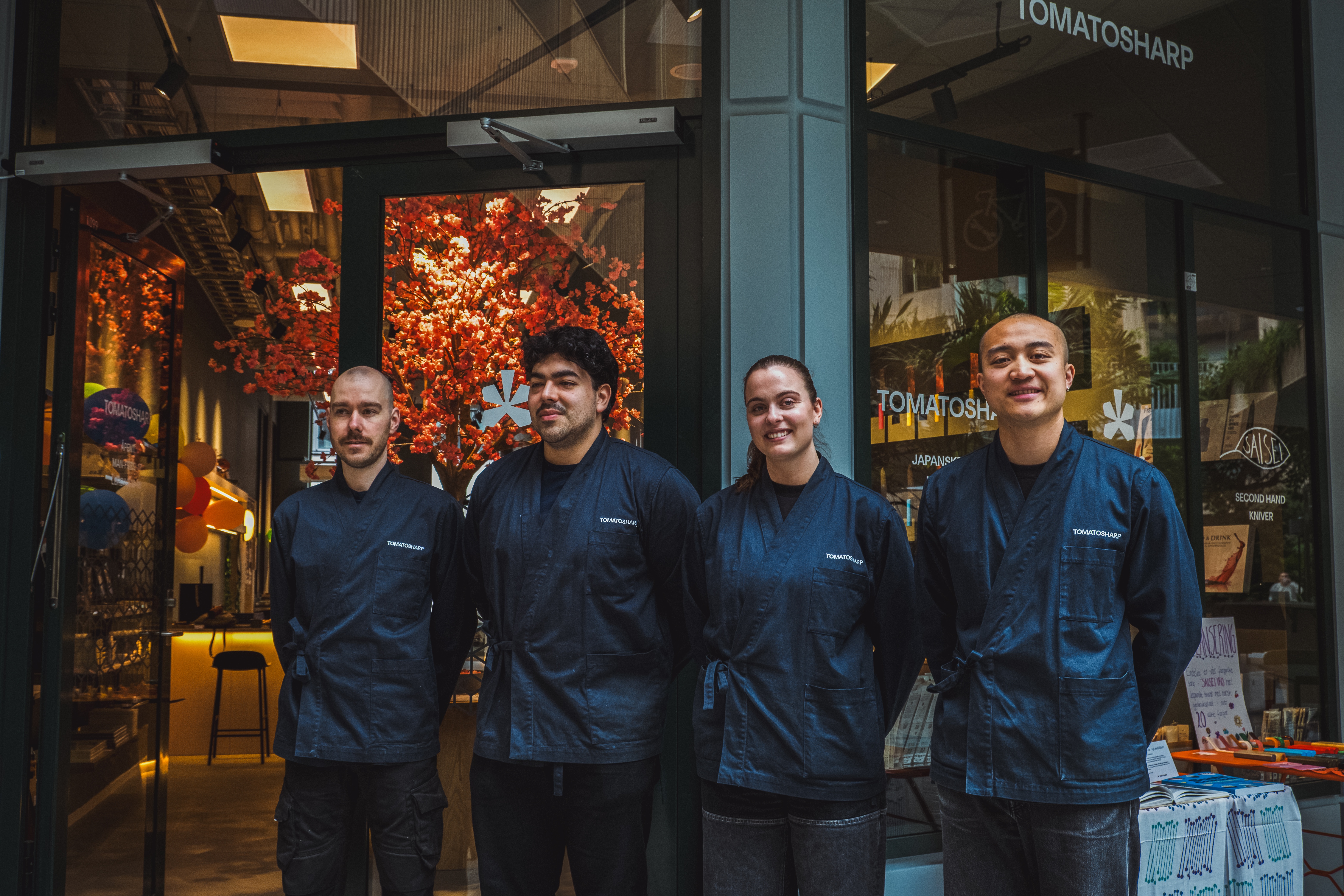
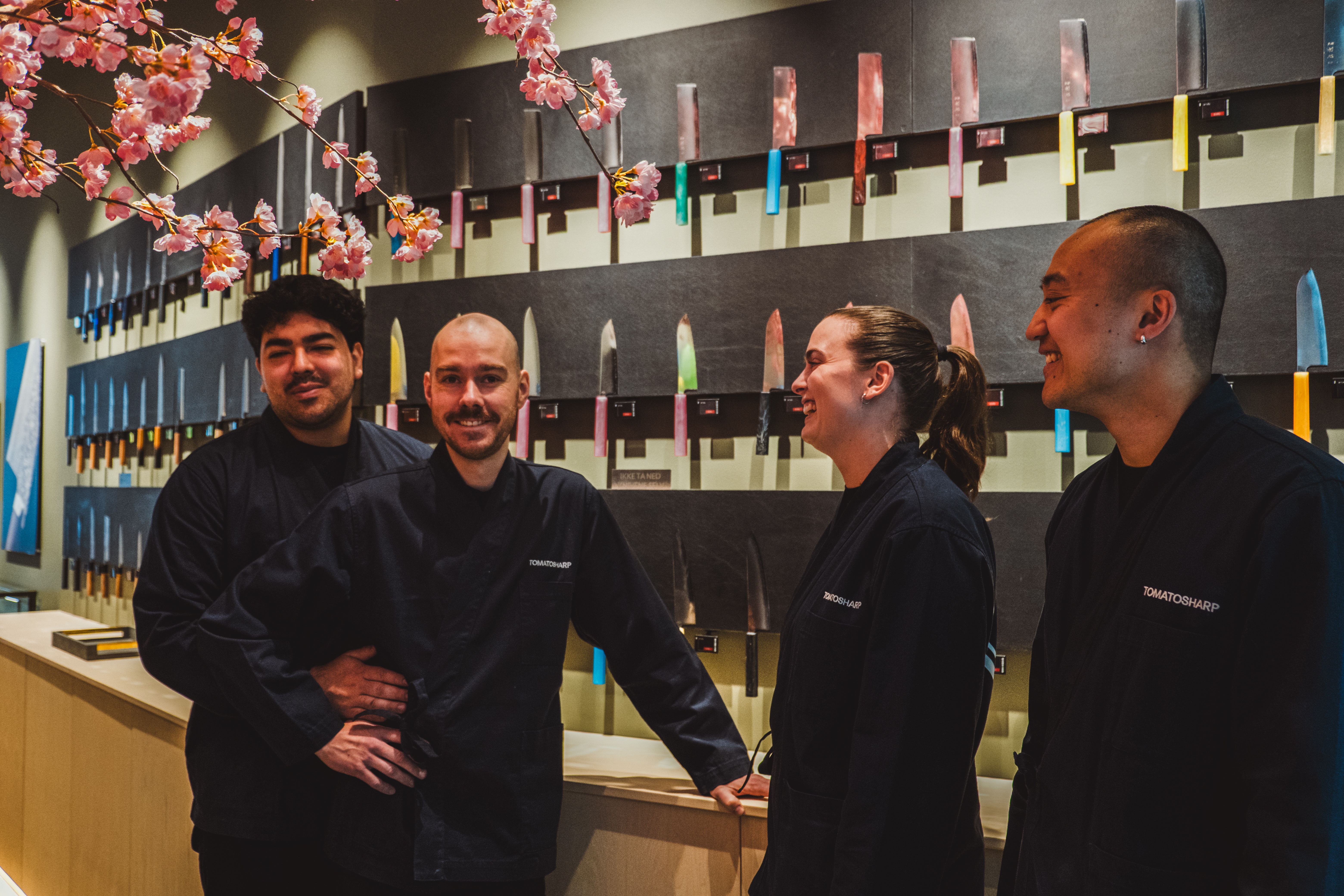
Tomatosharp team at flagship store in Teknobyen, Trondheim. Photo: Ludvik Hestbek, TRD Brand
When we first met the team behind Tomatosharp, they were in Bakklandet with a pop-up shop, a future address in Teknobyen, and a plan that still mostly lived in renderings and conversation.
The pop-up was real. The new store was renderings, logistics, and a team working across town, keeping several versions of the same idea alive at once.
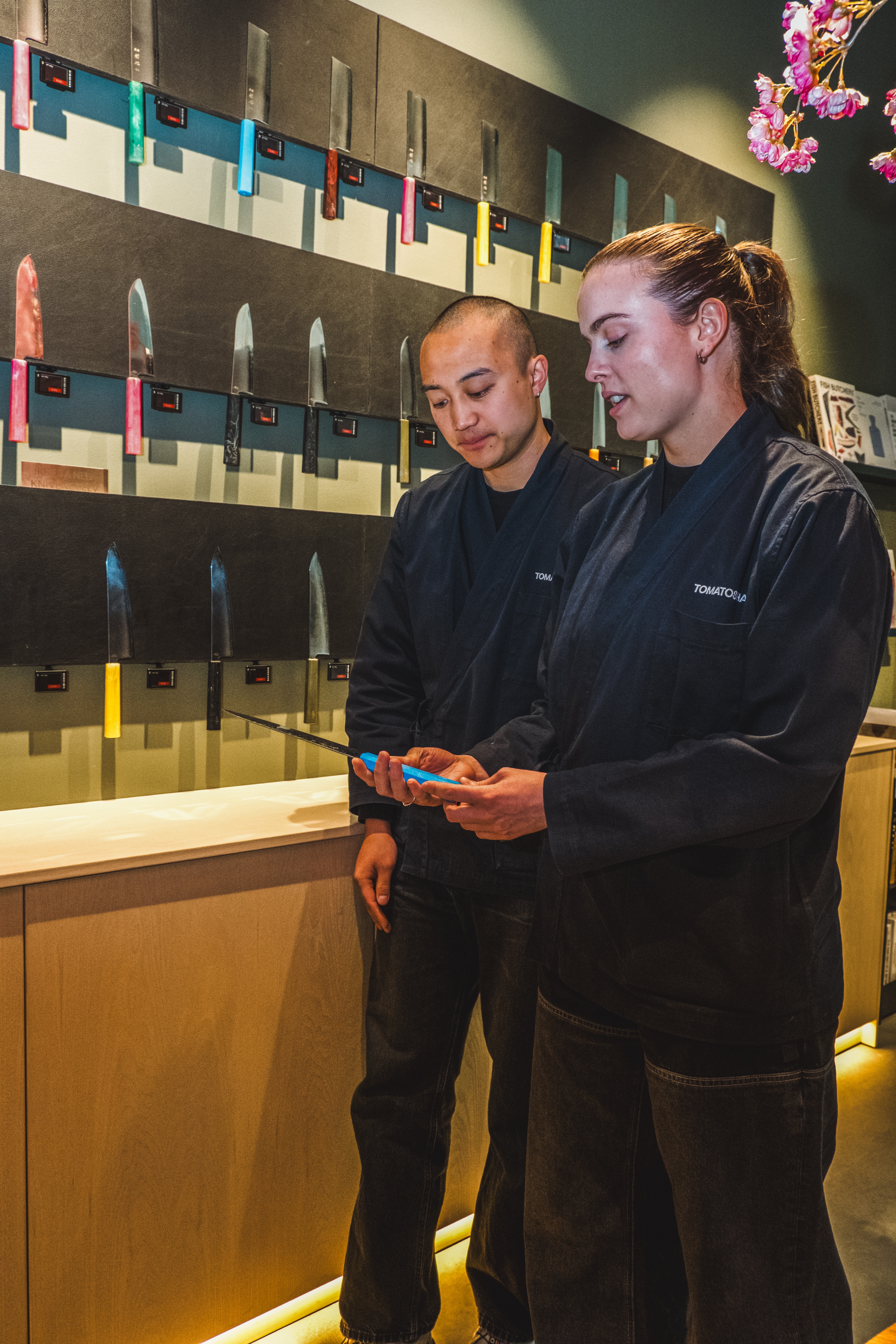
A year later, the idea has walls. It looks like a warm, beautifully considered room crossed with a Japanese knife shop: Scandinavian woodwork, clean lines, blades on display, and a cherry blossom tree holding court quietly in the middle of it all.
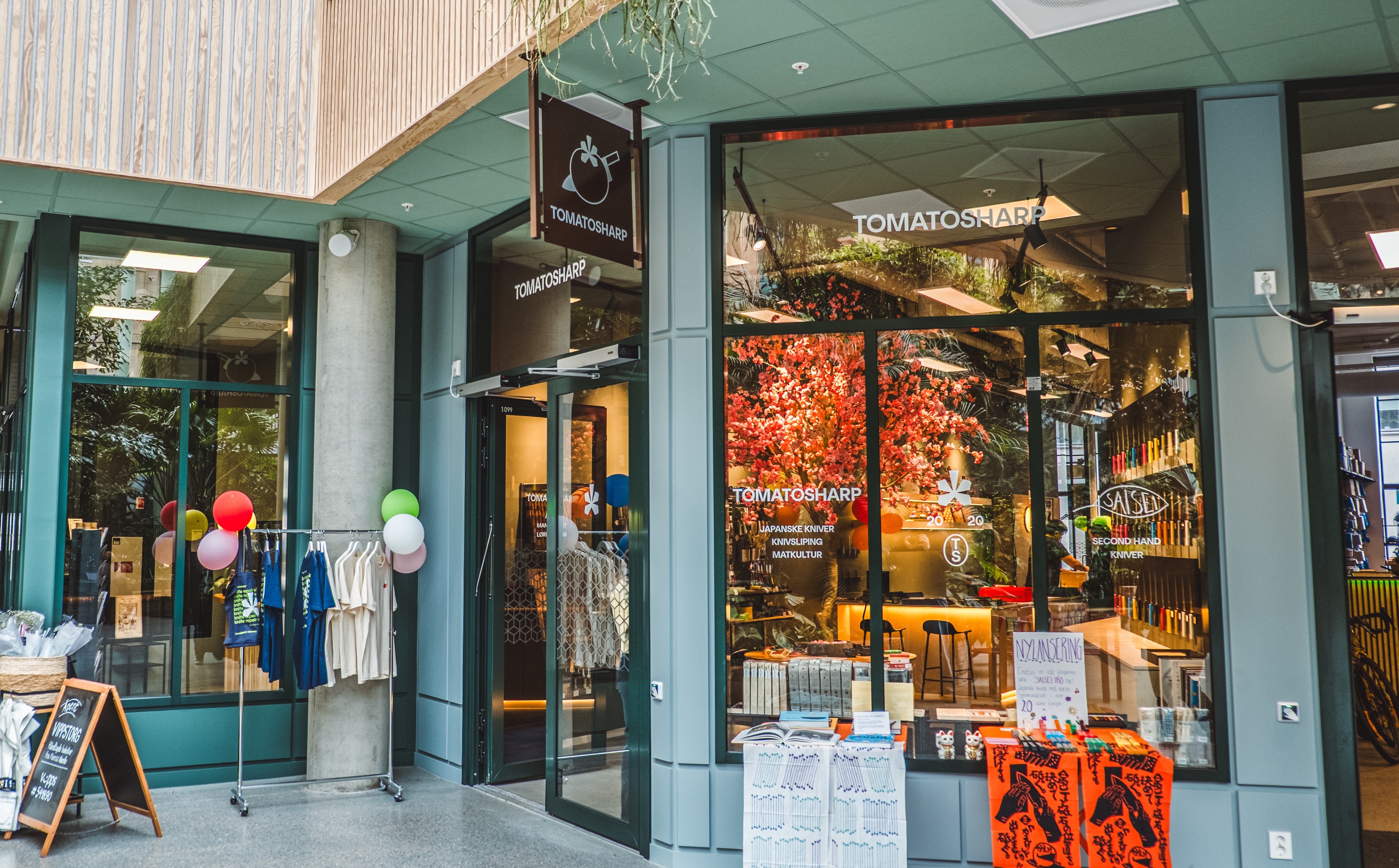
Tomatosharp flaship store at Teknobyen (Teknostallen)
“Our shop interior is inspired by traditional Japanese knife shops, but we also mixed in Scandinavian design.”
- David Phan
From renderings to reality
Built with Sigurd Haanæs, a local carpenter from Buvika, the shop is shaped by Japanese and Scandinavian design: warm ash wood, clean lines, open space, blades on display, and a cherry blossom tree holding court quietly in the middle of it all. It has the feeling of a place made by people who spent a great deal of time thinking about where a beautifully crafted knife ought to live.
“It was definitely a turning point for us to have everything under the same roof,” David says. “The workshop, the shop itself, and the sharpening courses all in the same room. Moving into Teknobyen has been a huge transformation for us.”
Ingrid remembers seeing the first renderings.
“When we first saw the renderings of how we wanted the shop to be, I didn’t believe it. I was like, ‘Yeah right, it looks nice, but it’s impossible.’”
At the time, Tomatosharp felt slightly everywhere. The workshop was in Fossegrenda. The pop-up was in Bakklandet. Orders were coming in. Courses were being planned. And there always seemed to be one more thing that needed doing.
“It was a lot of work running the website, having the workshop in Fossegrenda, and managing all the logistics,” Ingrid says. “Friends and family were helping us until eleven at night. We ordered takeout and ate in the garden.”
Today, everything is finally under one roof, which has given their ideas a little more room to behave like real things. New courses, new collaborations, a growing team, and now a product line of their own.
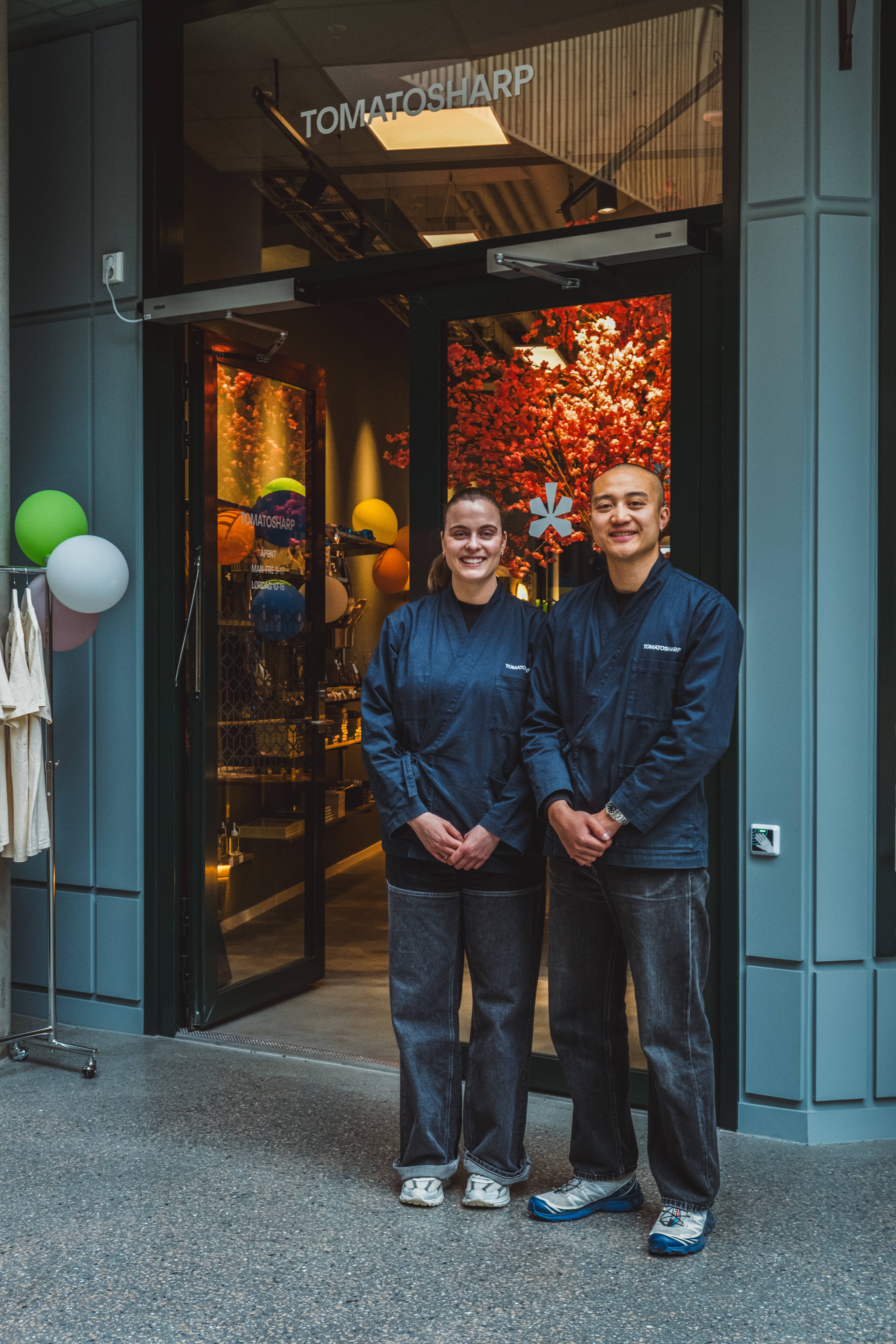
David & Ingrid. Photo: Ludvik Hestbek, TRD Brand
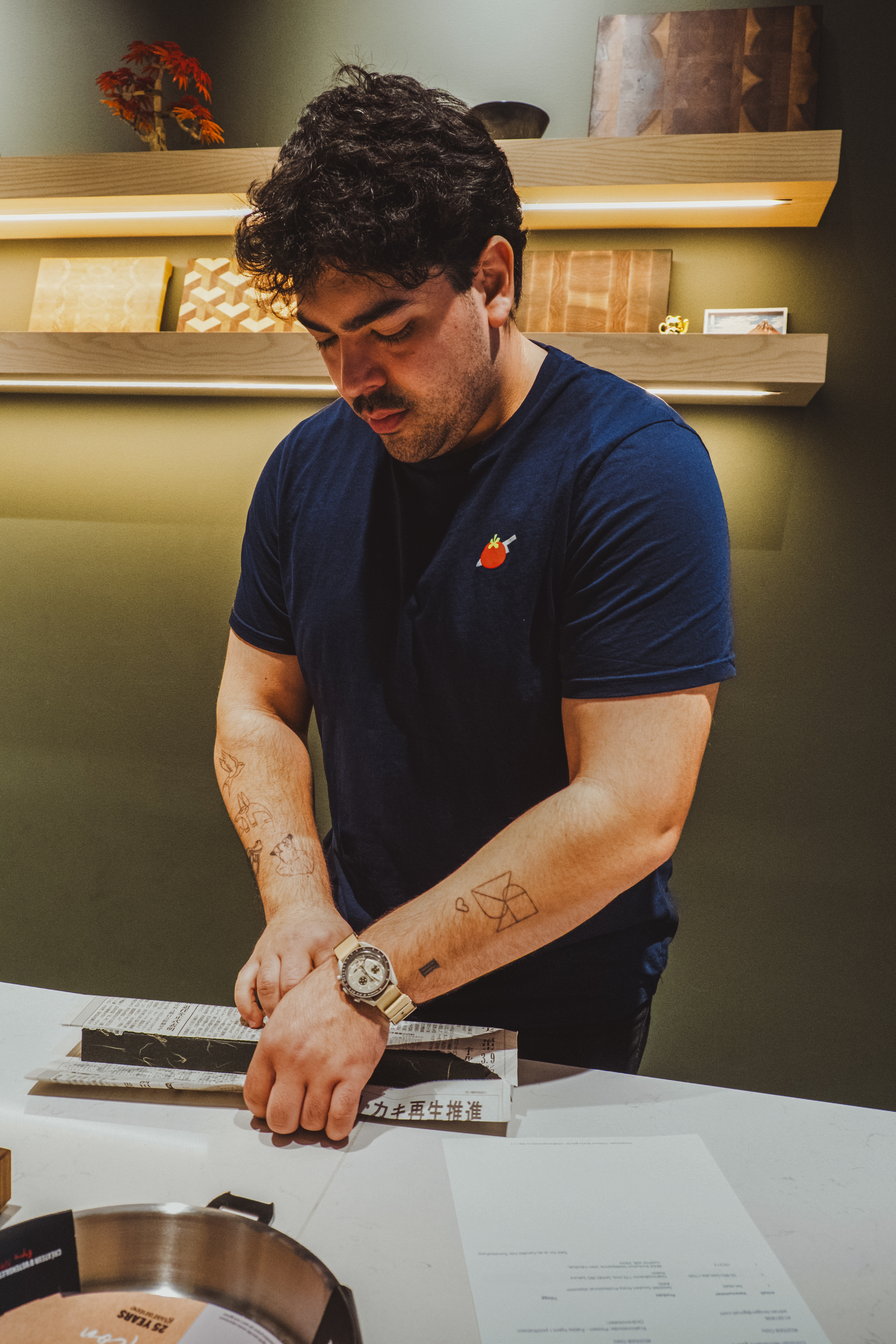
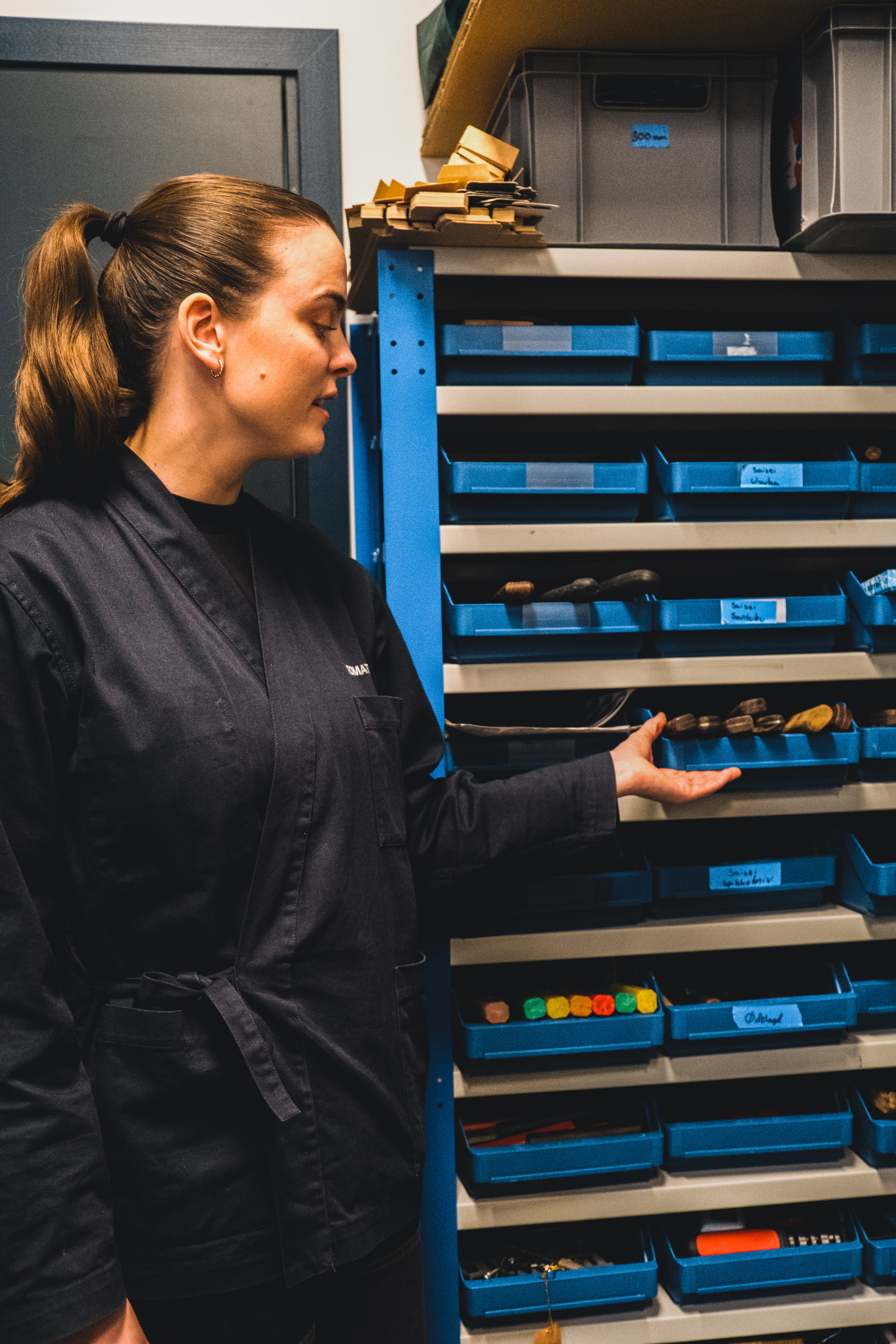
Store manager, Alejandro. Photo: Ludvik Hestbek, TRD Brand

Inside the shop at Teknobyen. Photo: Ludvik Hestbek, TRD Brand

Tomatosharp. Photo: Ludvik Hestbek, TRD Brand
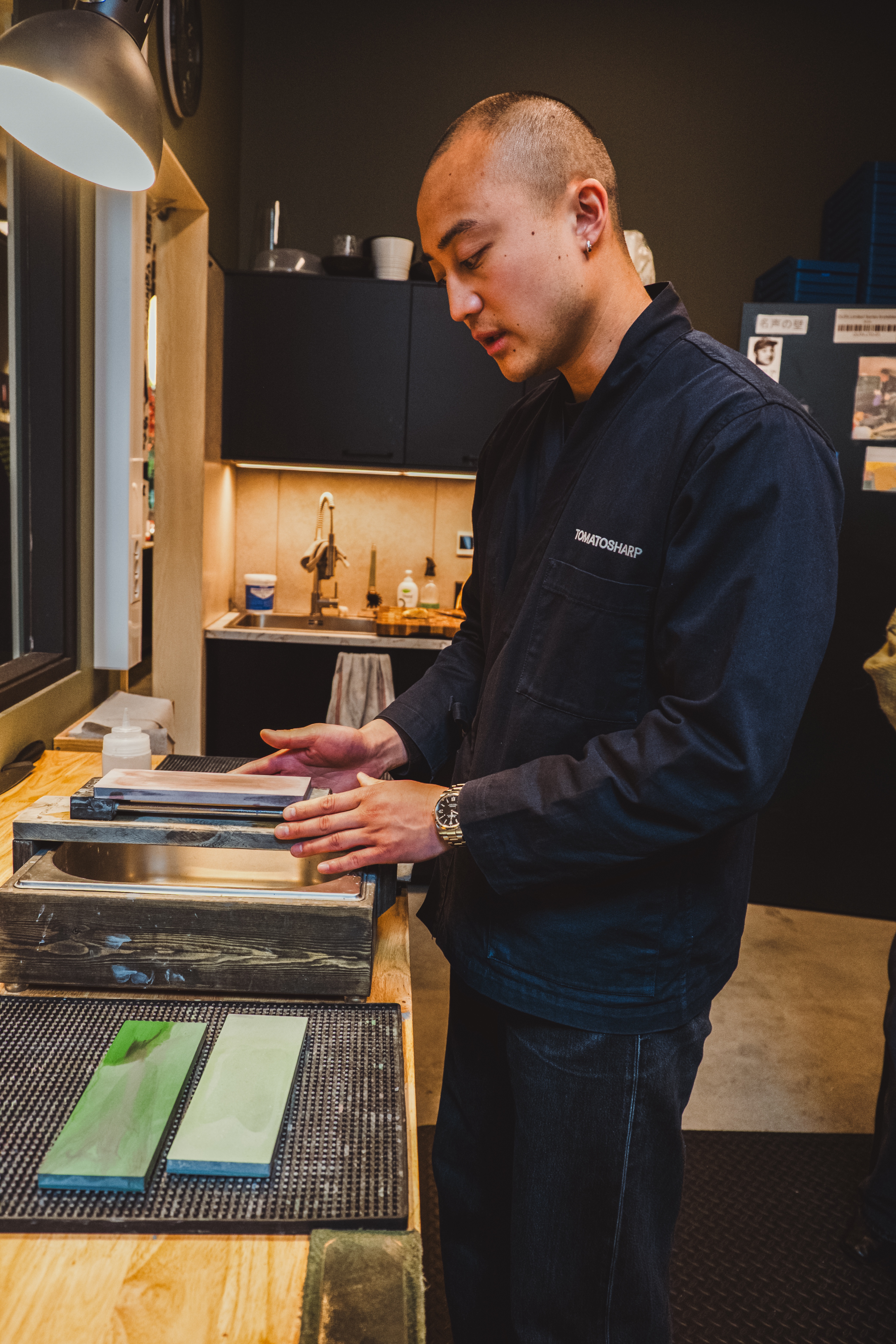
David Phan, Tomatosharp. Photo: Ludvik Hestbek, TRD Brand
Something of Their Own
Before Teknobyen, Tomatosharp mostly worked in the orbit of other people’s craft. Knives arrived dull, damaged, inherited, forgotten, or simply tired from years of being useful. Tomatosharp sharpened them, restored them, sold blades from small Japanese makers, taught people how to care for them, and became, in a very specific way, caretakers of sharp things.
After years spent sharpening, restoring, and studying craftsmanship, Tomatosharp has started contributing its own chapter to the story.
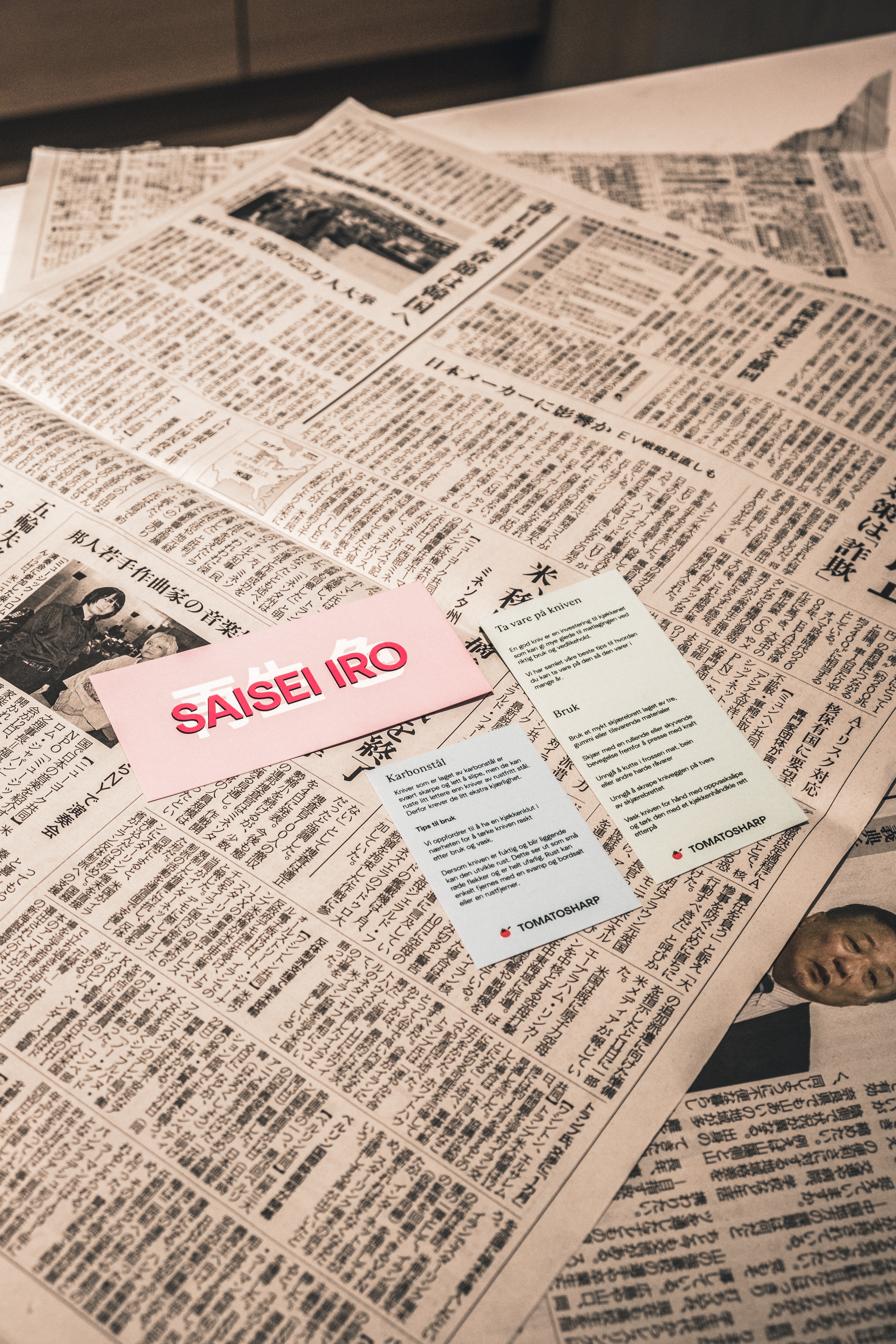
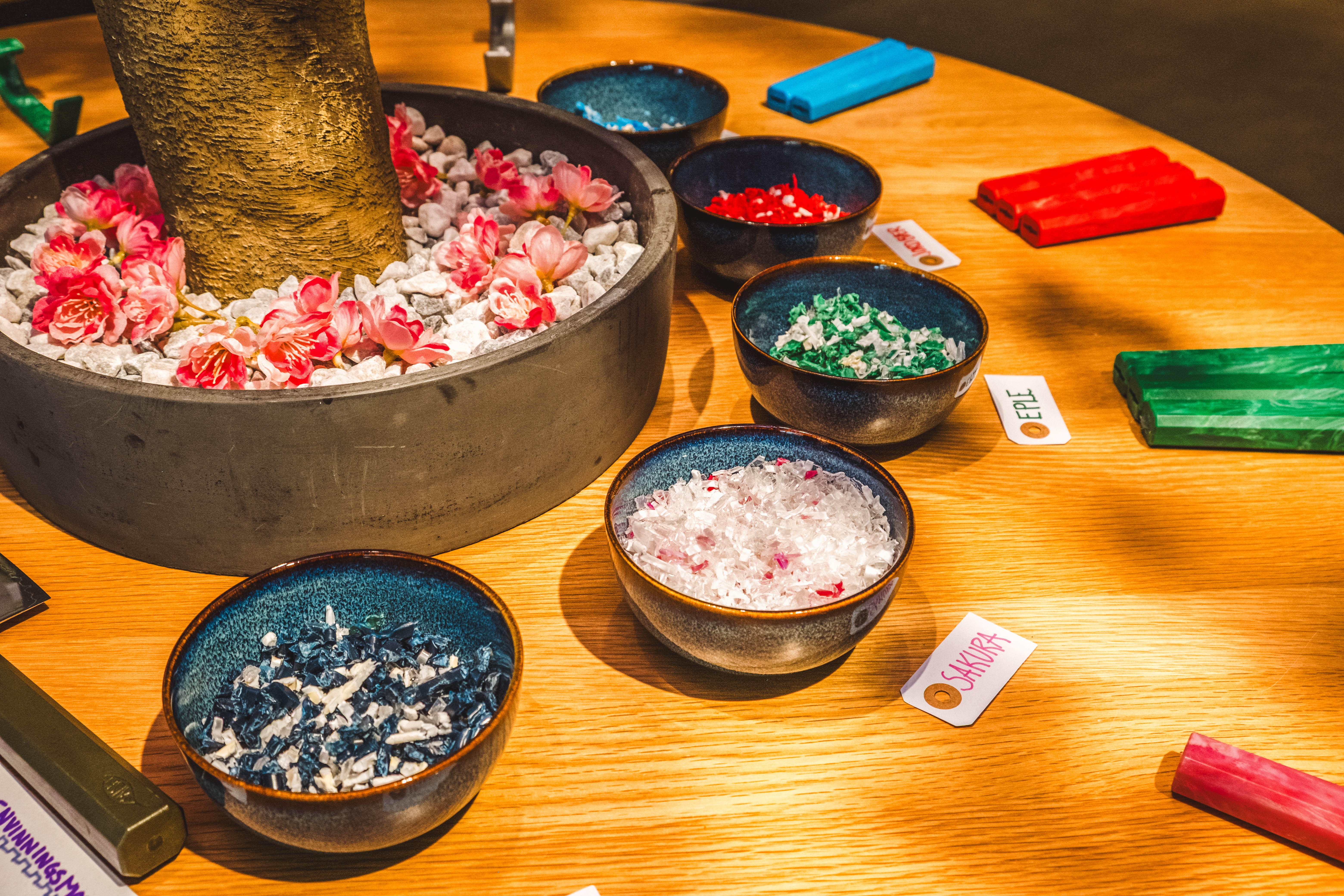
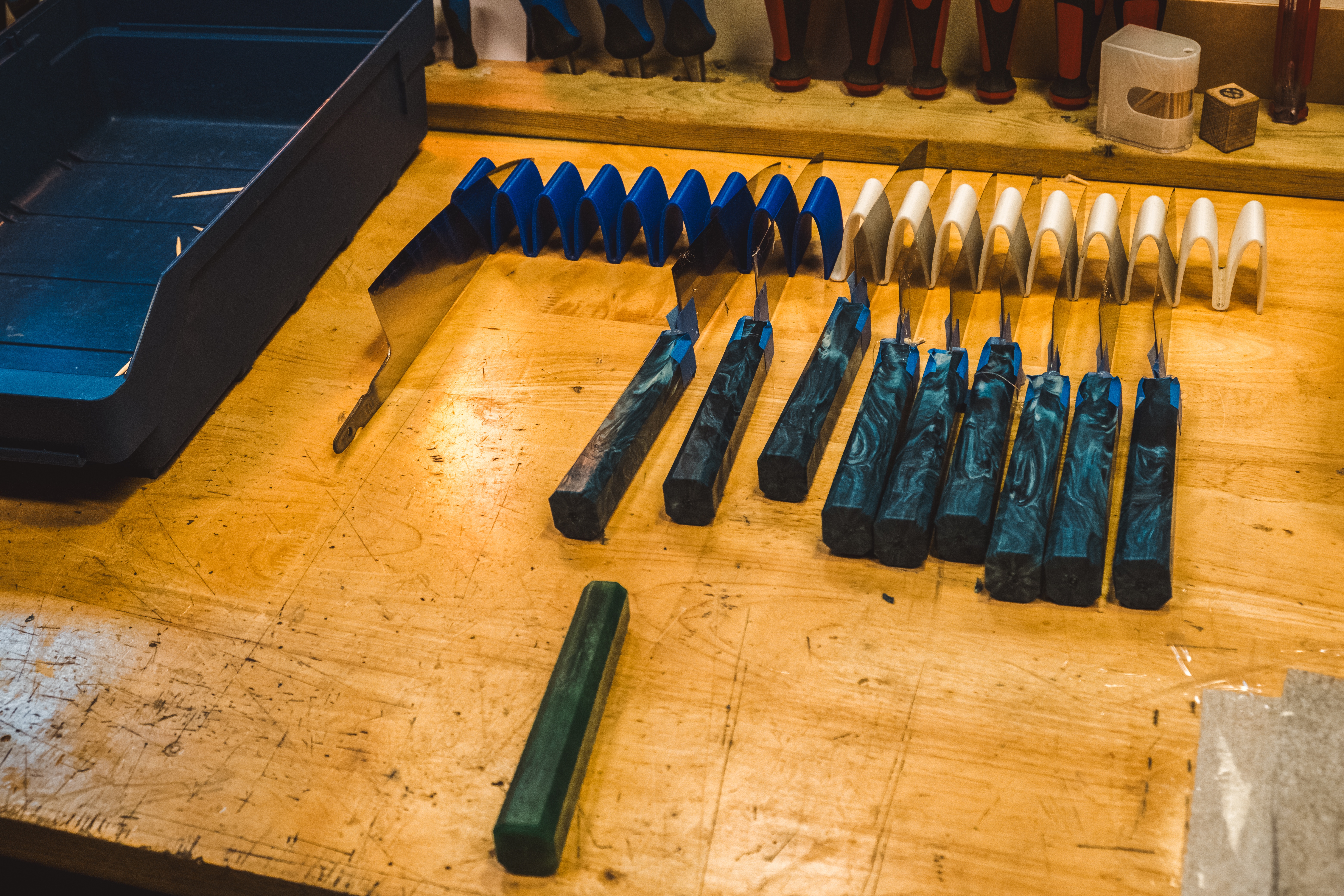
“Our new collection is called Saisei Iru, which means rejuvenated or rebirth and color in Japanese,” David says. “These knives have recycled plastic handles made entirely from Norwegian plastic waste.”
The project brings in Plasteriet, here in Trondheim, where local maker Vincent Gartiser gives discarded plastic a much better second act. Plastic from the food and fishing industries comes in as waste and leaves his workshop as knife handles.
“It’s upcycling,” Ingrid explains. “Instead of the plastic being recycled in the usual way, or burned for heat, this guy bikes around town, picks up the plastic, and makes the handles in his own workshop. So it becomes something with higher value. Not just a trash can that lives for five or six years, but a Japanese knife for life.”
The handles are made in Trondheim. The blades come from Japan. The finished knife belongs somewhere in between.
A sharper operation
The team has taken shape too.
“Ever since we moved into the new shop, our core team has expanded,” David says.
“We’re still a team of students, but we’ve also hired a new knife sharpener. Right now, we have two knife sharpeners and one shop manager, including ourselves.”
Alejandro Barrera now manages the shop. His girlfriend Maria helps out. Two siblings and a cousin work on the sales floor, which means tomatosharp has, at least partly, become a family business by recruitment.
“Alejandro is one of our best sellers and works really hard,” David says. “He quit his day job to follow this journey. We’re a small team, but together we can evolve and do a lot of exciting things.”
One thing hasn’t changed: they still spend almost as much time teaching people about knives as they do selling them.
“We’ve shifted our focus more toward education,” David says. “We’re trying to teach people how to use a knife properly, how to sharpen, and bring more of that knowledge to the general public.”
The courses bring together an interesting mix of people. Professional chefs. Serious home cooks. People who bought a knife and realized they should probably learn how to take care of it.
“We’ve collaborated with chefs from Tollbua and To Rom og Kjøkken,” David says. “And we’re planning collaborations with Michelin chefs as well. We want to introduce more of their knowledge to the general public.”
The conversations now stretch far beyond Trondheim.
“We work with chefs all around Norway,” David says. “There are restaurants in Stavanger, like RE-NAA, a three-Michelin-star restaurant. We’ve done sharpening courses for them, and they also send their knives here for sharpening.”
One week David is helping chefs at RE-NAA maintain their knives. The next he’s visiting sushi chefs in Bergen. Recently, a customer ordered a knife from Australia.
“We can see that our knives are desirable in other parts of the world too,” David says. “Because we’re building something unique here in Trondheim.”
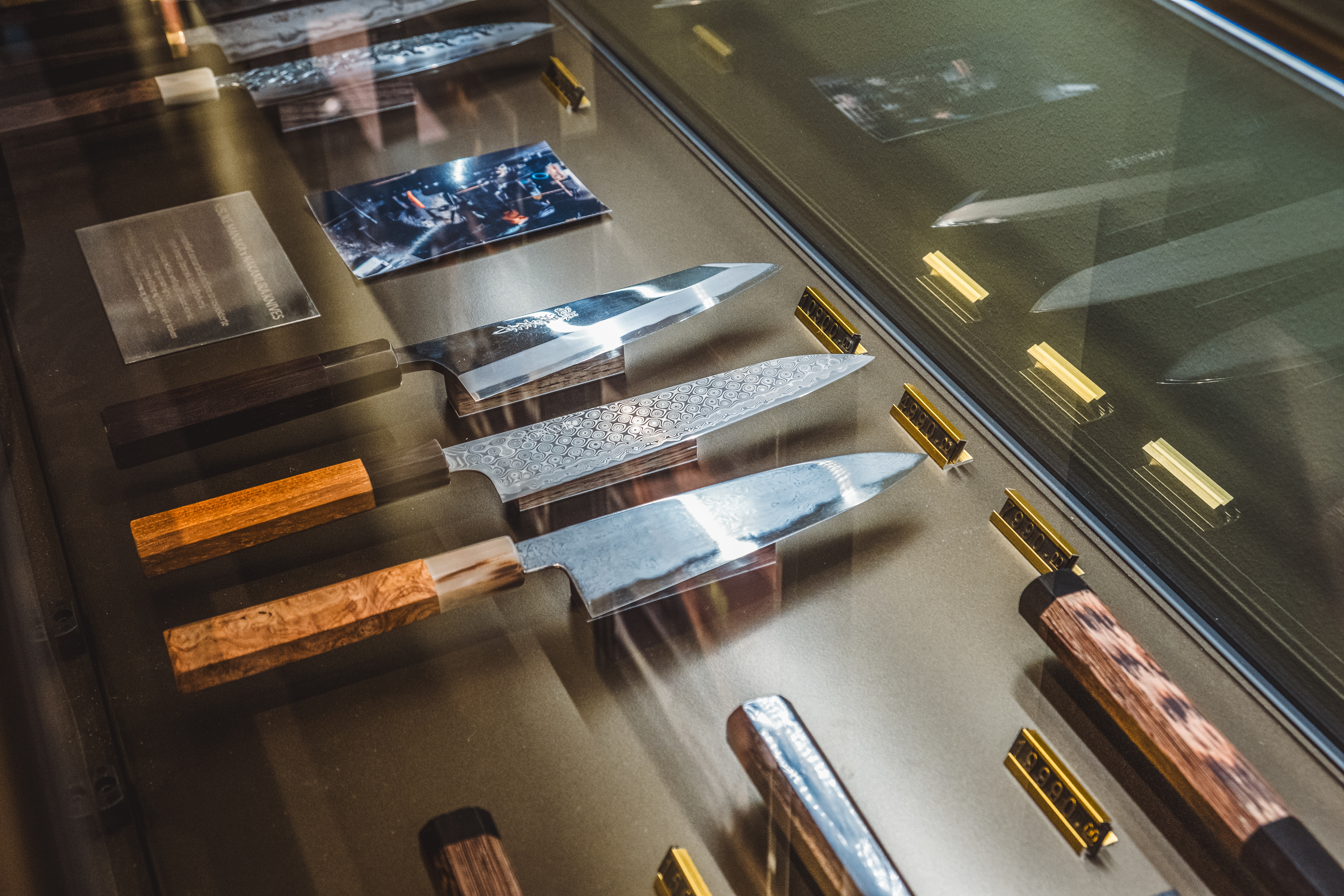
Tomatosharp flagship store. Photo: Ludvik Hestbek, TRD Brand
The craft behind the blade
Back in the workshop, Benedikt Schroerlücke, head sharpener, is making handcrafted wooden sayas, the protective sleeves that fit over each blade. Vintage Japanese knives are being restored. Custom handles are being fitted. Sharpening stones are wearing down from daily use.
“We purchase used blades and used knives from Japan,” David says. “Sometimes they arrive rusty and in poor condition, and we refurbish them and sell them at a good price.”
That respect for craftsmanship is something David and Ingrid trace back to the workshops they visited in Japan.
The workshops are smaller than most people imagine. Not factories. Not production lines. More often family businesses where one person spends decades doing one part of the process exceptionally well. One person forges the blade. Another sharpens it. Another fits the handle. By the time a knife reaches a kitchen in Trondheim, it has already passed through several pairs of hands.
“It’s also a homage to the craftsmanship,” Ingrid says. “The knives deserve it. The makers are so talented, and they’ve spent their whole lives doing this, so we wanted to pay respect to the knives as well.”
That philosophy seems to shape the shop as much as the products.
“We want every customer who comes here to have an experience,” Ingrid says. “When you come in, you’re greeted and welcomed, and you get to explore Japanese knives. You don’t have to buy anything. You can just come here and learn.”
Looking around the new Teknobyen store, you get the sense that Tomatosharp has become exactly what it was always inching toward. A place where people come to learn, where craftsmanship is treated with a certain reverence, and where a knife can tell a surprisingly long story.
Their new store and workshop give the craft somewhere to be seen, held, questioned, sharpened, and understood. Their new collection gives it a signature.

Author's profile
McKenna Starck
Trondheim Brand Manager
McKenna works with the development of Trondheim’s city brand and Trondheim.com, with a focus on brand strategy, content and the overall digital experience.