10 September 2026 · 8 min read · By McKenna Starck
He came to study engineering. ISFiT had other plans.
Jon came to Trondheim with one plan and found something else waiting at the edges. What started as a chance way into student life became a much bigger lesson in what can happen when you stay open to the unexpected.
- Student Life
- Arts & Culture
- Events & Experiences
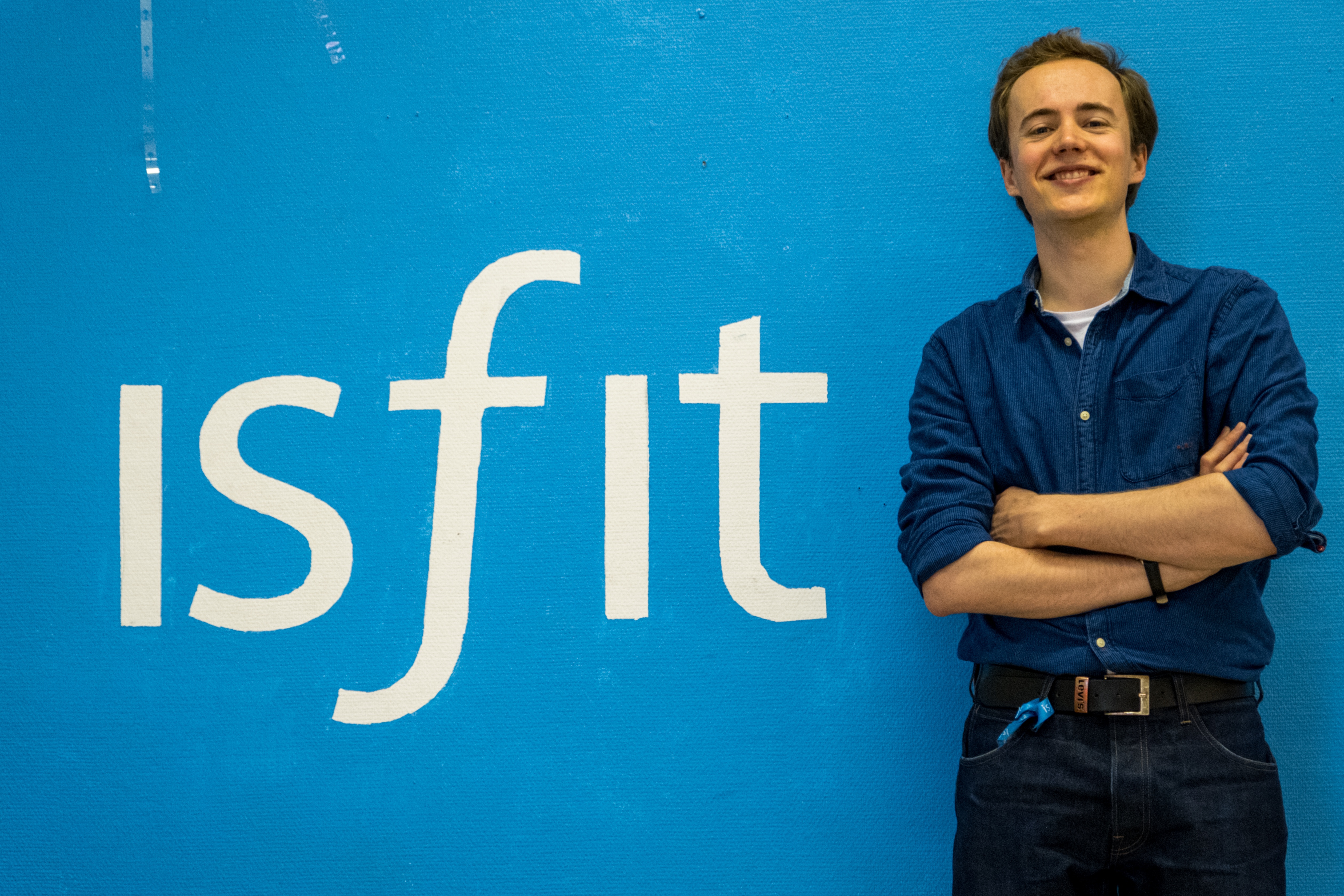
Jon Bergland, President of ISFiT 2027. Photo: Ludvik Hestbek, TRD Brand
Jon Bergland came to Trondheim to study data engineering.
Somewhere along the way, he ended up in charge of a festival that will bring around 350 students from more than 100 countries to the city in February 2027.
There wasn’t a grand plan behind it. ISFiT entered the picture through a summer job, someone who told him he should join, and a few other things that hadn’t quite worked out. Then something about it got under his skin. The scale, maybe. The strange magic of hundreds of students building something together. The fact that for ten days, people who might otherwise never meet find themselves in the same rooms, arguing, listening, dancing, changing their minds. Now 24, he’s leading ISFiT 2027 with around 400 student volunteers helping shape what the festival will become. For someone who chose engineering because he liked the satisfaction of building something and watching it work, there’s a certain logic to it. The thing he’s building now just happens to be a little more human.
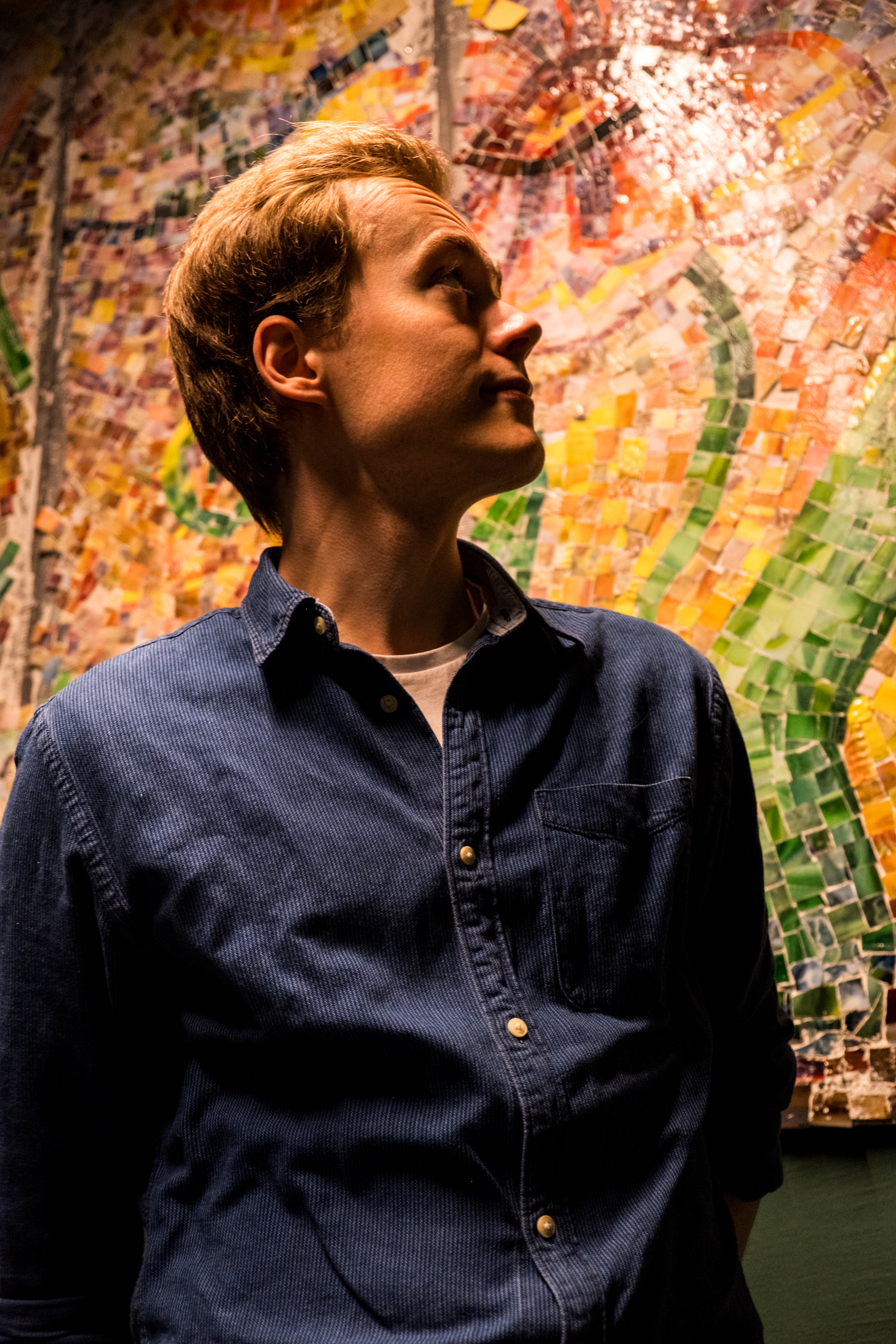
Jon Bergland, President of ISFit 2027. Photo: Ludvik Hestbek, TRD Brand
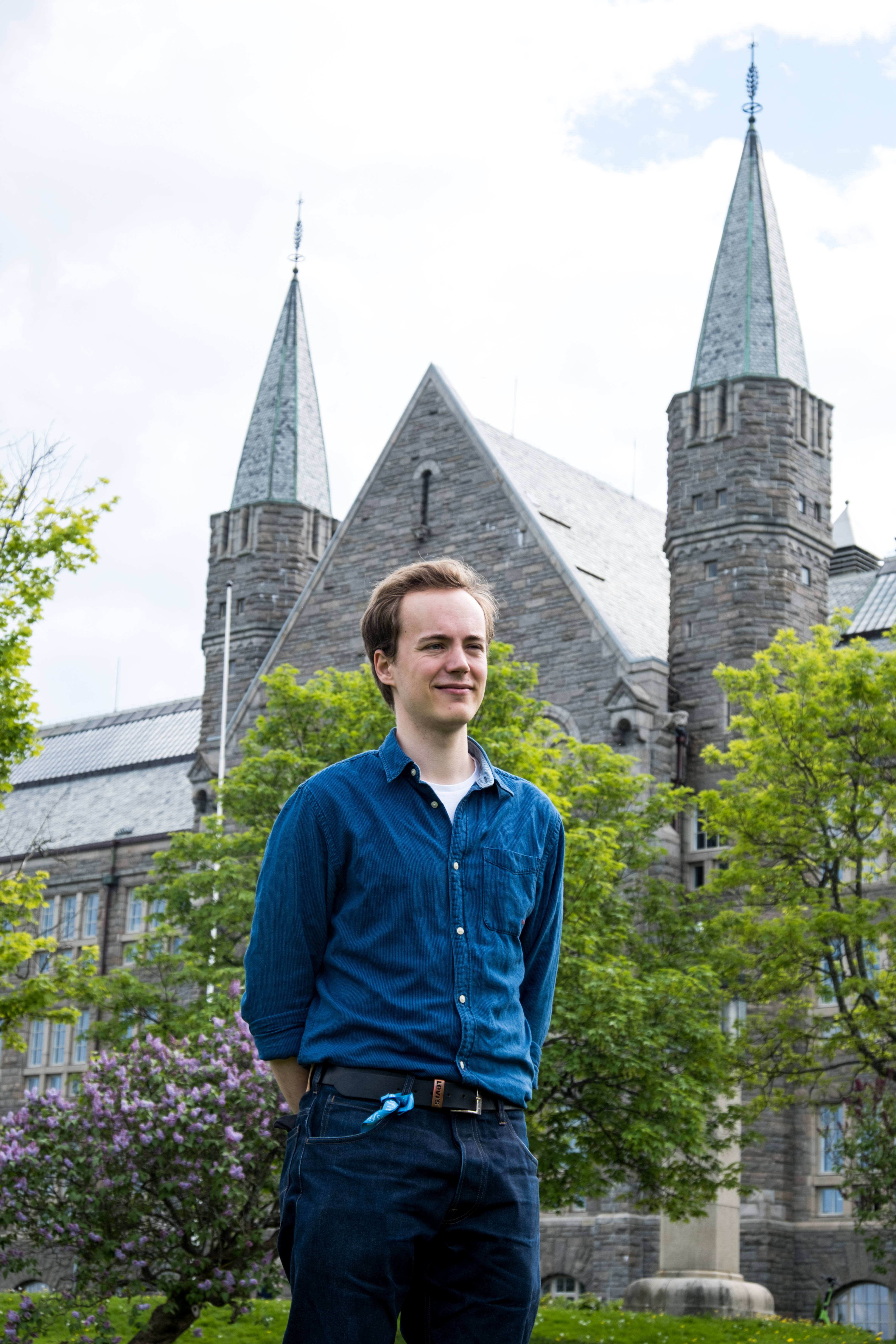
Jon Bergland, President of ISFit 2027. Photo: Ludvik Hestbek, TRD Brand
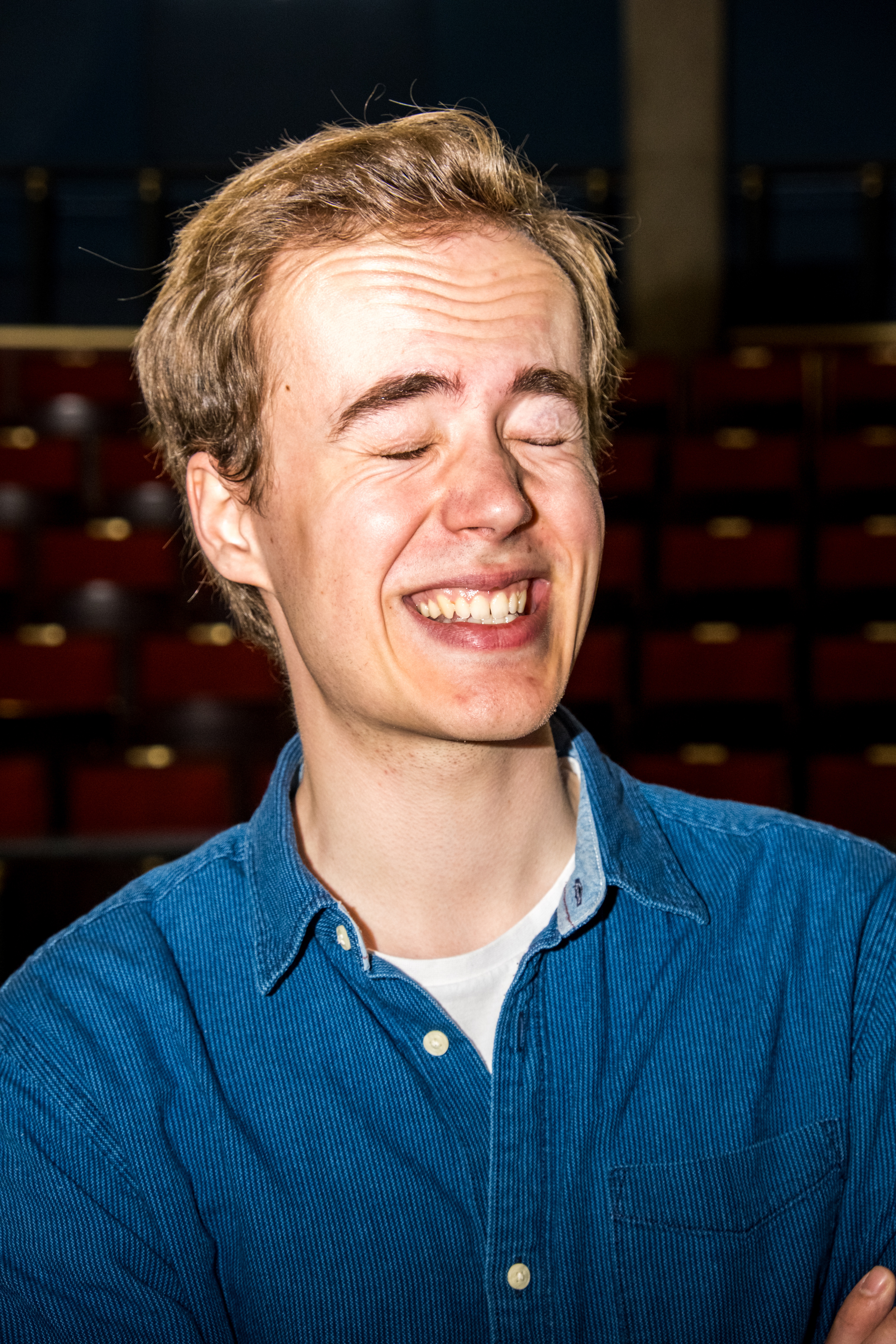
Jon Bergland, President of ISFit 2027. Photo: Ludvik Hestbek, TRD Brand
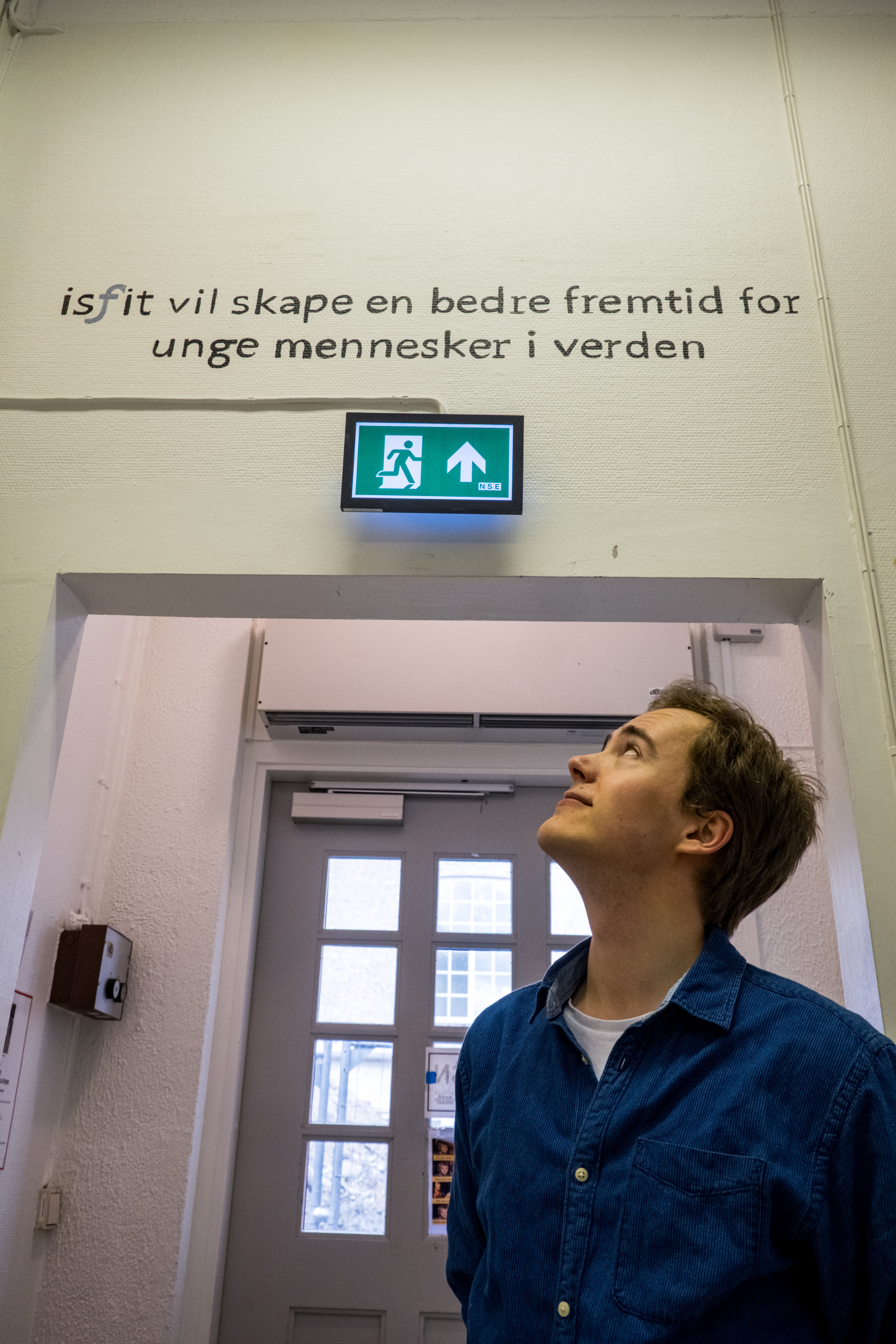
Jon Bergland, President of ISFit 2027. Photo: Ludvik Hestbek, TRD Brand
The thing he didn’t plan for
Jon came to Trondheim partly because he wanted out of what he calls the “Oslo bubble.” NTNU made sense for engineering, but leaving Oslo was also a chance to start somewhere new and see who he might become outside the usual cast of characters. He knew he wanted something beyond his studies too. A real project, real people, something with a little more consequence than a grade. ISFiT was not the obvious answer. In fact, it barely registered as an answer at all.
Then a summer job put him next to someone who had joined. She told him he should too. A few other student roles had already fallen through, which, in hindsight, turned out to be useful.
“It was a series of coincidences,” Jon says. “ISFiT showed up at the absolute perfect time.”
He joined as a volunteer and suddenly found himself inside something much bigger than the project experience he had been looking for: hundreds of students building a festival together, international participants arriving in Trondheim, concerts and debates taking shape, people quietly solving everything from programming to where everyone would sleep. “During the festival itself, I completely fell for it.”
Ten days later, Jon was tired, happy, and very sure he wasn’t done. A conversation with Aurora Kolstad, the previous president of ISFiT 2025, followed, along with the thought that perhaps he should lead the next one himself. His logic was characteristically simple: “Well, you might as well try when you have the opportunity.” A few coincidences had turned into a fairly serious commitment.
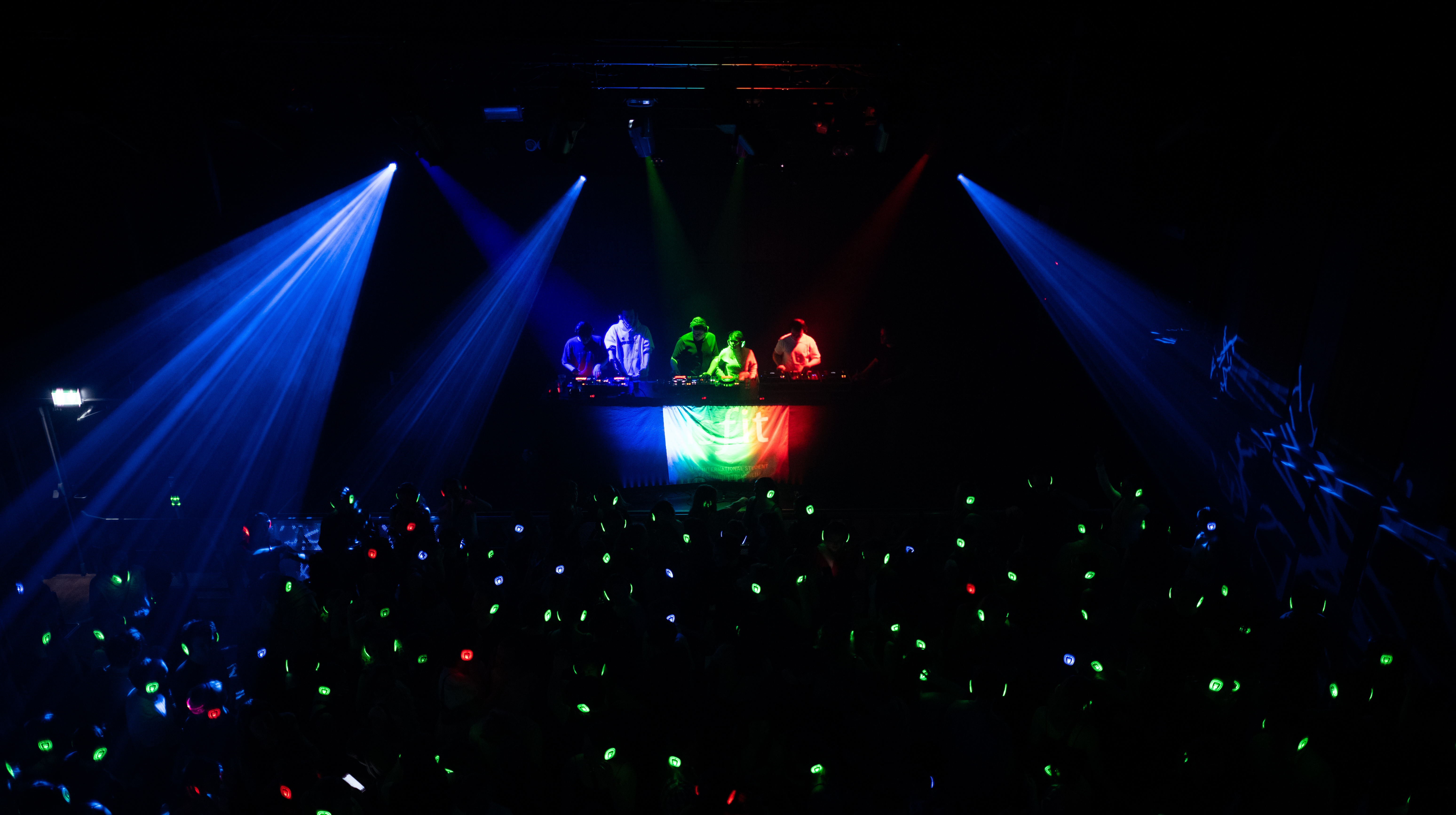
ISFiT 2025, Silent Disco. Foto.samfundet.no
Built by students, for the world
ISFiT stands for the International Student Festival in Trondheim, which is a fairly accurate name for something that is part global forum, part cultural festival, and entirely run by students. Every two years, young people from around the world arrive in Trondheim for ten days of debates, workshops, concerts, culture, and conversations that tend to get more interesting once everyone realizes they are not looking at the world from the same angle.
For ISFiT 2027, around 350 participants from more than 100 countries are expected to join roughly 400 student volunteers. This year’s theme, Changing Winds, takes on political, technological, and social change, or, more simply, the growing realization that the world is becoming a little harder to predict.
For Jon, that international mix is what keeps the whole thing from becoming too comfortable. “It ensures it doesn’t just become a group of Norwegians sitting and speculating in little Trondheim,” he says. Who is in the room changes the conversation, and that is exactly the point.
Everything else is built around it by students: the debates, the cultural program, the logistics, the food, the beds. The organization starts small enough for Jon to know almost everyone involved, then grows until whole parts of it begin moving perfectly well without him. “You get a very strong sense of ownership over the project,” he says, “and I hope I manage to share that ownership with those who come after me.”
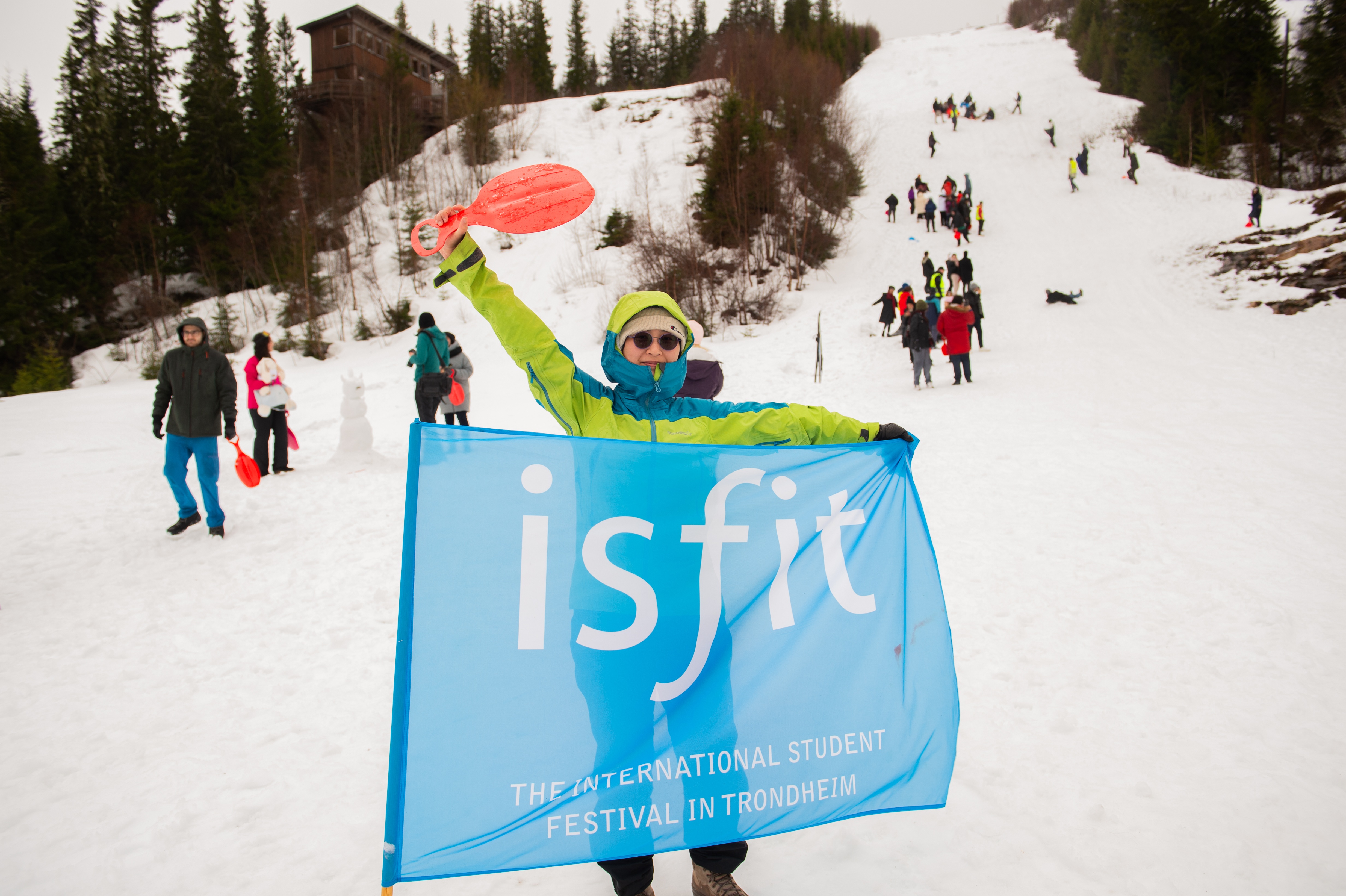
ISFiT 2025 Snow Day. Foto.samfundet.no

Ella Marie consert ISFiT25. foto.samfundet.no
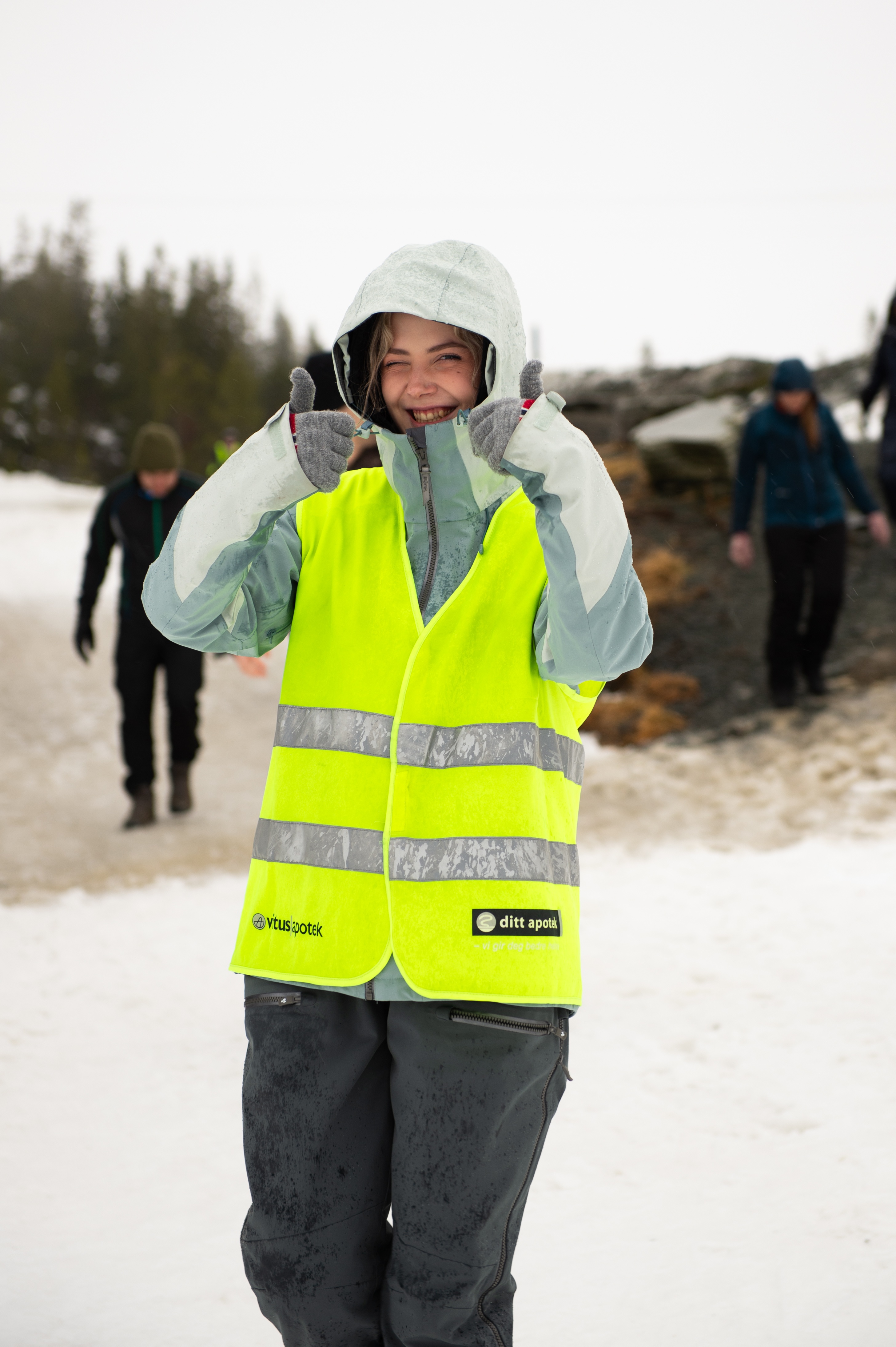
ISFiT 2025 Snow Day. Foto.samfundet.no
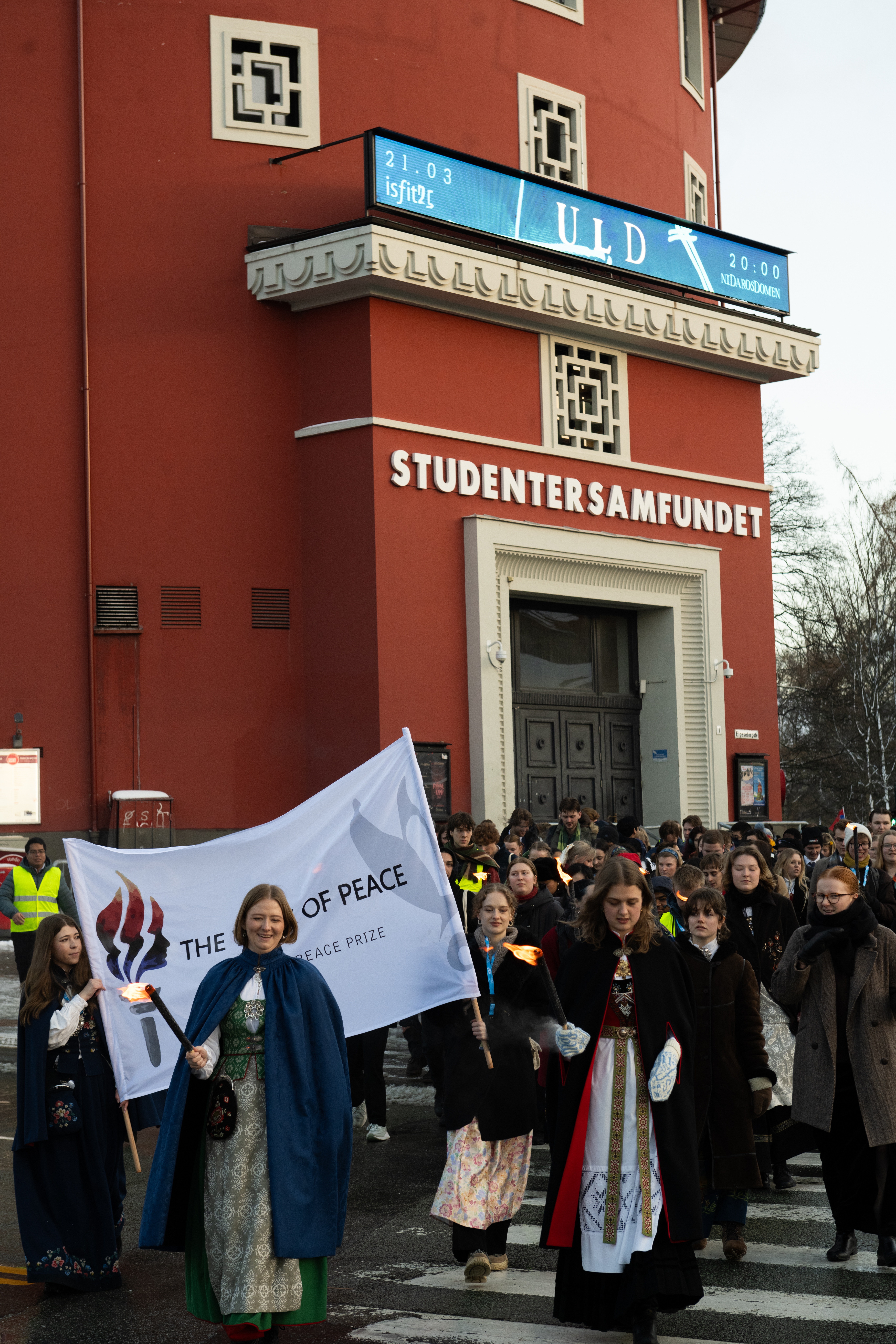
ISFiT 2025, Walk of Peace. Foto.samfundet.no

Dragshow ISFiT 2025. Foto.samfundet.no
Everyone changes the chemistry
ISFiT can be planned for two years, but it doesn’t really become itself until everyone else arrives. The debate team decides which conversations deserve a room. The cultural team shapes the mood. International participants bring perspectives that no planning meeting could possibly recreate. “It’s very much about the personal stories and the cultural exchange,” Jon says. “Everyone who participates helps leave their mark on ISFiT by creating diversity.”
And not everyone shaping the festival is wearing a volunteer badge. Through the host program, people across Trondheim open their homes to international participants arriving from around the world. On paper, it solves the rather practical problem of where to put hundreds of people. In reality, it can become one of the most personal parts of the whole experience. For ISFiT 2027, Jon is hoping more people across the city will become a host and make room for one of the students coming to Trondheim. Some participants have later found their way back to the city to study, pursue PhDs at NTNU, or work here after first meeting Trondheim through ISFiT.
Some traces are easier to point to. There is the traditional concert in Nidaros Cathedral, and the Student Peace Prize, whose recipient has their name set into a stone in Jomfrugata. The rest is less tidy: conversations, friendships, shifted perspectives, and the things people carry home with them without necessarily realizing it at the time.
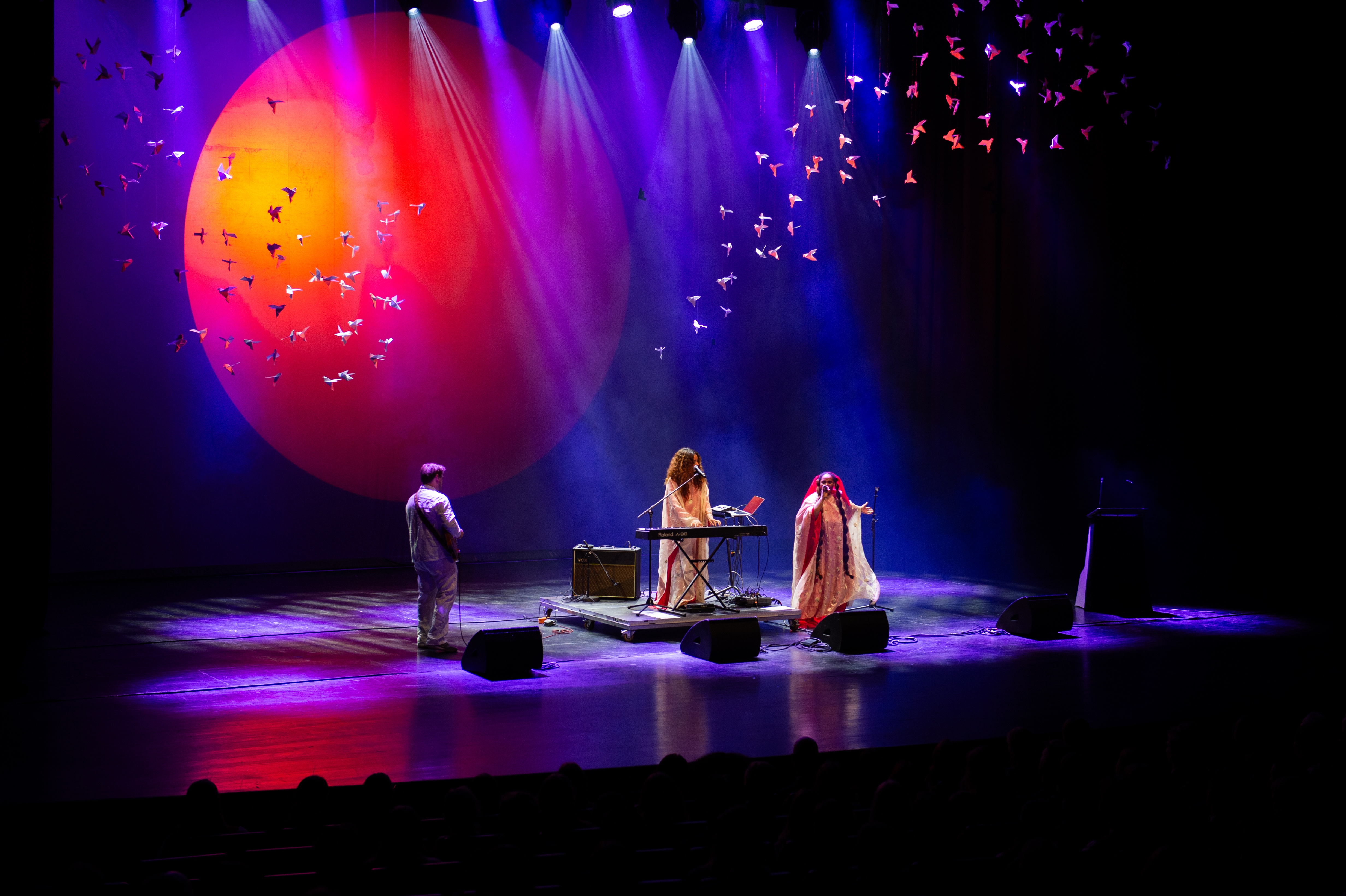
ISFiT 2025, Student Peach Prize Cerimony. Foto.samfundet.no
More than just a degree
Jon arrived in Trondheim in fall 2023, just as UKA was taking over the city. It was quite an introduction. Norway’s largest cultural festival is built almost entirely by students, who somehow manage to fill Samfundet, book major artists for Dødens dal, put on theater and revue, and generally behave as though producing a citywide festival is a perfectly reasonable extracurricular. Jon remembers looking around and thinking, “What on earth, this is completely insane!”
ISFiT comes from the same slightly improbable tradition of giving students very big things to do and trusting them to work out the details. The difference is where it points. UKA is built around culture and entertainment; ISFiT brings students from across the world together around global questions, cultural exchange, and conversations that tend to get more interesting when everyone arrives with a different answer.
Jon, meanwhile, had imagined his own extracurricular life going in a much more predictable direction. A technical organization seemed obvious. He liked technology. He was studying engineering. Then he started spending his days studying data engineering and realized that doing more engineering after class had lost some of its charm.
So volleyball happened instead, courtesy of an orientation buddy. Then debates and quizzes at Samfundet. Then ISFiT. “There’s an expectation here that you should do something alongside your studies,” he says, but there is plenty of room to be surprised by what that something turns out to be. You can spend your student years building something technical, putting on concerts, playing sports, running a festival, or simply ending up around people you might never have met otherwise. Jon came for the degree. Quite a lot of what shaped him happened around it.
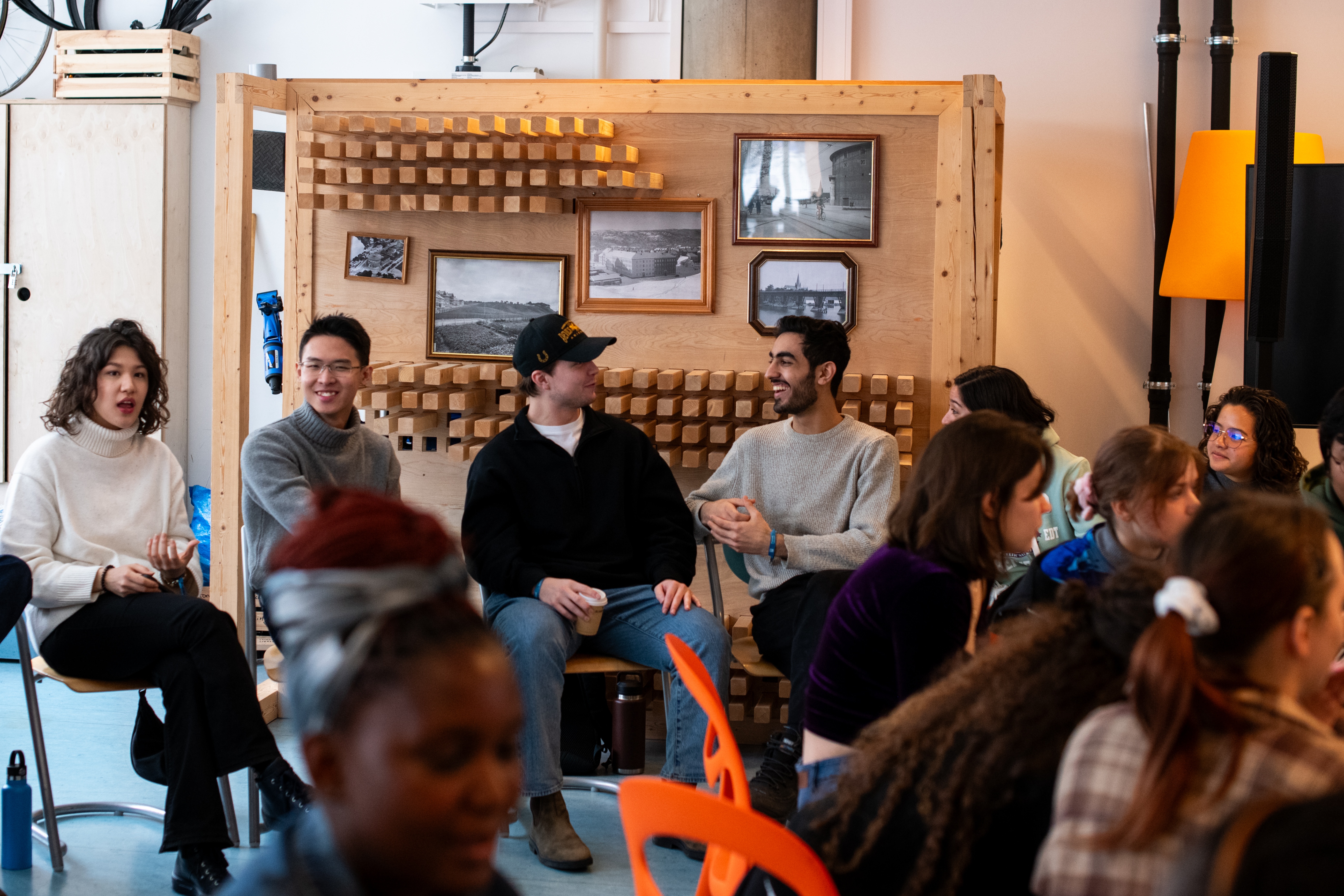
ISFiT 2025 Workshop. Foto.samfundet.no

ISFiT 2025 Panel discussion. Foto.samfundet.no

ISFiT 2025 Snow Day. Foto.samfundet.no
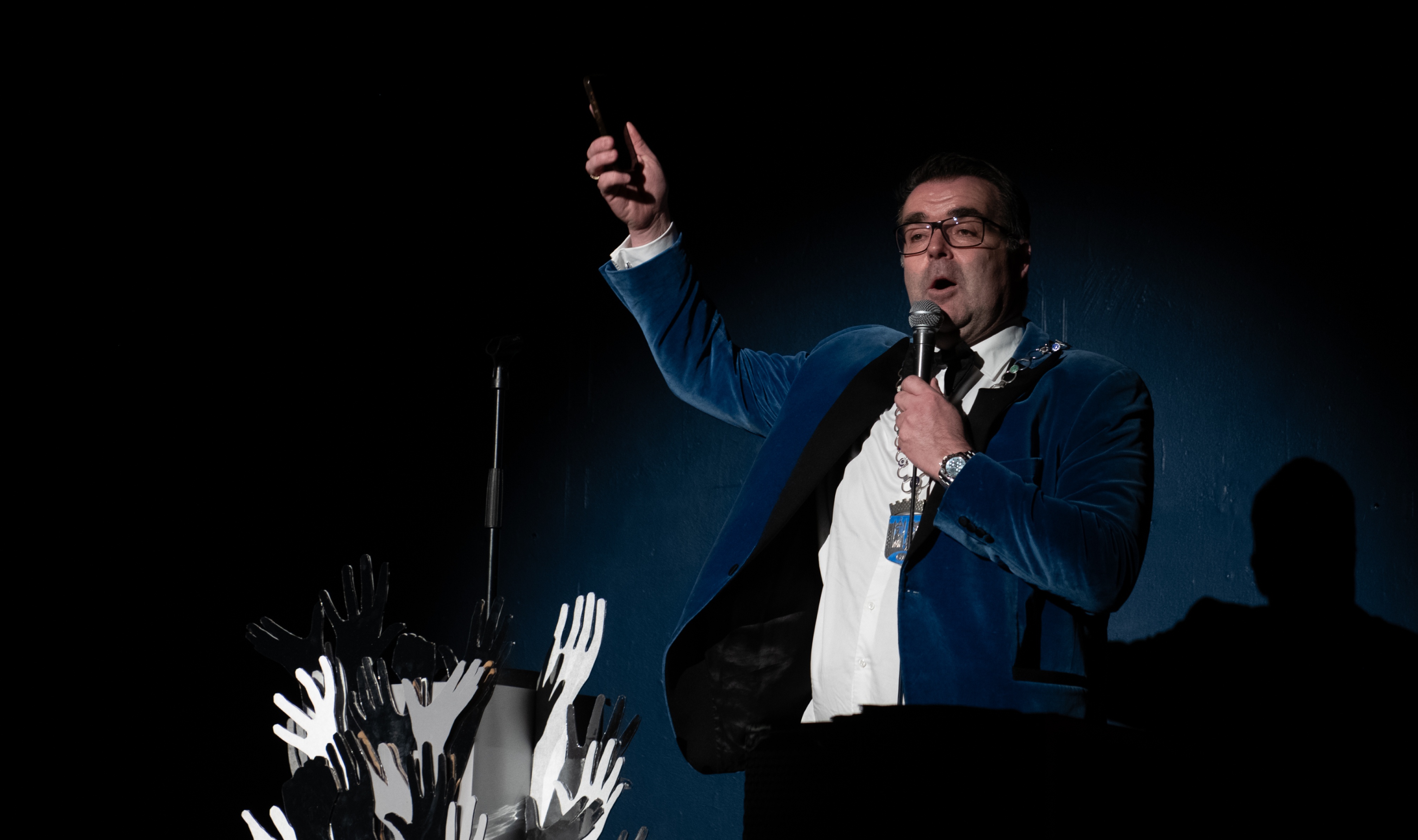
ISFiT 2025 Opening Cerimony with Mayor, Kent Ranum. Foto.samfundet.no
When the thing has a life of its own
There is something slightly absurd about spending two years building toward ten days. Jon has watched ISFiT grow from a handful of people and a loose collection of ideas into an organization of hundreds. Somewhere along the way, his job stopped being about knowing every detail and became more about knowing when to get out of the way.
“The tasks change all the time, so you certainly don’t get bored,” he says. It is an understated way to describe leading around 400 volunteers. By February, Jon expects there will be people doing brilliant work whom he has never even met, which is perhaps the clearest sign that the thing is working.
For someone who chose engineering because he liked the immediate satisfaction of seeing whether something worked, ISFiT is almost the opposite. There is no screen giving him the answer. You build it, hand large parts of it to other people, and trust that something good comes back. Sometimes, not for a while.
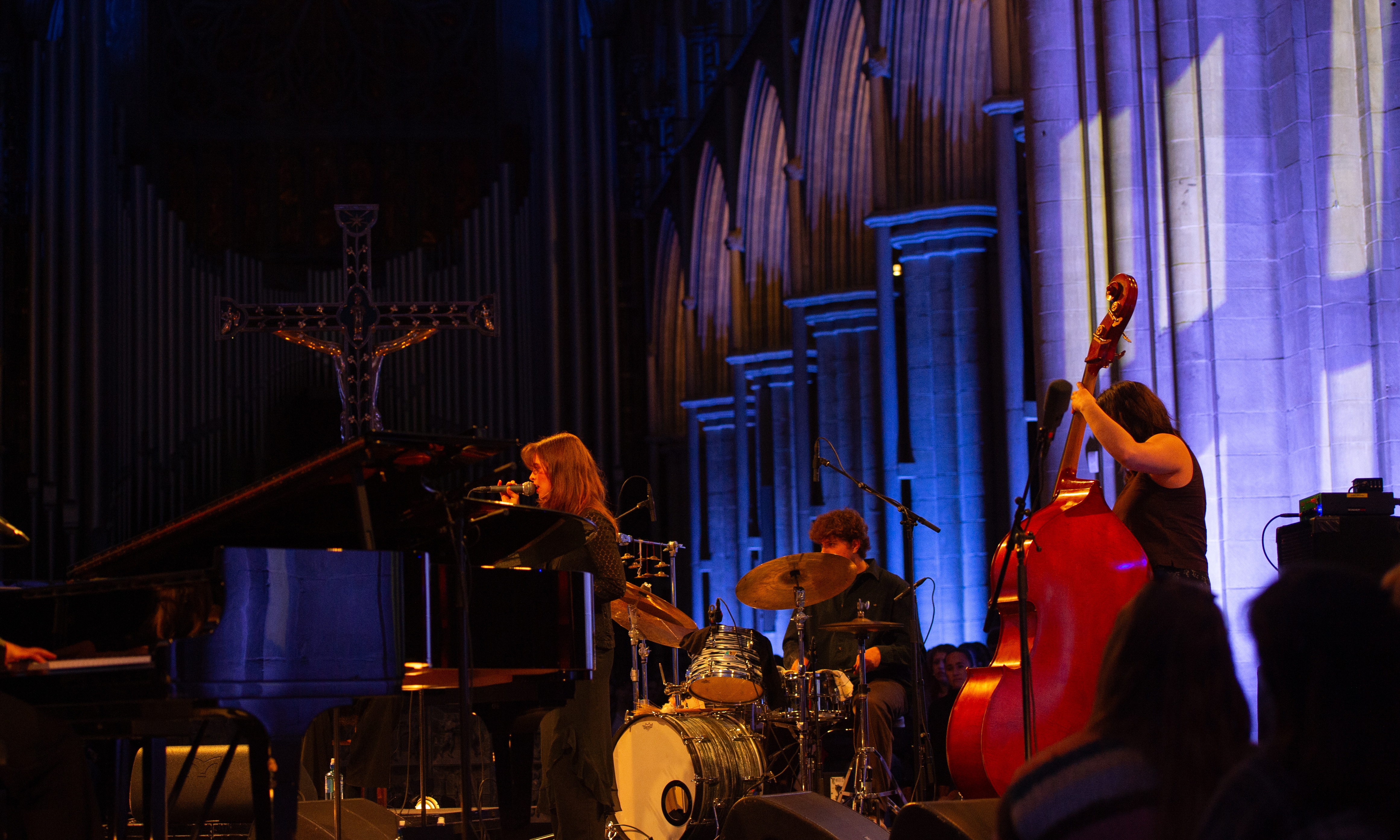
ISFiT 2025, ULD in Nidarosdomen. Foto.samfundet.no
The part that leaves with you
Jon is not under the impression that a ten-day student festival is going to fix the world. The idea is a little smaller, and probably more useful: put people who have grown up with very different versions of it in the same place, give them time, and let the conversation do some of the work.
That difference in perspective is part of what he values most. A problem that feels urgent from Trondheim can look entirely different from South Africa. Multiply that by more than 100 countries and some of the things you thought were obvious start to loosen around the edges.
“It’s hard to quantify the effect of dialogue,” Jon says. Which is inconvenient, perhaps, if you are looking for tidy proof. There is no easy metric for hearing something you had never considered before, meeting someone you would never otherwise have known, or carrying a slightly different version of the world home with you.
For all the conversation around Changing Winds and a future that feels less certain than it once did, what Jon hopes people leave with is remarkably simple. “Even though the world feels more uncertain and the optimism I felt growing up might have slowed down a bit, I hope they leave here with the determination and hope to keep fighting for a better future,” he says. “I hope they see that things aren’t quite as dark as they might seem right now.”
By February 2027, hundreds of people will have had a hand in building the festival Jon more or less stumbled into. Then the participants will arrive, spend ten days inside it, and scatter back across the world again. By then, the festival program is finished. The effect of it is another story.

Author's profile
McKenna Starck
Trondheim Brand Manager
McKenna works with the development of Trondheim’s city brand and Trondheim.com, with a focus on brand strategy, content and the overall digital experience.