5 November 2026 · 13 min read · By McKenna Starck
The Art of Cross-Pollination
Give Ola Høsflot Klæbo an idea and there's a good chance it won't stay in its original form for long. Music becomes art, art finds its way into film, and somewhere along the way, a few unexpected collaborations enter the picture.
- Arts & Culture
- Music
- Entrepreneurship
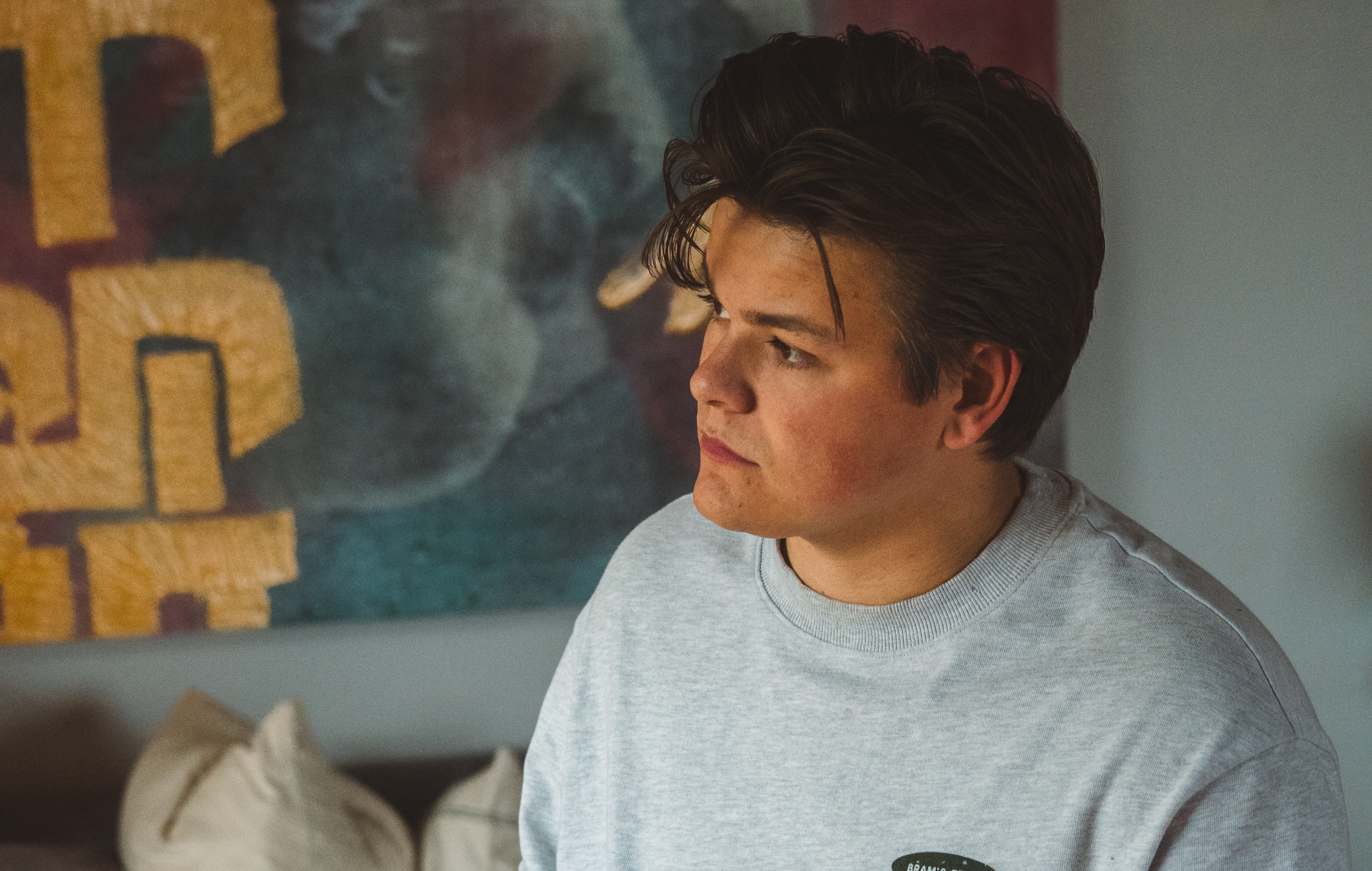
Ola Klæbo in his home, Trondheim. Photo: McKenna Starck
We're often told that getting really good at something means picking a lane and staying in it. Ola Høsflot Klæbo has never been particularly concerned with fitting into a neatly prescribed box.
At 25, he's already made quite a lot out of following his curiosity. Music, filmmaking and painting have a habit of crossing paths, borrowing from one another and occasionally turning into something else entirely. A composition becomes a film score. A painting ends up on a record sleeve. A shared obsession with house music becomes a reason to throw a party, then several more. There's a certain logic to it all, even if it doesn't look much like a conventional career path. "When I'm not inspired by one thing, I move to the next," he explains. "I feel like I've found a way of staying inspired in this kind of circular motion."
And he has quite a bit to show for it. At seventeen, he found himself performing a DJ set ahead of Post Malone, playing to a crowd of 18,000, an experience that eventually led to a record deal with Sony Music Norway. Years later, he'd be co-directing KLÆBO, a feature film that gave him the chance to compose his own cinematic score. Somewhere along the way came a successful painting exhibition, a creative collective and a house music event series that developed a following of its own.
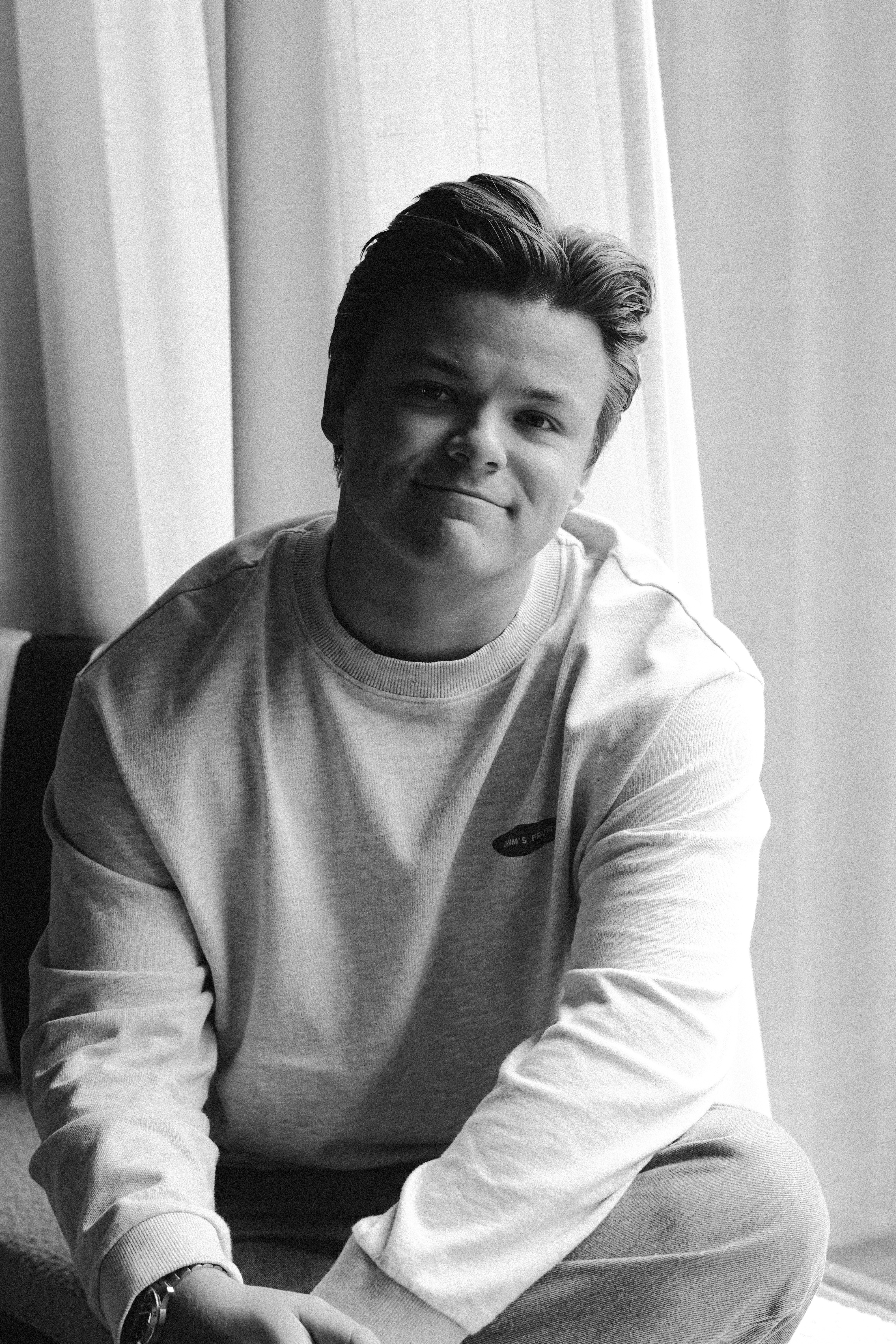
Ola in his home. Photo: McKenna Starck
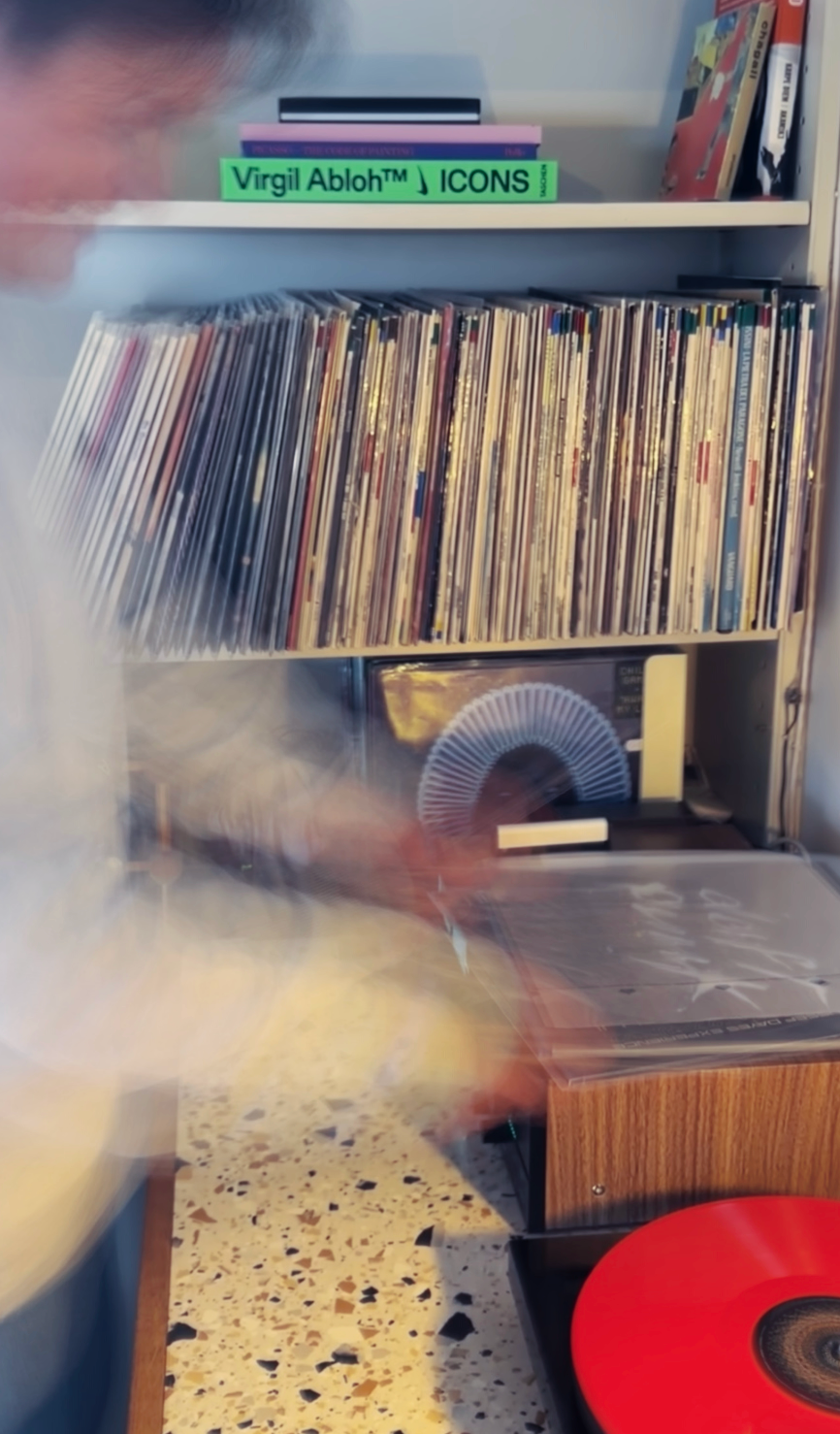
Ola and his record player. Photo: McKenna Starck
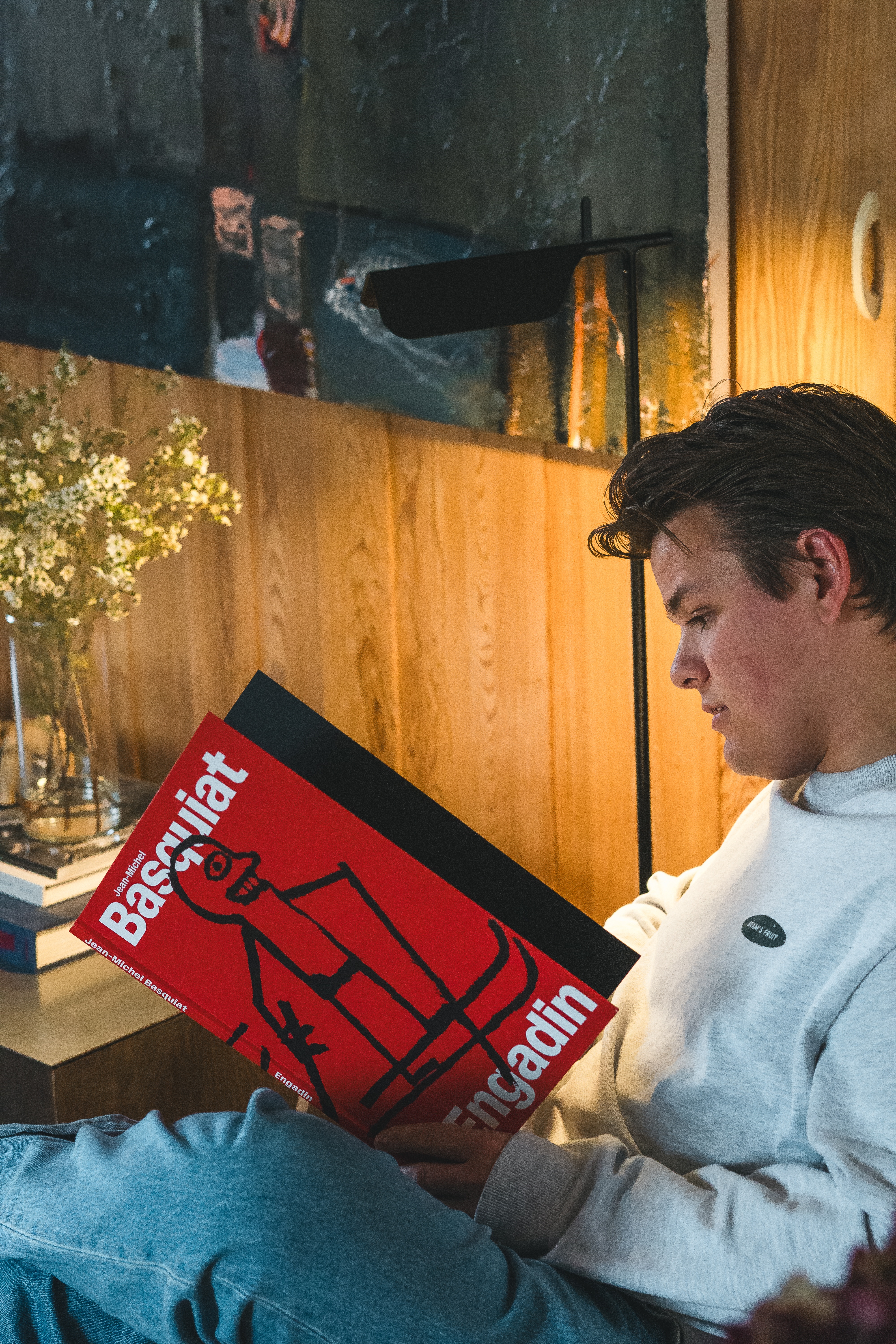
Ola in his home. Photo: McKenna Starck
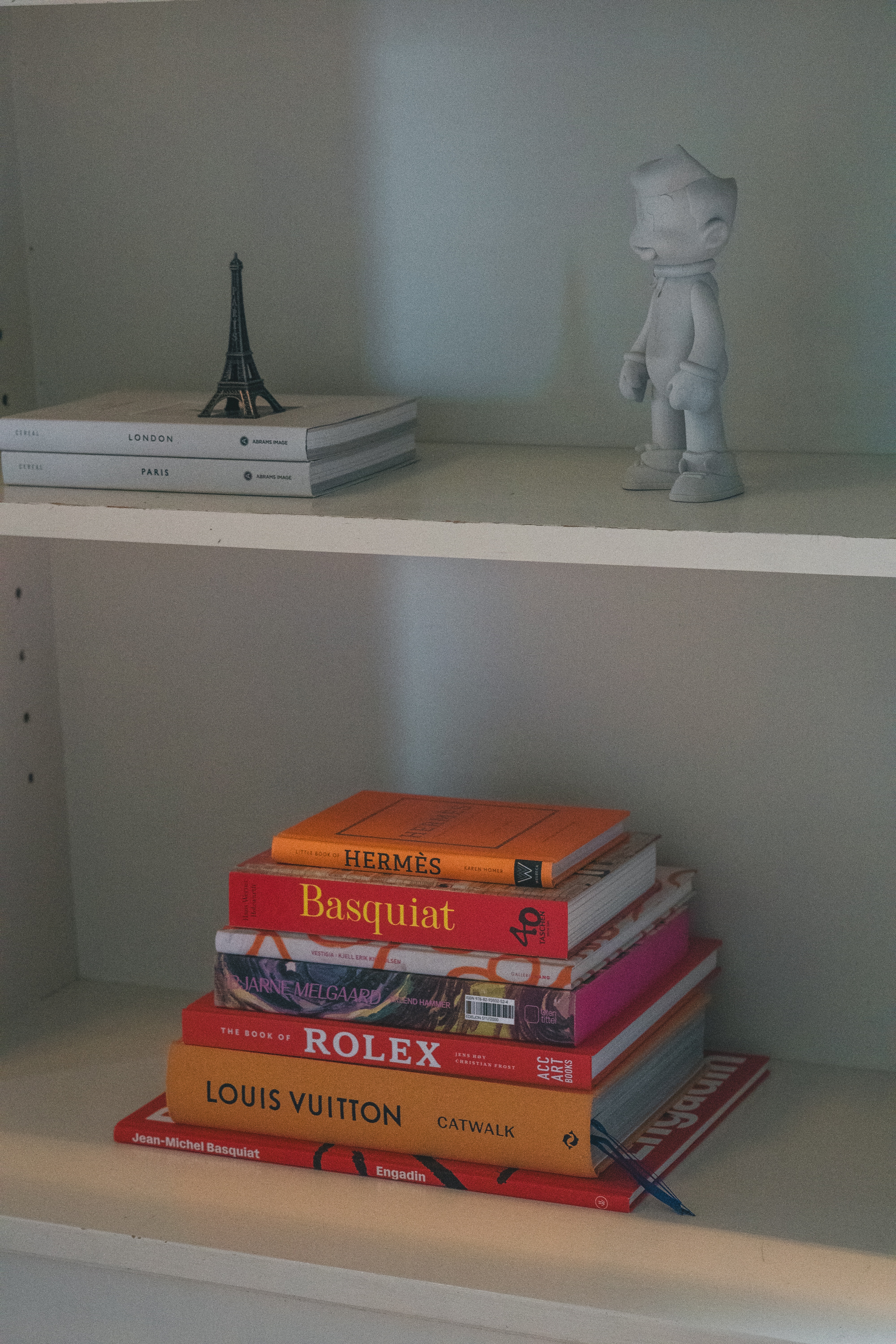
Ola's home. Photo: McKenna Starck
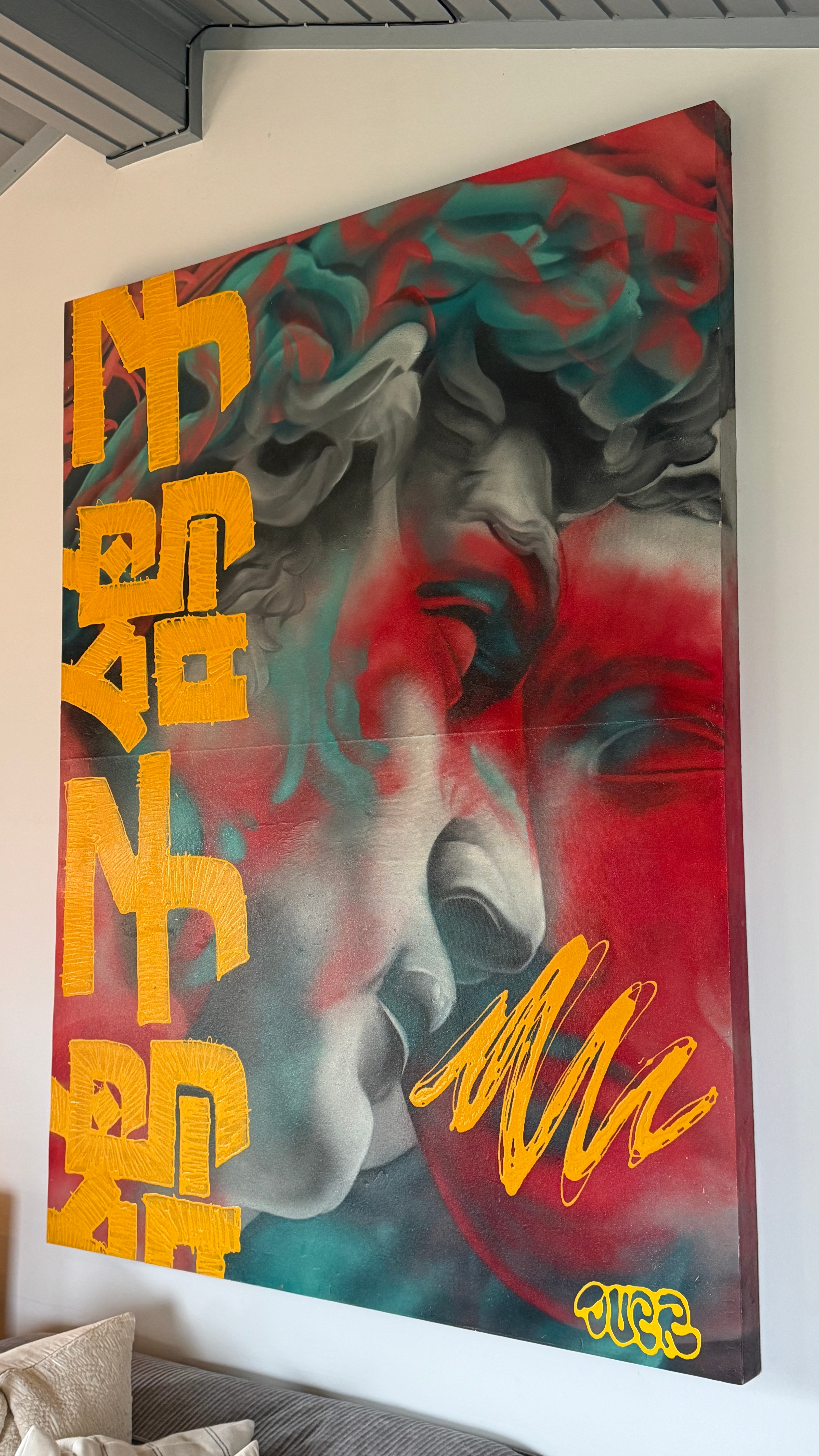
Artwork in Ola's home. Photo: McKenna Starck
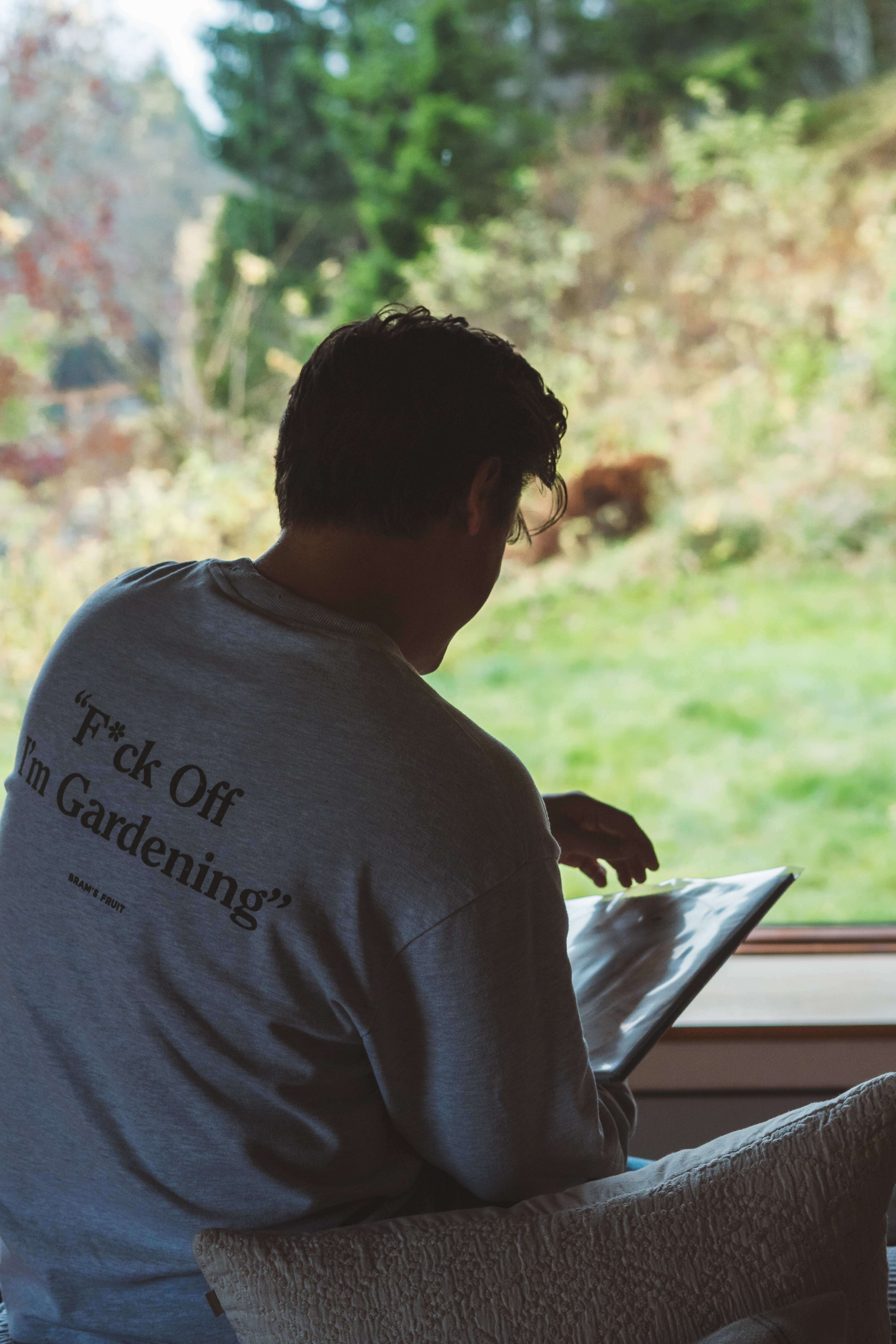
Ola in his home. Photo: McKenna Starck
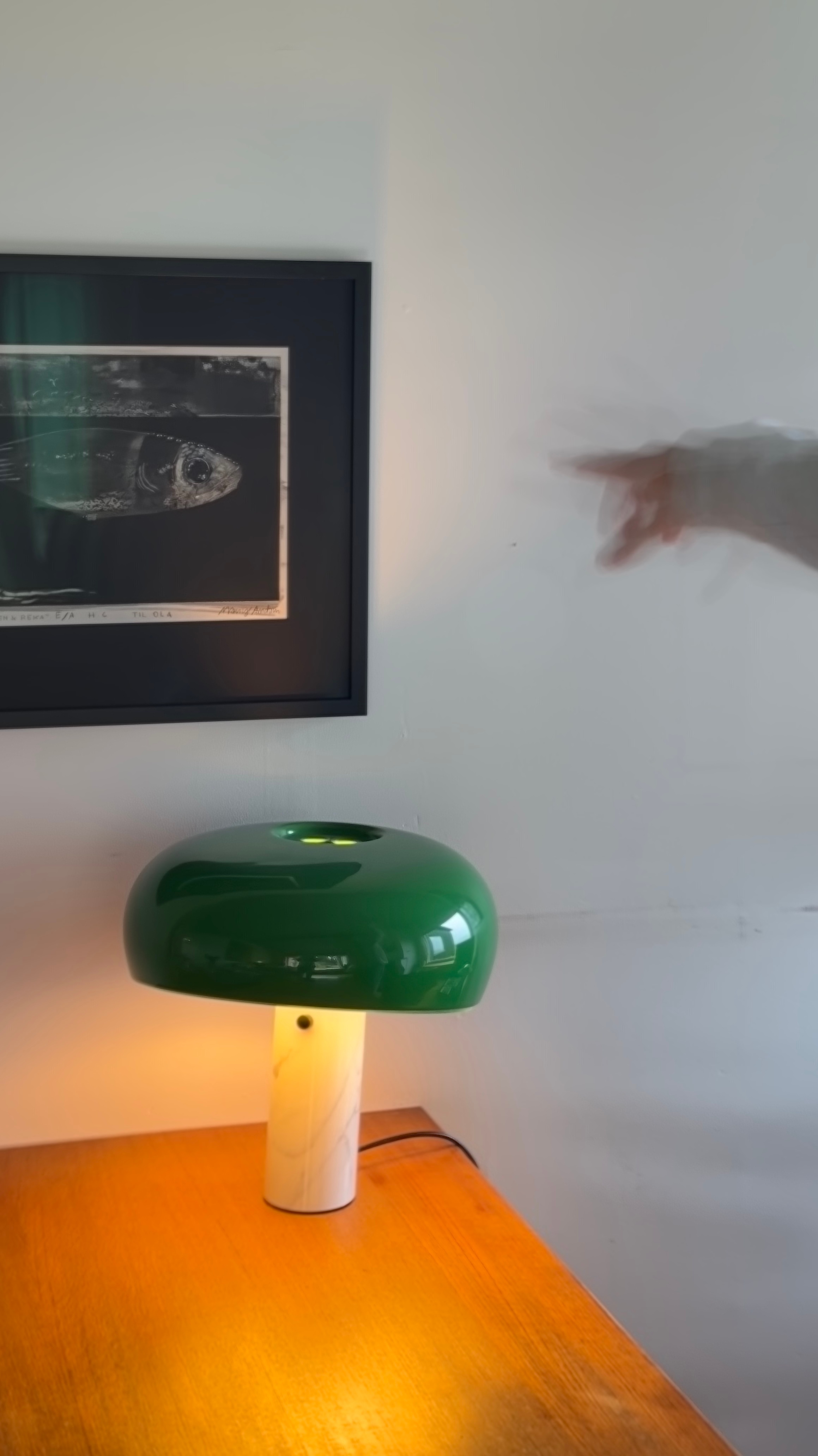
Artwork in Ola's home. Photo: McKenna Starck
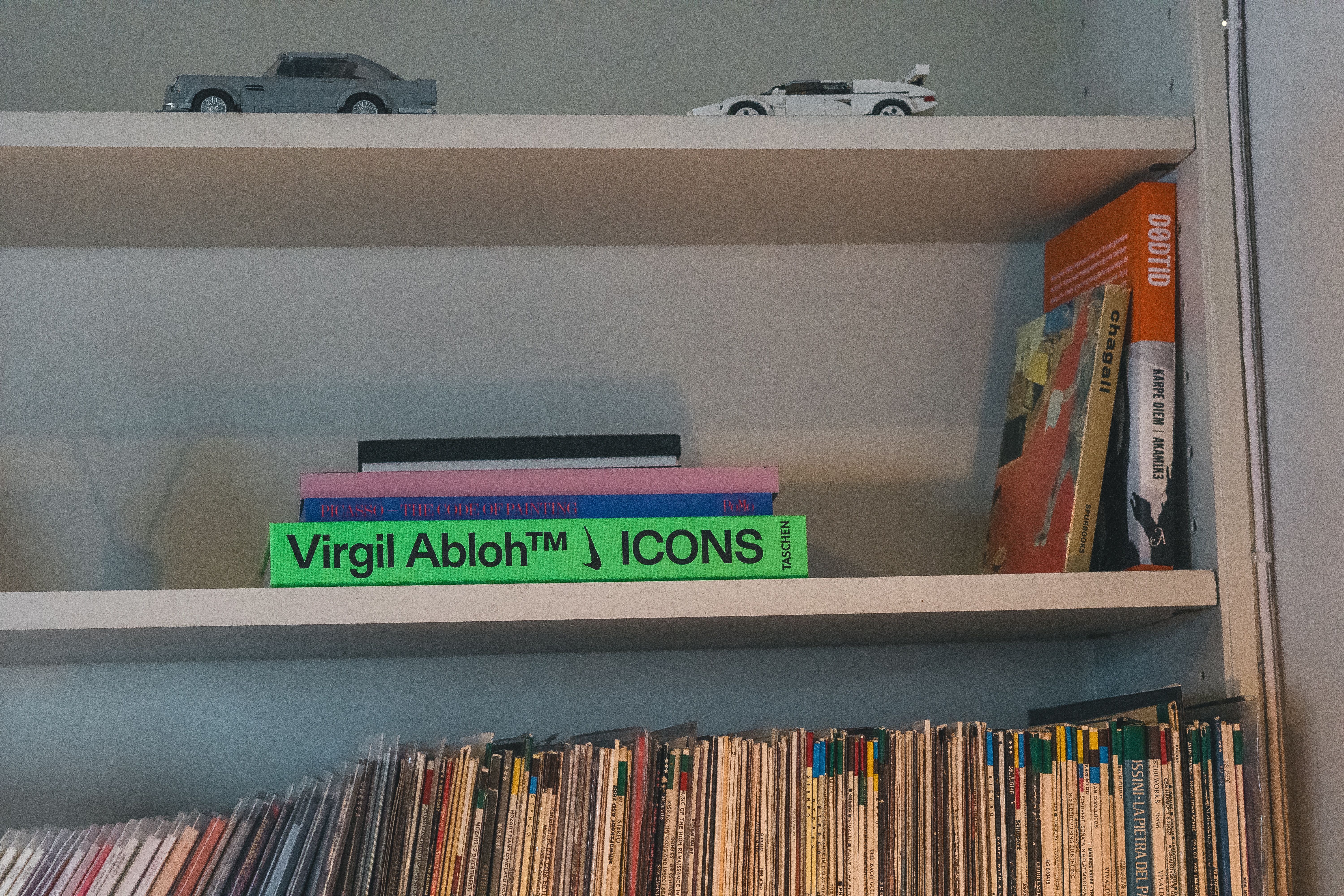
Ola's record collection. Photo: McKenna Starck
Tuned to the Family Frequency
Ola Klæbo has the perfect neighbors. The forest of Bymarka is practically an extension of his backyard, with local wildlife making regular cameos. And should he ever run out of sugar, his brother Johannes is only a few steps and a door knock away. Trondheim and the fjord provide a rather spectacular backdrop. Inside, he and his girlfriend have curated a home filled with original artwork, vinyl records and collected curiosities. The record player is his latest muse, while downstairs, his music and painting studios provide ample room for whatever catches his imagination next.
Growing up in Byåsen, Ola's childhood was a lively mix of family, friends and whatever happened to catch his interest. Weekends often meant disappearing into Bymarka for outdoor adventures, campfires and a healthy dose of sporting activities thanks to his mother's athletic side of the family. His father, a former orchestral violinist with Trondheimsolistene, brought a different influence to the mix, making sure music had just as much room to play. "My dad used to call himself the indoor man in the family," Ola remembers. "I was really happy about that because I felt the same way."
At six, Ola began learning violin. Five years later, his father passed down his old computer and encouraged him to try making music digitally. Neither knew much about music production, but that hardly mattered. They spent evenings figuring it out together, making trips to the music shop for speakers and equipment. Beyond those early creative experiences, Ola speaks with particular affection about the closeness his parents cultivated within the family.
"I grew up with two siblings, which are my best friends, and we're still best friends now. We've always been very close, and family has always been very important. I really admire my mum and dad for keeping it that way, so that when we grew up, we also had that same bond, and we wanted to share their love for the family with each other."
His childhood friendships were another outlet for creative experiments. Ola and his friends produced homemade Harry Potter adventures, complete with ambitious visual effects and original music. His friend Sondre Gråberg was often behind the camera, while Ola took on the acting and eventually began composing for their films. Some of those friendships would eventually become professional collaborations.
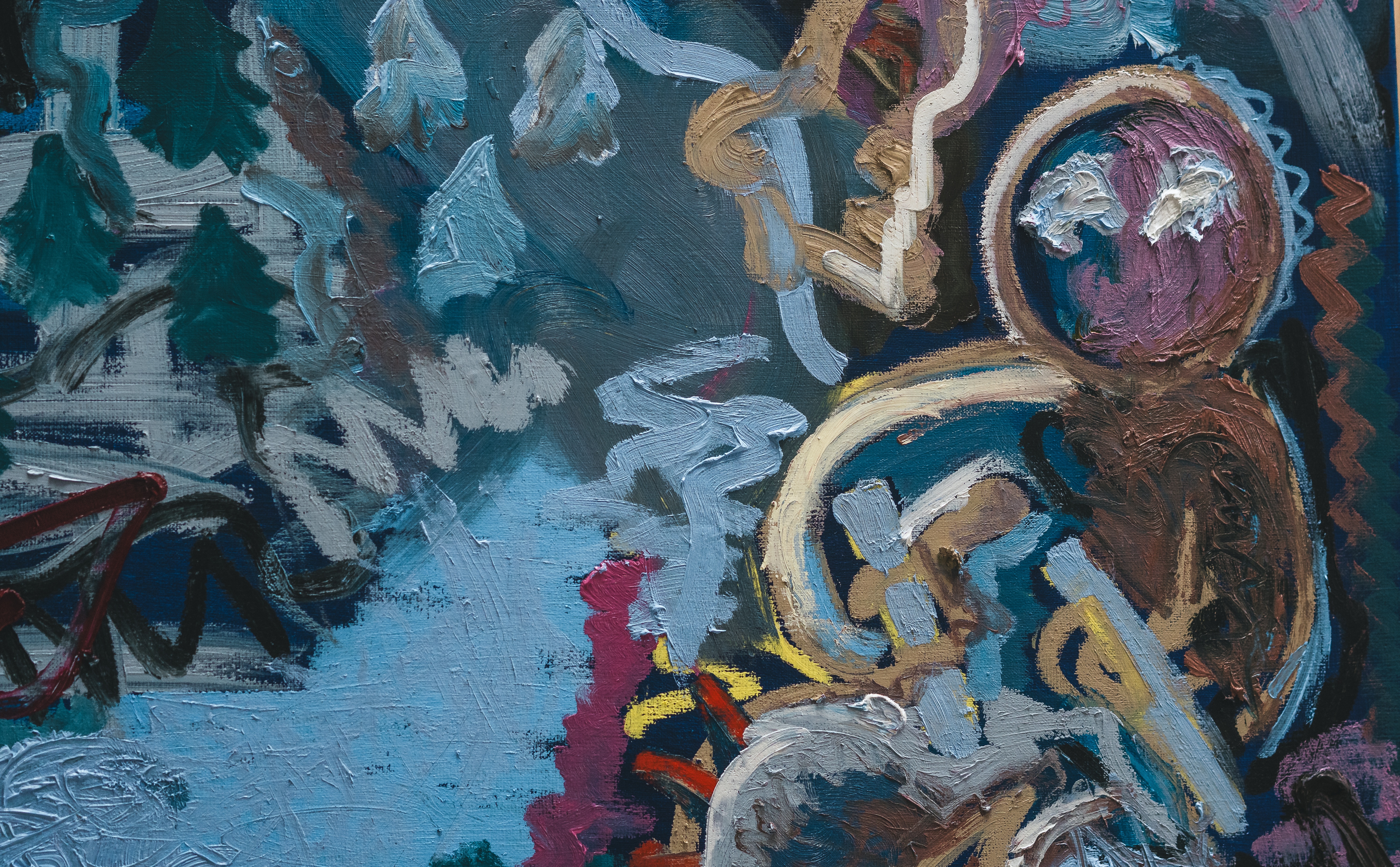
Detail from one of Ola's paintings. Photo: McKenna Starck
No Fixed Genre
At seventeen, Ola found himself performing in front of an audience considerably larger than anything he'd encountered in his bedroom studio. Through an opportunity connected to Coca-Cola and Findings Festival in Oslo, he landed a DJ set on the main stage ahead of Post Malone, with approximately 18,000 people in the crowd. The performance caught the attention of Sony Music Norway, eventually leading to a record agreement and several years of releasing music under the name OKEY. "I was going from being a child to becoming an adult, and the music I liked changed a lot during that period. I think it was probably a bit of a mess for them because I was going in all these different directions."
House music became central to his sound, but Ola's interests continued to evolve. The expectation that successive releases should follow a recognizable musical direction didn't always align with his appetite for experimentation. After four releases together, Ola and Sony parted ways following their final release in 2023.
By then, music had already led Ola into another creative territory: painting. He'd started creating original artworks for his music releases, and when people began asking to buy the paintings, the idea of an exhibition took shape. With support from Kjeldsberg, he held his first exhibition at Lager 11, where eighteen of his twenty paintings sold. Not bad for a debut.
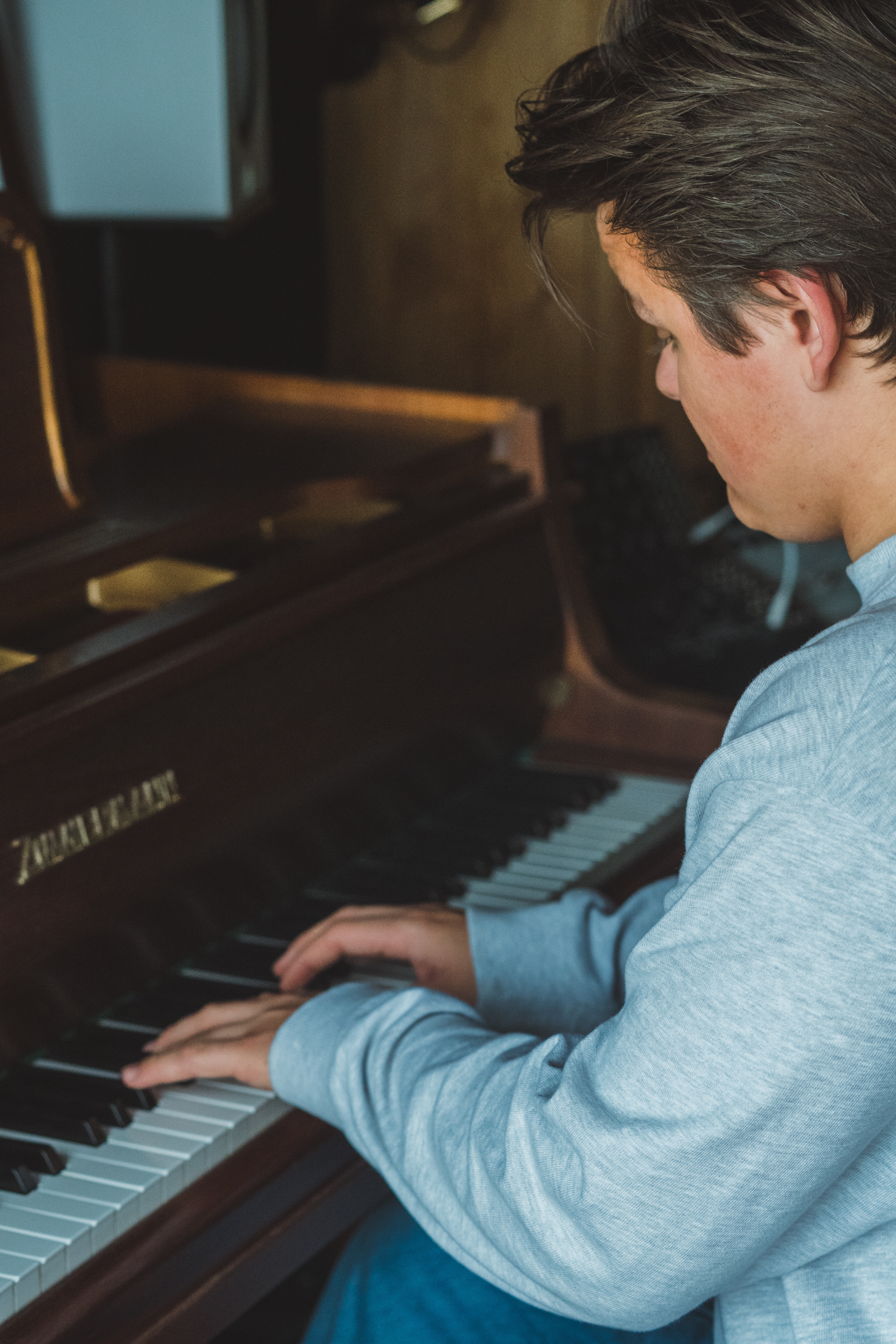
Ola in his music studio. Photo: McKenna Starck
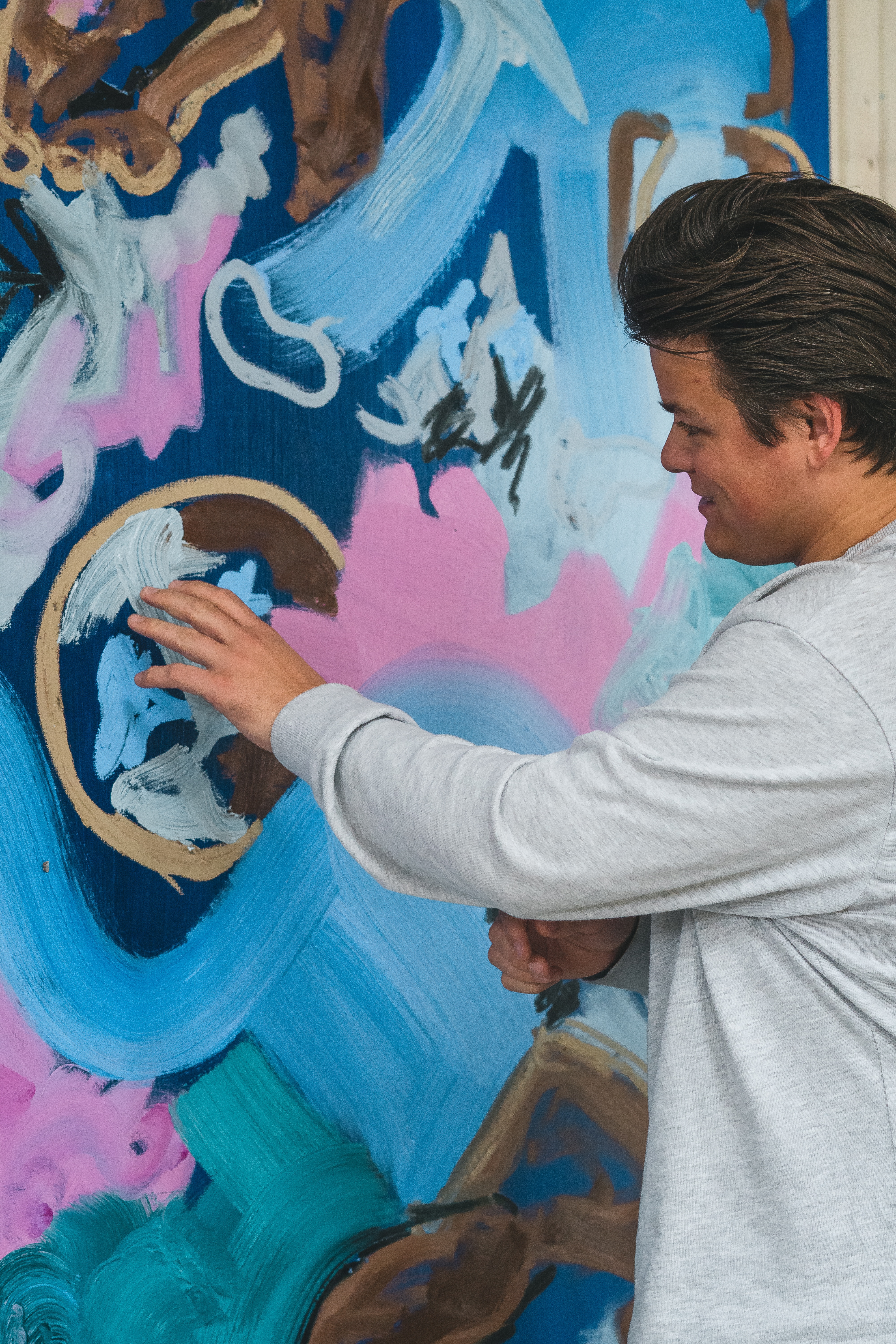
Ola in his art studio. Photo: McKenna Starck
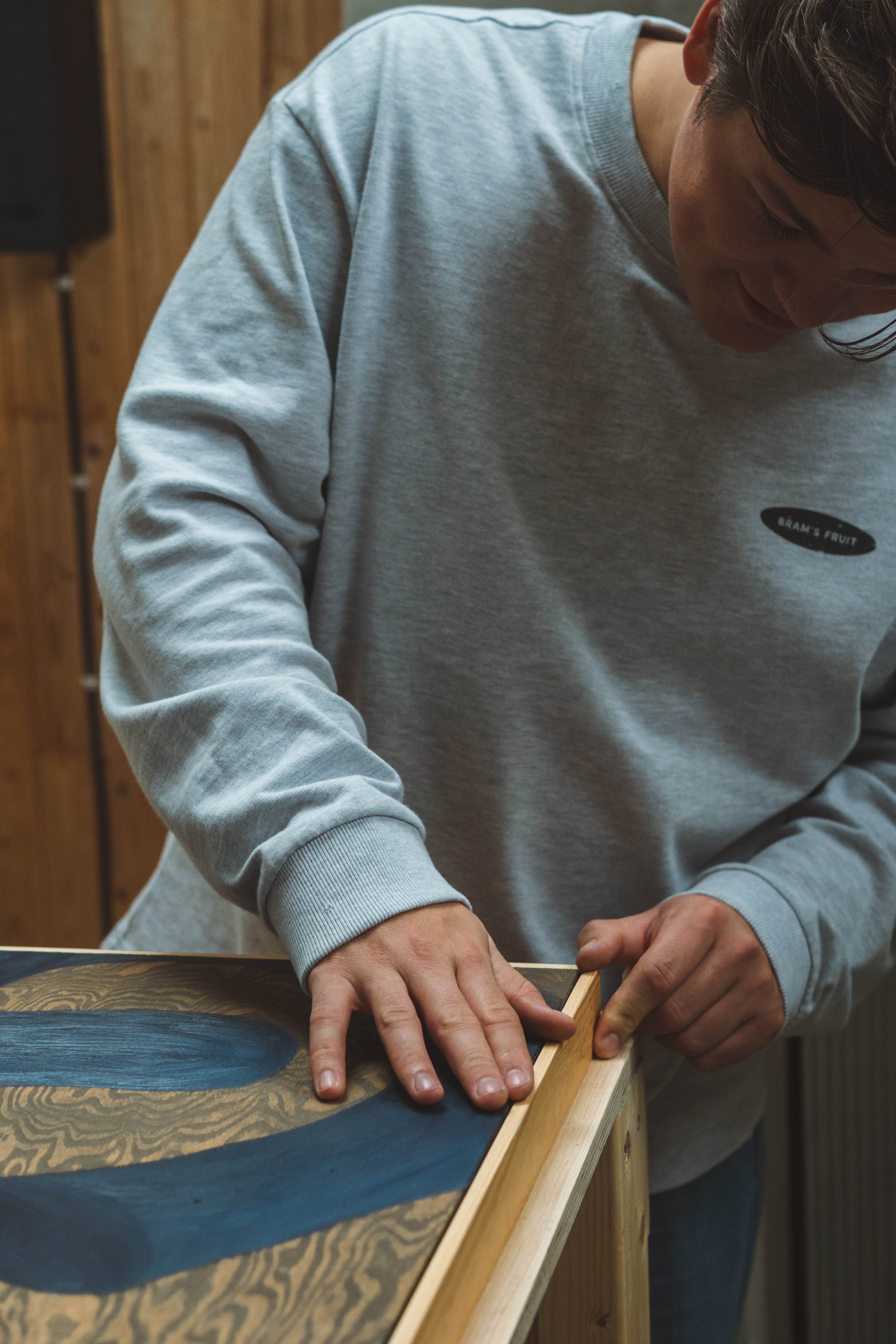
Ola in his art studio. Photo: McKenna Starck
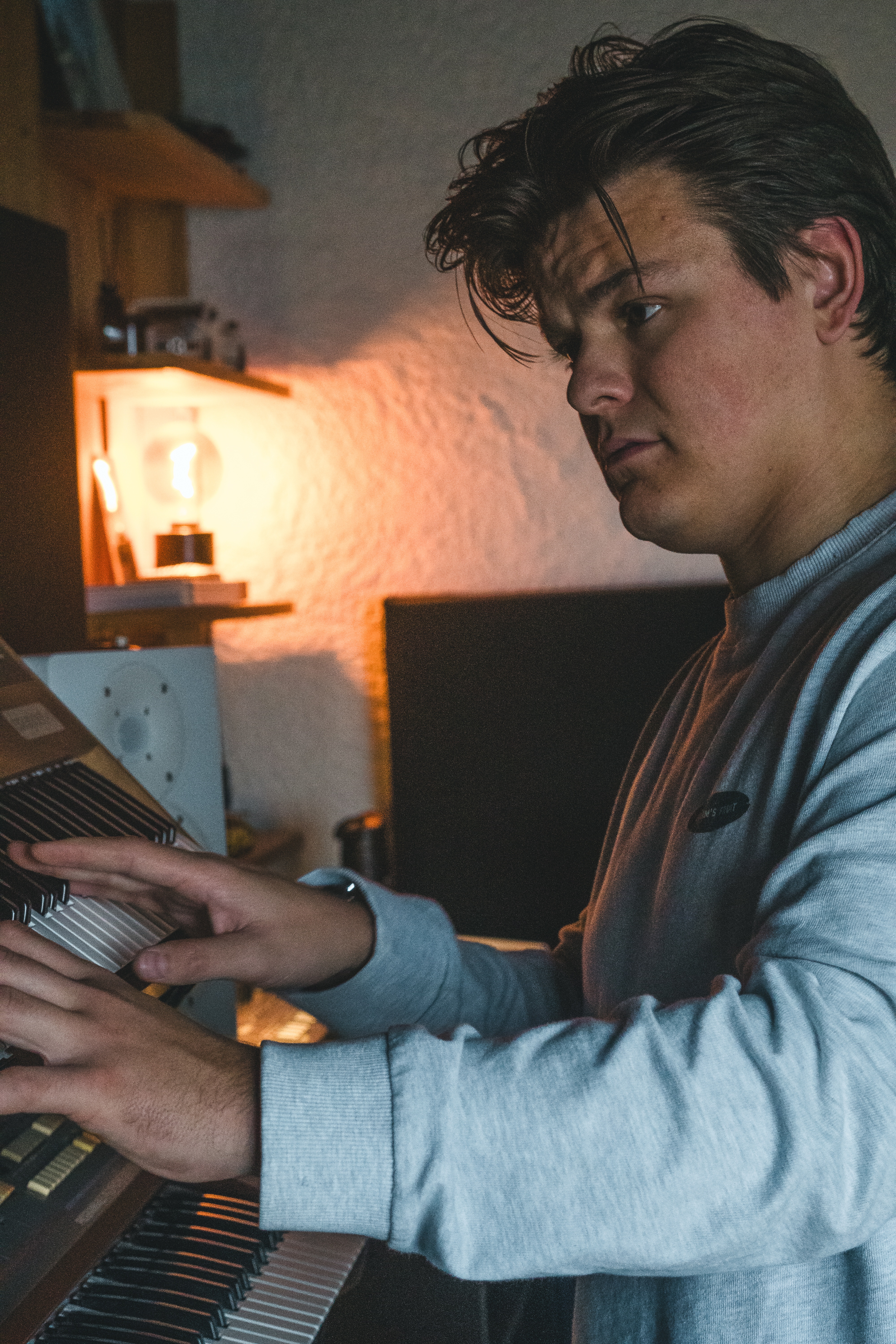
Ola in his music studio. Photo: McKenna Starck
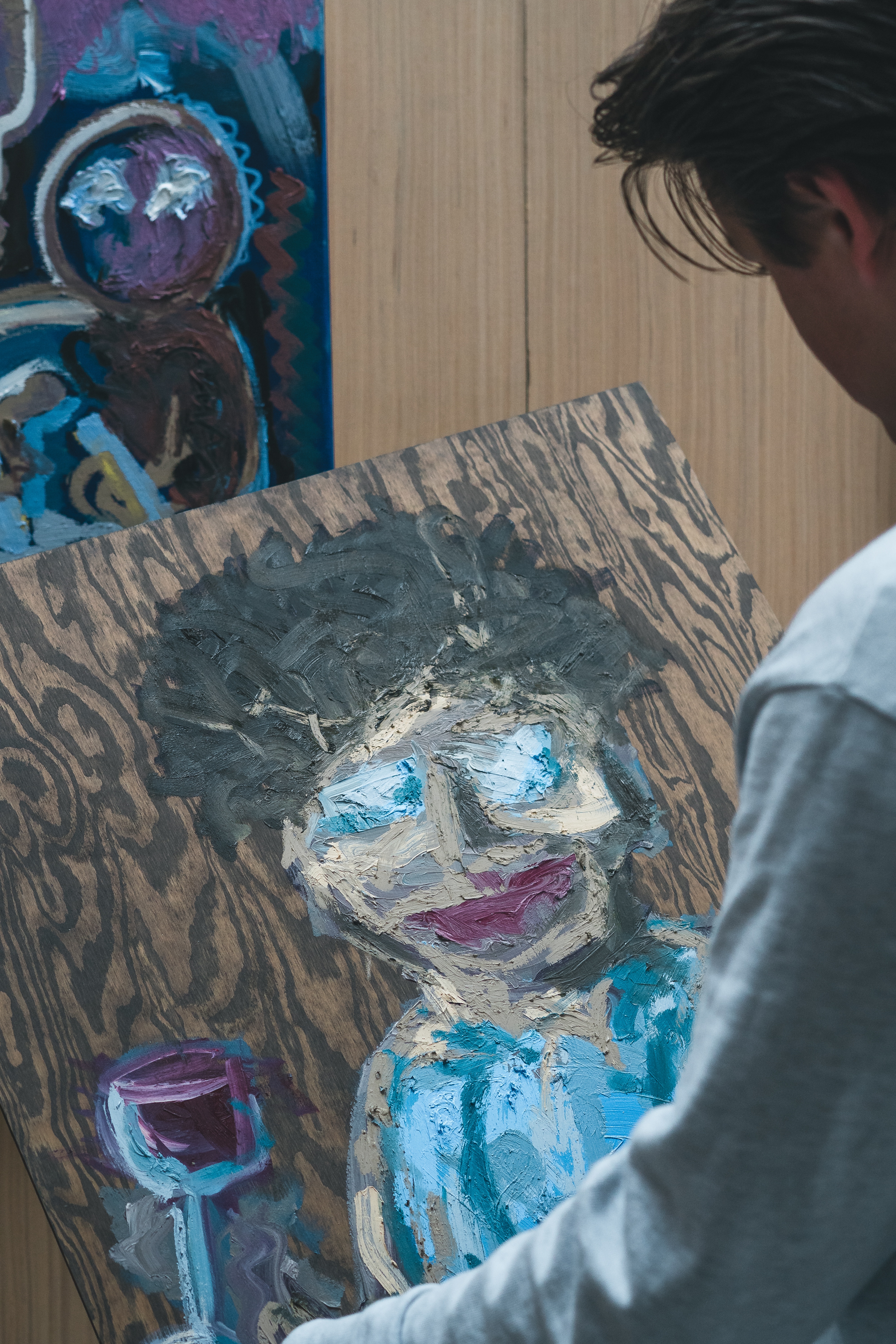
Ola in his art studio. Photo: McKenna Starck
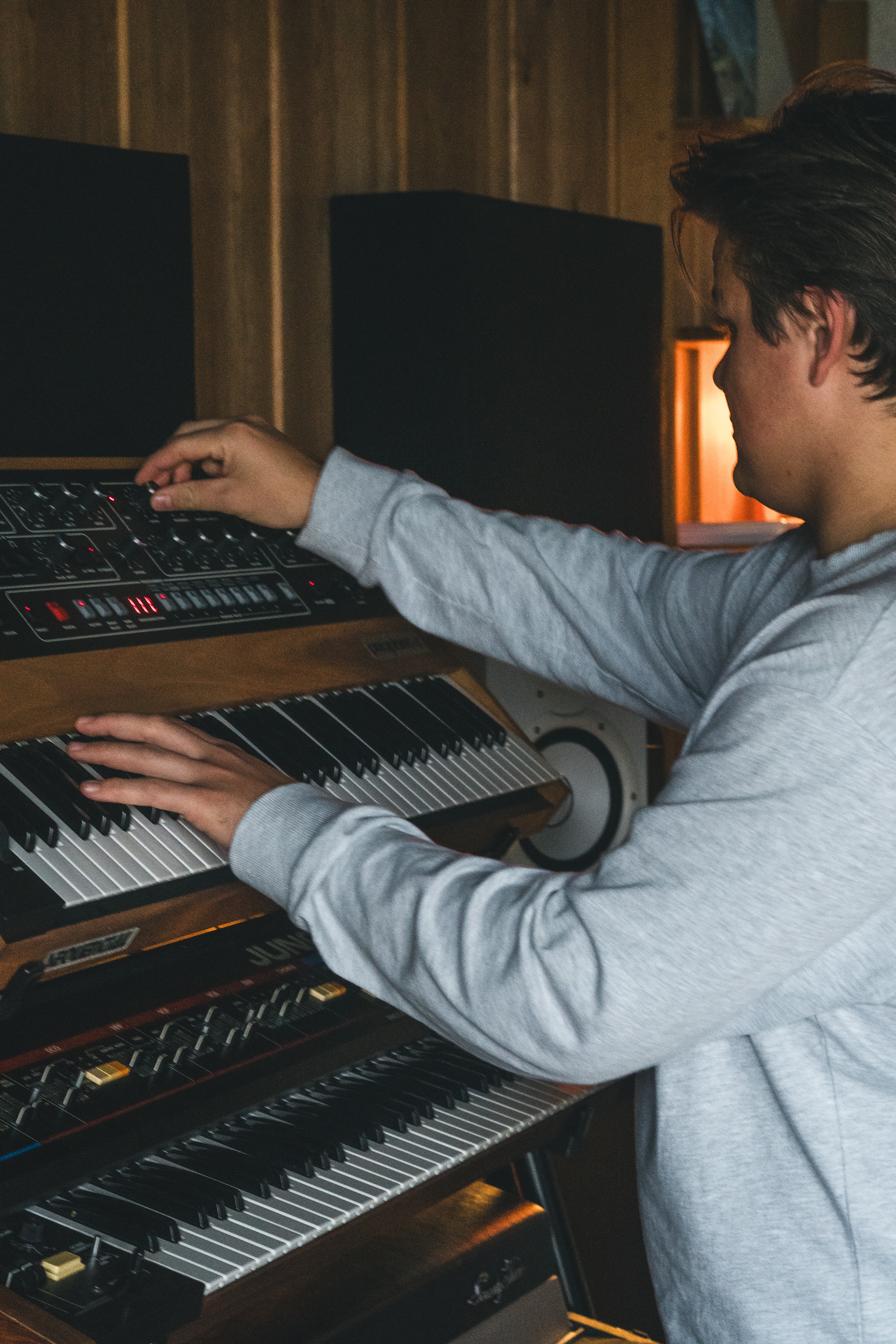
Ola in his music studio. Photo: McKenna Starck
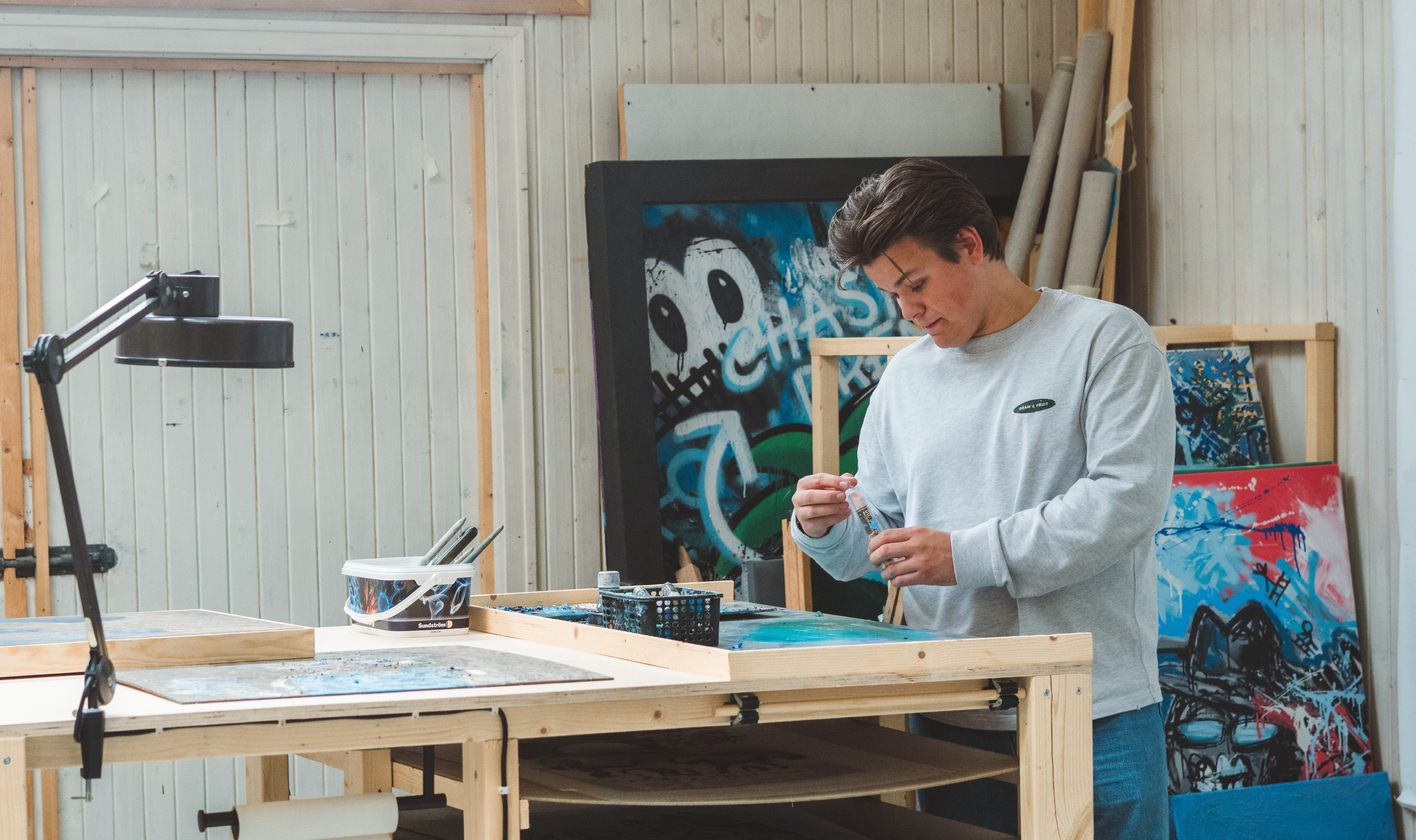
Ola in his art studio. Photo: McKenna Starck
The Creative Playground
Around the same period, Ola and his friend Philip Mittet wanted somewhere to work, experiment and surround themselves with other creative minds. Somewhere musicians, filmmakers and artists could cross paths, exchange ideas and make things together. An opportunity emerged in Sluppen, where Kjeldsberg owned an empty industrial building scheduled for eventual demolition. With the support of Morten Forbord, they were able to take over the space at an affordable rent and transform it into something of their own.
They scavenged materials from neighboring buildings, assembled meeting rooms from discarded walls and built a recording studio using elements of an old stage. Four friends eventually shared the space, including Stian Engh, who would later co-direct KLÆBO with Ola. But the collective soon attracted a much wider circle of creative people.
"It was so cheap for us that we just shared the rent. We wanted to make a community where people could come by."
There were recording sessions, film projects, impromptu screenings and plenty of afternoons that took on a life of their own. With recording equipment, cameras, editing stations and the occasional skateboard, the space became a creative playground where ideas and people were constantly crossing paths. The only catch? A place this good for dreaming up projects wasn't always ideal for finishing them. Between friends dropping by, four people trying to edit entirely different films in the same room, meeting deadlines became a challenge of its own.
The group ultimately moved into more practical working environments. The collective itself ended, but the friendships and collaborations it helped cultivate continued.
From Vlogs to Silver Screen
Ola's interest in filmmaking would eventually develop into a venture of its own, one that brought him together professionally with his older brother, Olympic champion and cross-country skier Johannes Høsflot Klæbo.
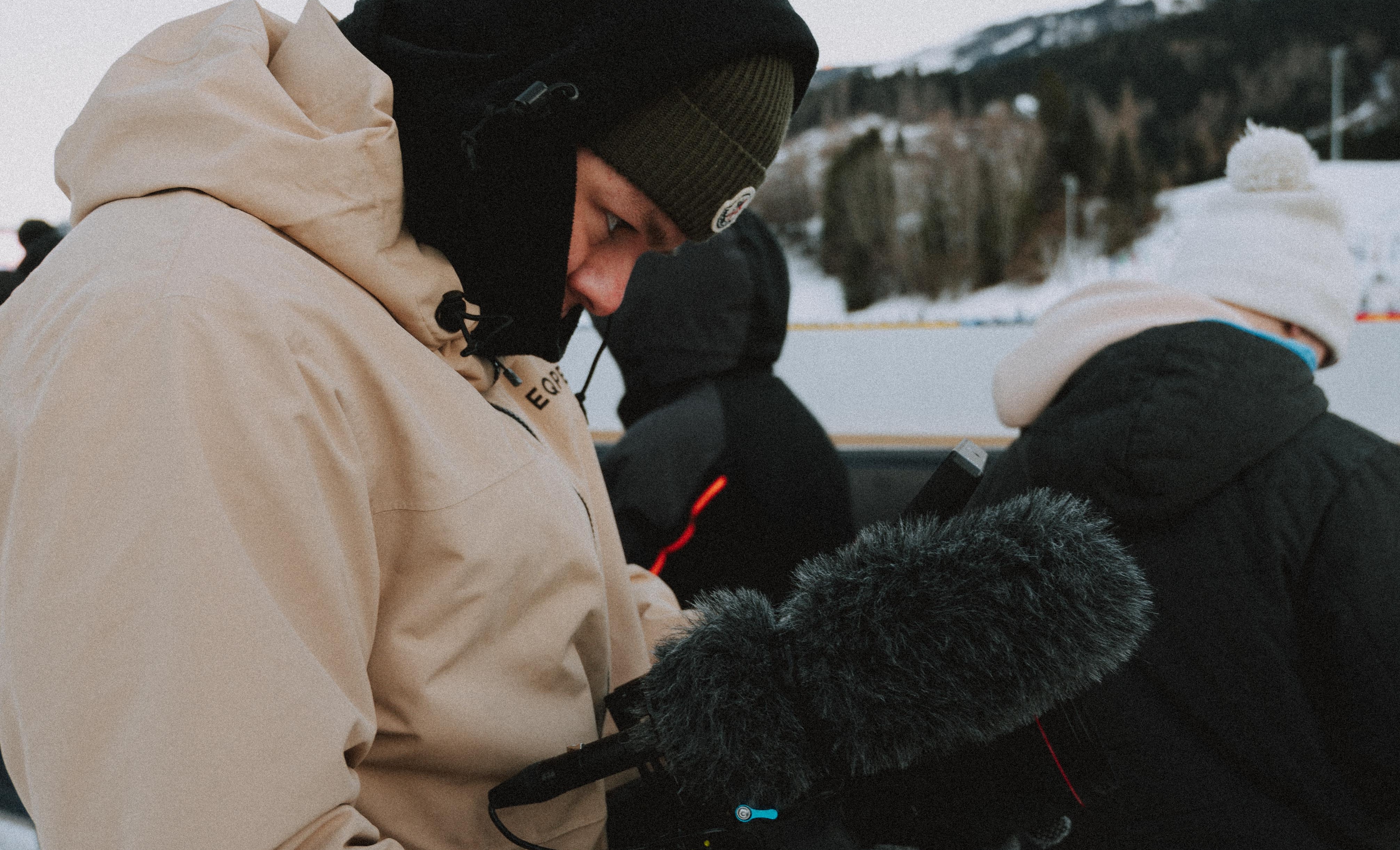
During one of Johannes's early World Cup weekends, a bout of flu sent him home ahead of schedule. Back in Trondheim, he asked Ola if he'd help him film some vlogs for YouTube. Ola agreed, and the brothers began experimenting with a camera. What started as a casual project soon became a regular production, eventually attracting commercial opportunities with Johannes's sponsors. The brothers went on to establish Klæbo Media together, turning Ola's growing interest in filmmaking into a business.
By September 2024, they were discussing something much bigger. Johannes was preparing for the 2025 World Ski Championships in Trondheim, the home championship he'd dreamed of competing in since childhood. Ola had witnessed the work behind that ambition firsthand and saw an opportunity to tell his brother's story from an unusually intimate perspective. Ola also had an ambition of his own: to make a feature film and compose an original soundtrack that could be experienced in a cinema.
Within days, Ola and his friend and colleague Stian Engh were in Italy with cameras rolling. The next six months were spent following Johannes through the intense preparations for one of the biggest seasons of his career, capturing the moments both on and off the ski tracks. It was an all-consuming undertaking, with Ola putting every other project on hold.
Having a front-row seat to his brother's life gave Ola a perspective few filmmakers could offer. It also raised a few eyebrows among journalists, who questioned whether a film made by Johannes's own brother could really be considered an objective documentary.
"My intention was never really to call it a documentary. For me, it was just a film about him, documenting his life and telling the story from our perspective."
Still, the team recognized the value of an outside perspective. In a rather serendipitous turn of events, Johannes found himself seated beside an Oscar-winning documentary filmmaker at an event at the Royal Palace. The encounter eventually led Ola to Antipode Films, a Norwegian production company whose experience lay in documentaries exploring politics, war and complex social issues. Sports, interestingly, was entirely new territory for them. For Ola and Stian, who knew the story almost too well by this point, Antipode brought fresh eyes, different instincts and the experience to see what might resonate with an audience who didn't know Johannes personally.
Then came the small matter of actually finishing it. Having approached distributors in March 2025 with hopes of a November release, the team had set themselves an ambitious timeline. Between securing financing, editing days that stretched to eighteen hours and the small task of turning months of footage into a feature film, the production had all but taken over Ola's year. "I'm really glad we didn't know what we were getting ourselves into," he admits. "If we'd known, we probably never would have started."
Yet somewhere amid the demanding schedule was the part Ola had been dreaming of for years: composing an original soundtrack for the big screen. Rather than outsourcing the soundtrack, Ola brought together a group of musicians, vocalists and producers, many from Trondheim and the surrounding region, whose talent he'd come to know through years of smaller collaborations. The result was nearly an hour of original music, moving between atmospheric electronic compositions and sweeping orchestral arrangements. Recording sessions took place in Trondheim and at Ocean Sound Recordings on Giske, near Ålesund, where the team spent several days bringing the score to life.
"We didn't have the budget for a huge orchestra, so we had four people who had to play the whole orchestra," Ola recalls.
Through layers of performances and some inventive arranging, the small ensemble managed to produce a sound considerably larger than its numbers suggested. For Ola, the soundtrack was a particular highlight, bringing together musicians he admired and two of his greatest creative passions, music and film, on a scale he'd long dreamed of.
In November 2025, KLÆBO made its big-screen debut at Colosseum in Oslo, with an audience of around 950 people. Among them was Johannes, who had yet to see a single frame of the finished film. The brothers had agreed he'd experience it for the first time at the premiere, along with everyone else. For Ola, the nerves were understandably running high. After months spent behind the camera and in the editing room, there was something surreal about seeing it all unfold on one of Norway's largest cinema screens, with his brother watching his own story and Ola's original score filling the theatre.
By the time the premieres wrapped, Ola was more than ready for some downtime. He returned to smaller commercial projects, spent time painting and got back to making music, enjoying the luxury of creating a slower pace after months of relentless deadlines. Another feature film is certainly on his radar. Next time, though, he'd prefer a slightly less punishing schedule.
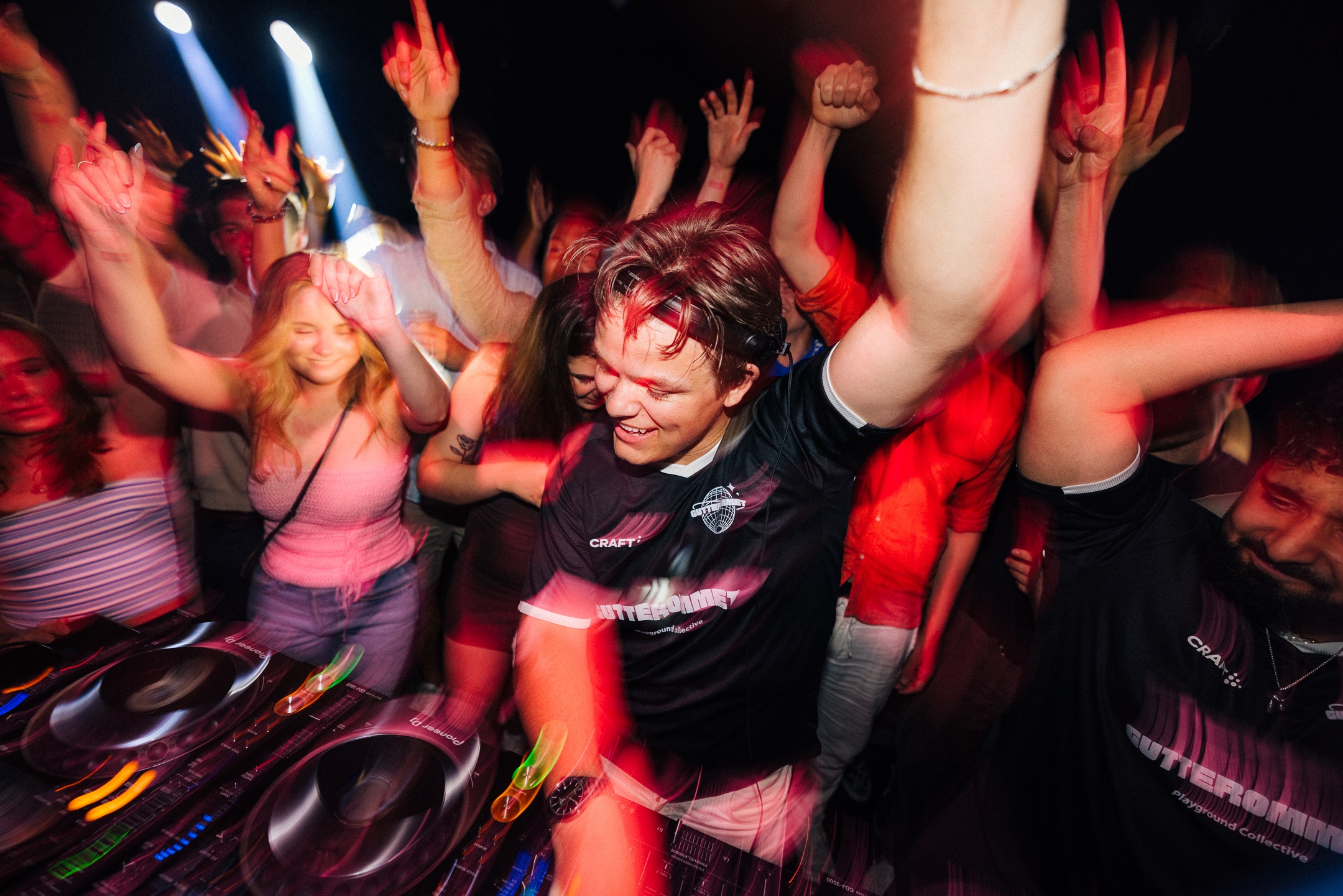
DJ OKEY, Gutterommet event. Photo:
The Boiler Room Effect
Before KLÆBO took over his calendar, Ola and fellow DJ Oscar Otterlei had another idea they couldn't quite leave alone. They loved house music, but the experience they wanted didn't really exist in Trondheim. So they decided to create it themselves. Gutterommet took its cues from Boiler Room, the UK-born concept that places DJs in the middle of the crowd, blurring the line between performer and audience. The ambition was to build something with its own identity, where the music, atmosphere and people were all part of the experience. Carefully selected house tracks, no predictable top 40's club hits, and a sound system that meant business.
Both had grown up making music in their bedrooms, which explains the name. Ola got to work on the visual identity, designing around forty posters, while the pair paid equal attention to the sound, lighting and custom remixes made exclusively for their performances. Gutterommet made its debut with around fifty friends sardined into a small room at K-U-K. A tight fit, but exactly the atmosphere they'd imagined. Energized by the response, they took the concept to Ladekaia and later Dokkhuset, eventually bringing in DJs from Oslo and Copenhagen. Profits were hardly the priority. If ticket sales covered the production costs, they considered it a success.
"We wanted to start a community."
- Ola Klæbo
As Gutterommet grew, so did the guest lineups and production ambitions. But somewhere between the bigger venues and visiting DJs, they discovered that more wasn't necessarily better. One of Ola's favorite events remains among their earliest, when the crowd was smaller, the setup simpler and the connection with the people in the room was hard to beat. “One of the best nights was actually one of our first. It was just us playing, and we had that connection with the people in the room.”
Gutterommet went on hiatus when Ola threw himself into KLÆBO, but he and Oscar have since been entertaining the idea of bringing it back. Whether they return to something intimate or dream up an entirely new production remains to be seen.
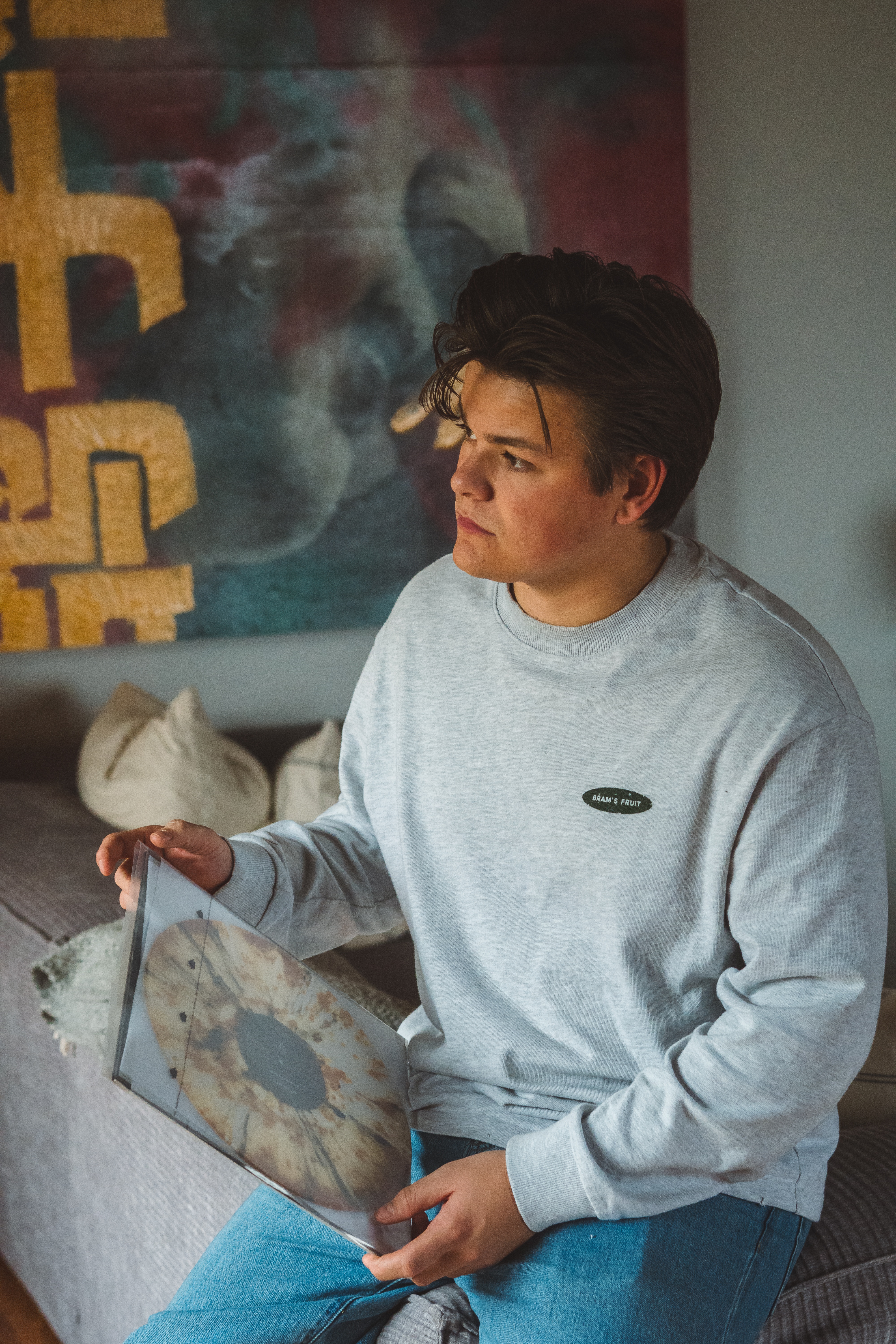
Ola in his home. Photo: McKenna Starck
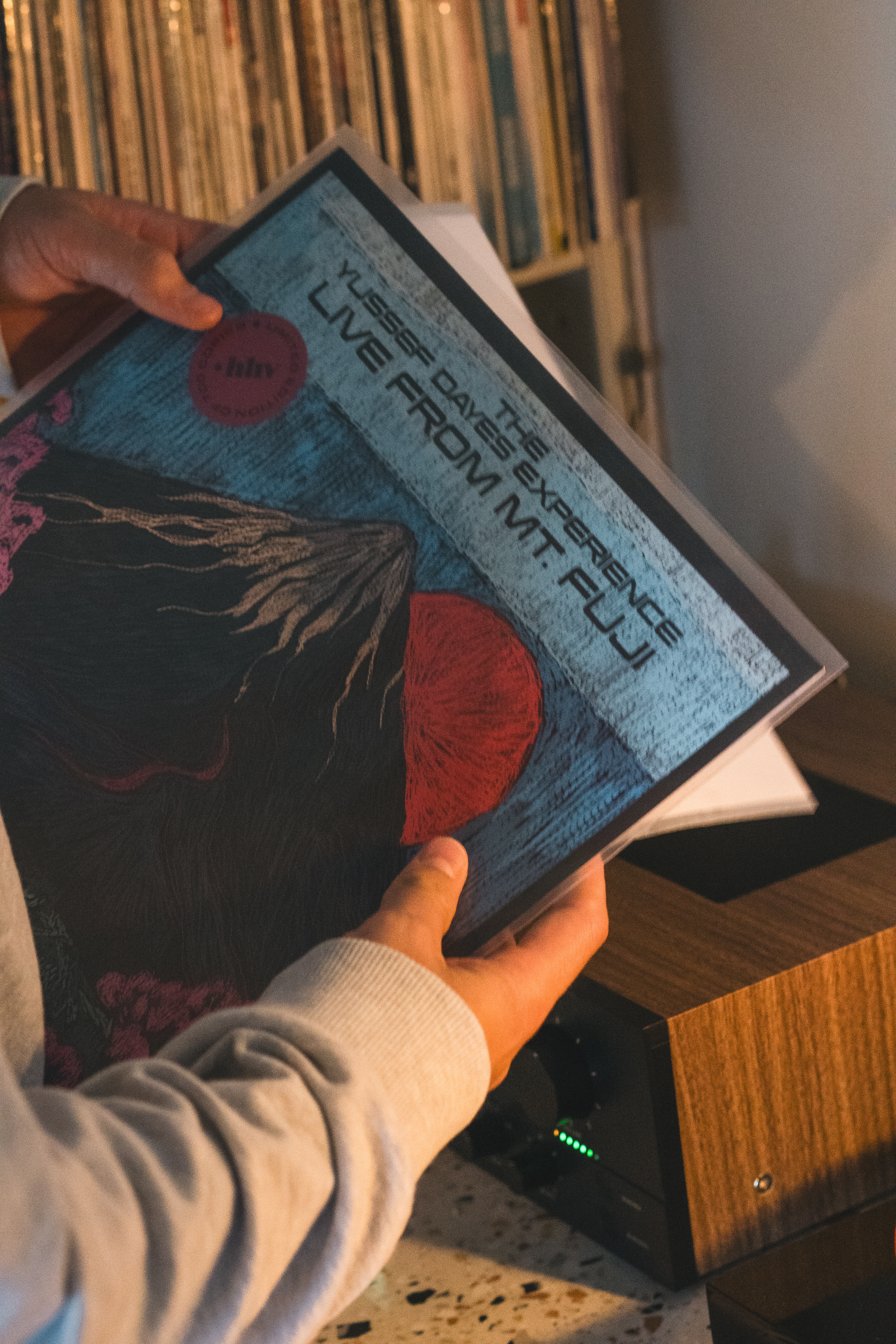
Ola's record collection. Photo: McKenna Starck
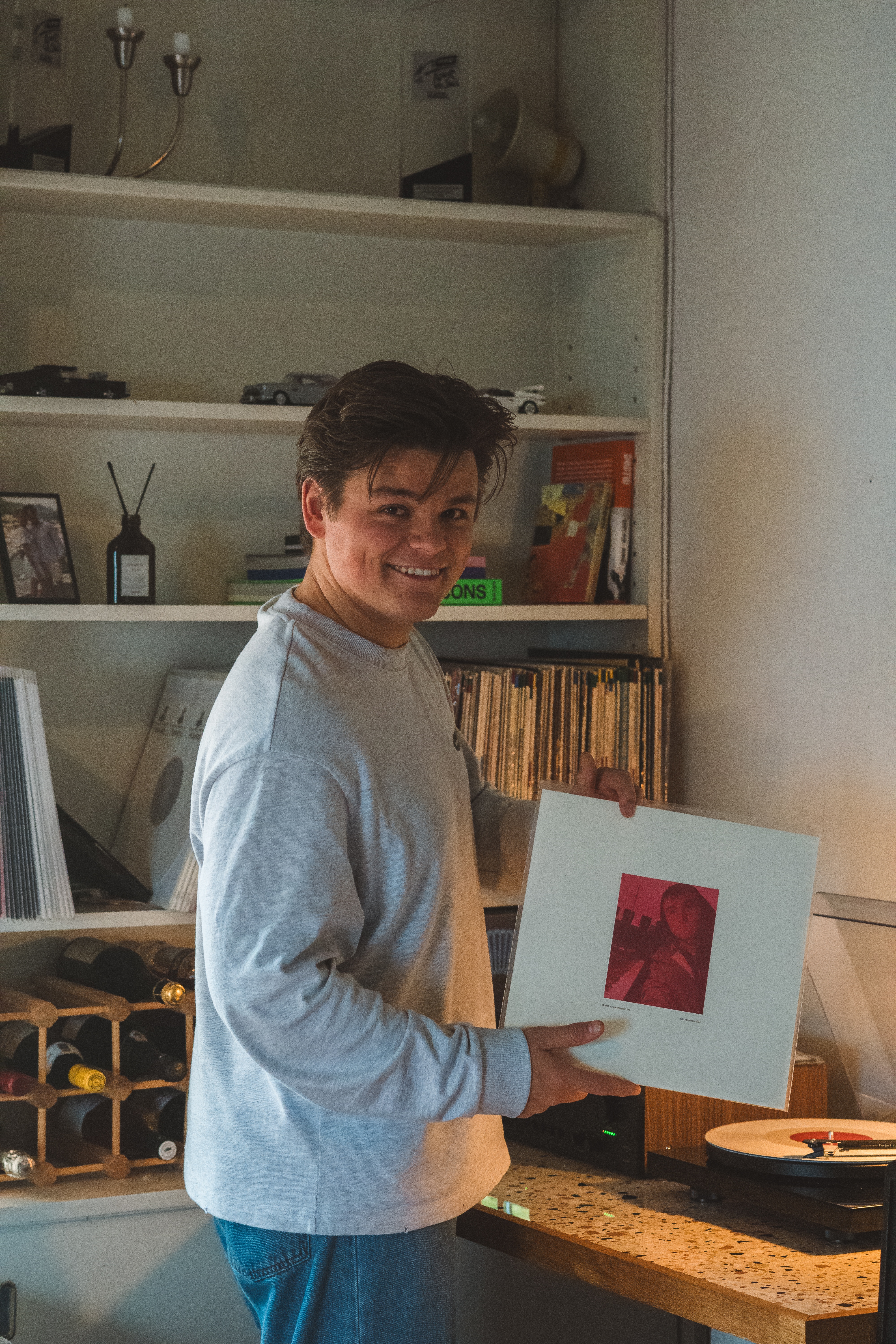
Ola and his record collection. Photo: McKenna Starck
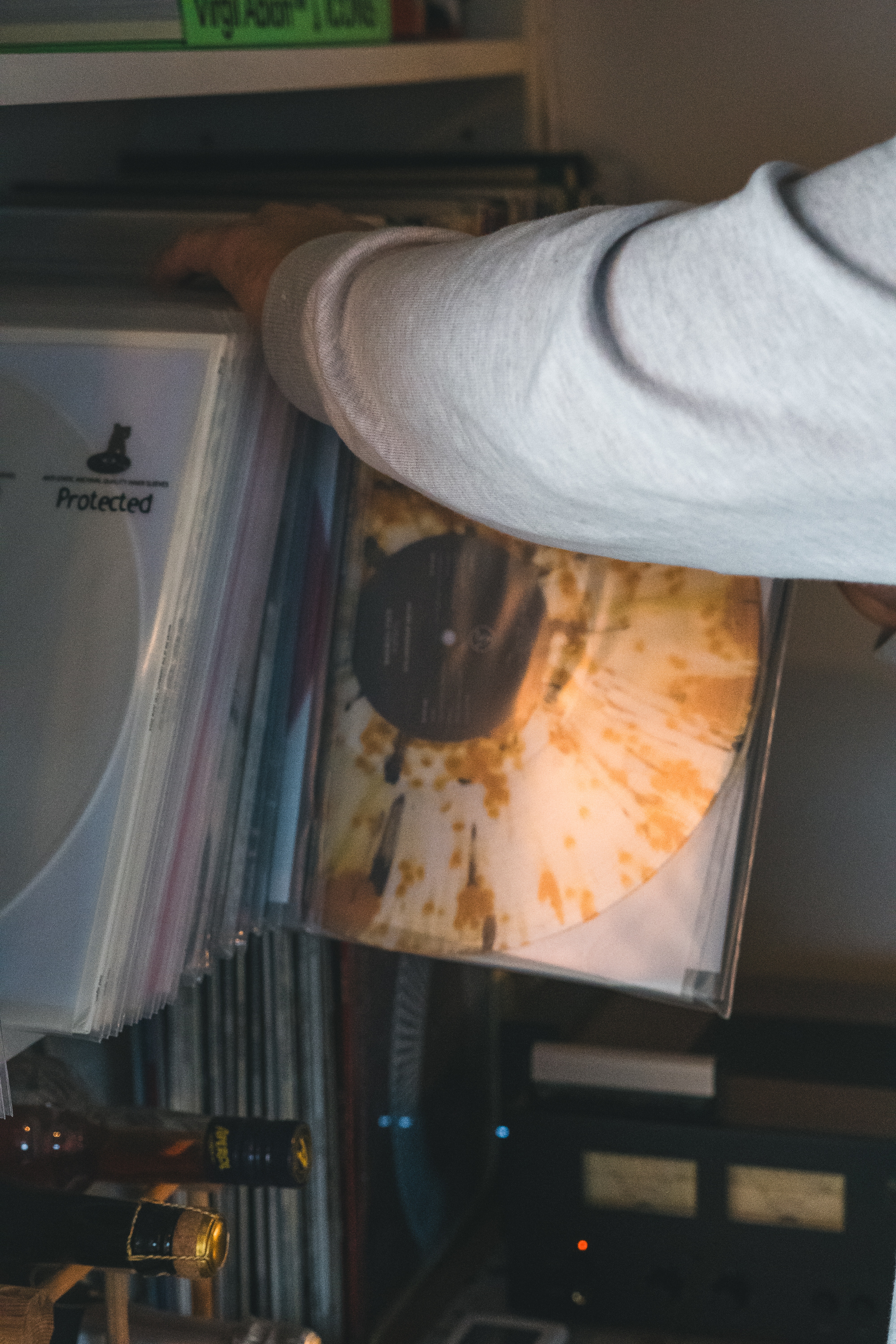
Ola's record collection. Photo: McKenna Starck
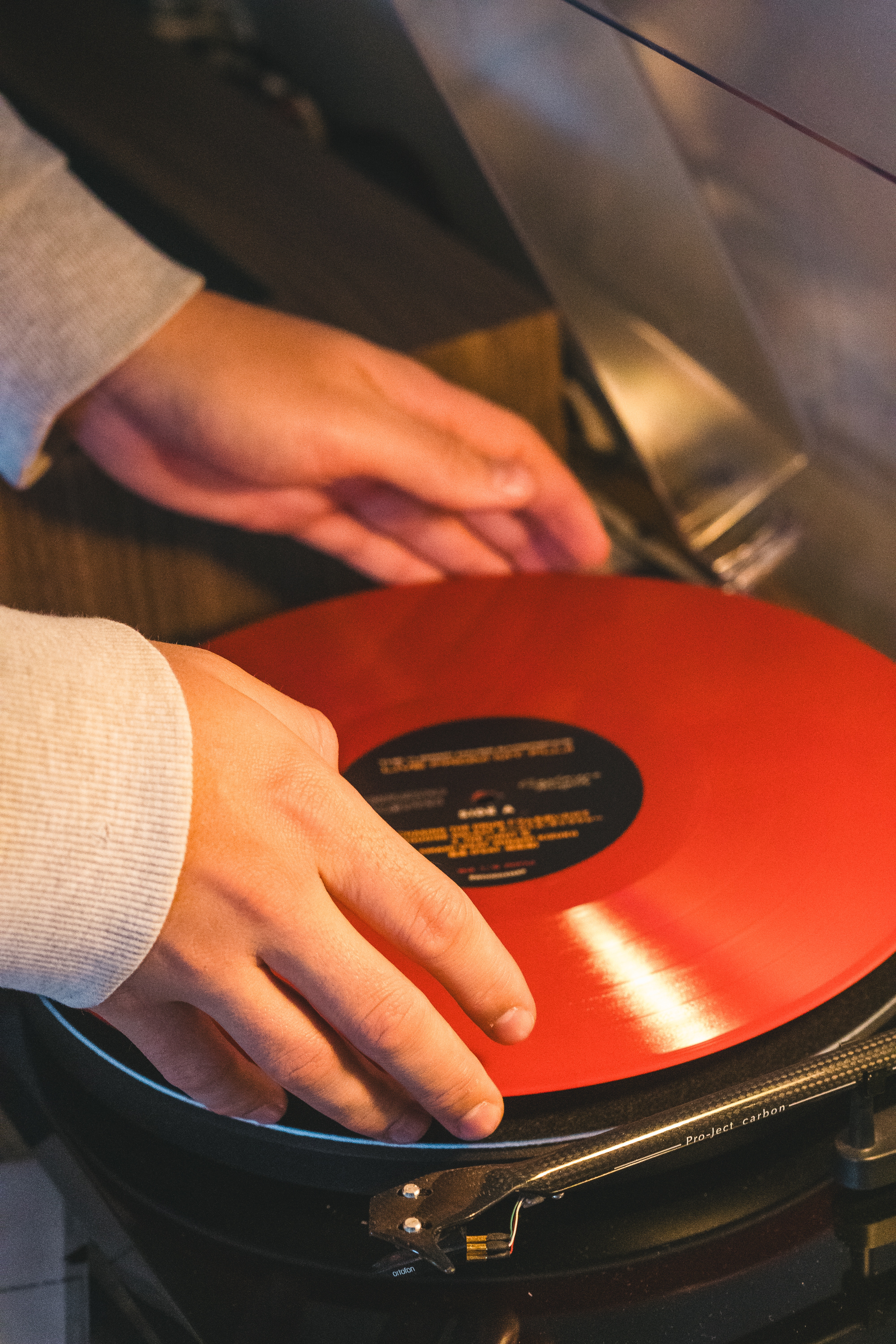
Ola and his record player. Photo: McKenna Starck
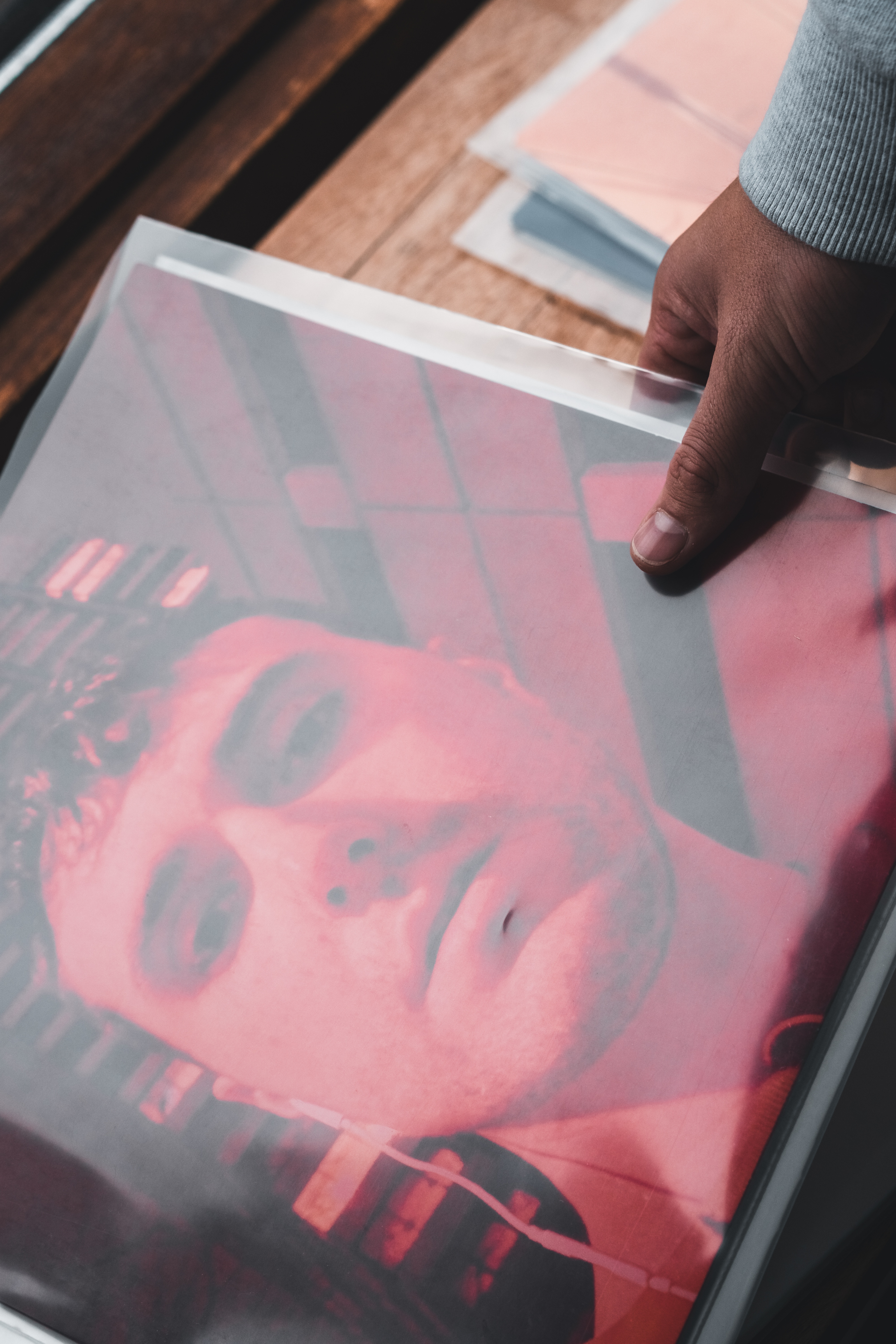
Ola's record collection. Photo: McKenna Starck
Needle, Meet Groove
Of all the ideas currently swirling through Ola's mind, one has him particularly excited: a vinyl album where his love of house music meets the jazz he grew up listening to with his father, with a little of his visual artistry thrown into the mix.
He's been exploring a more laid-back, jazz-infused side of house music, the kind that feels just as at home on a record player as it does in a lounge. But it's the prospect of creating something physical that appeals to him most. More than a collection of digital tracks, Ola imagines a vinyl release where the music and artwork are conceived together, giving him room to indulge both his musical and visual instincts. An avid collector of records and original paintings himself, he loves the idea of owning something an artist has made. Something you can hold, appreciate and keep long after the music stops.
“I love the idea of creating a physical record. It becomes a more artistic process. You get to design the cover and think about the whole experience, rather than simply releasing a single on Spotify and leaving it at that.”
And just when you think you've got a handle on Ola's creative interests, there's the matter of a collaboration with David Phan, Japanese knife specialist and founder of Tomatosharp. Together, they're developing a limited collection of handcrafted knives using materials from Ola's family history, including vintage wooden skis and furniture passed down through generations. David is transforming the reclaimed wood into knife handles, while Ola is creating hand-painted cases. An unusual pairing, admittedly, but not entirely surprising at this point.
For someone with so many interests of his own, Ola has an equally keen eye for what other people can do. He's quick to recognize talent, curious about what happens when different creative minds cross paths, and has a knack for turning those encounters into collaborations. What begins as a personal curiosity often grows into something much bigger, gathering new perspectives, unexpected ideas and a few good friendships along the way.
Perhaps that's one of the more interesting things about Ola's creative world. For all the skills he's collected over the years, he's just as interested in what other people bring to the mix. And he has a way of making room for them.
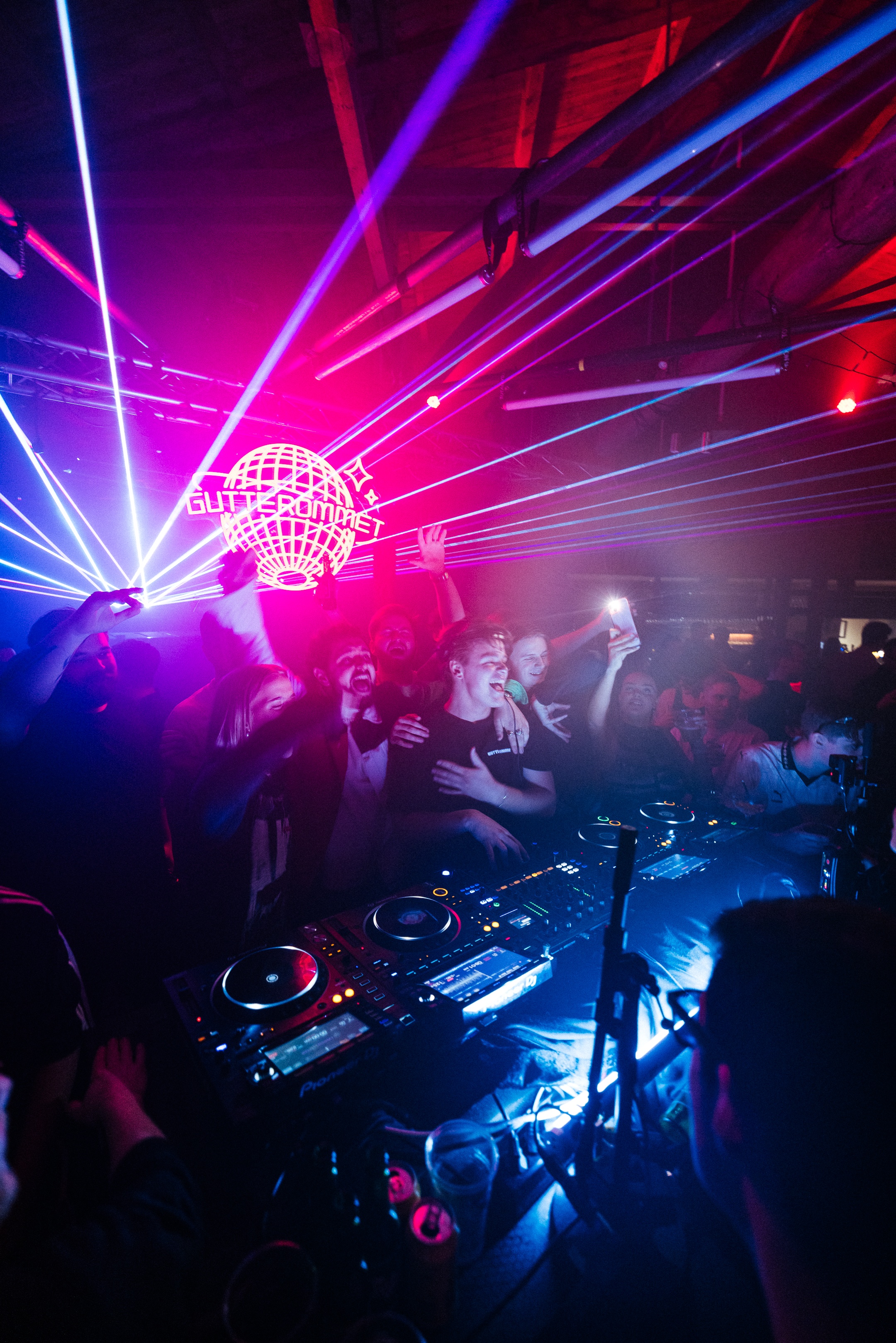
DJ OKEY, Gutterommet event. Photo:
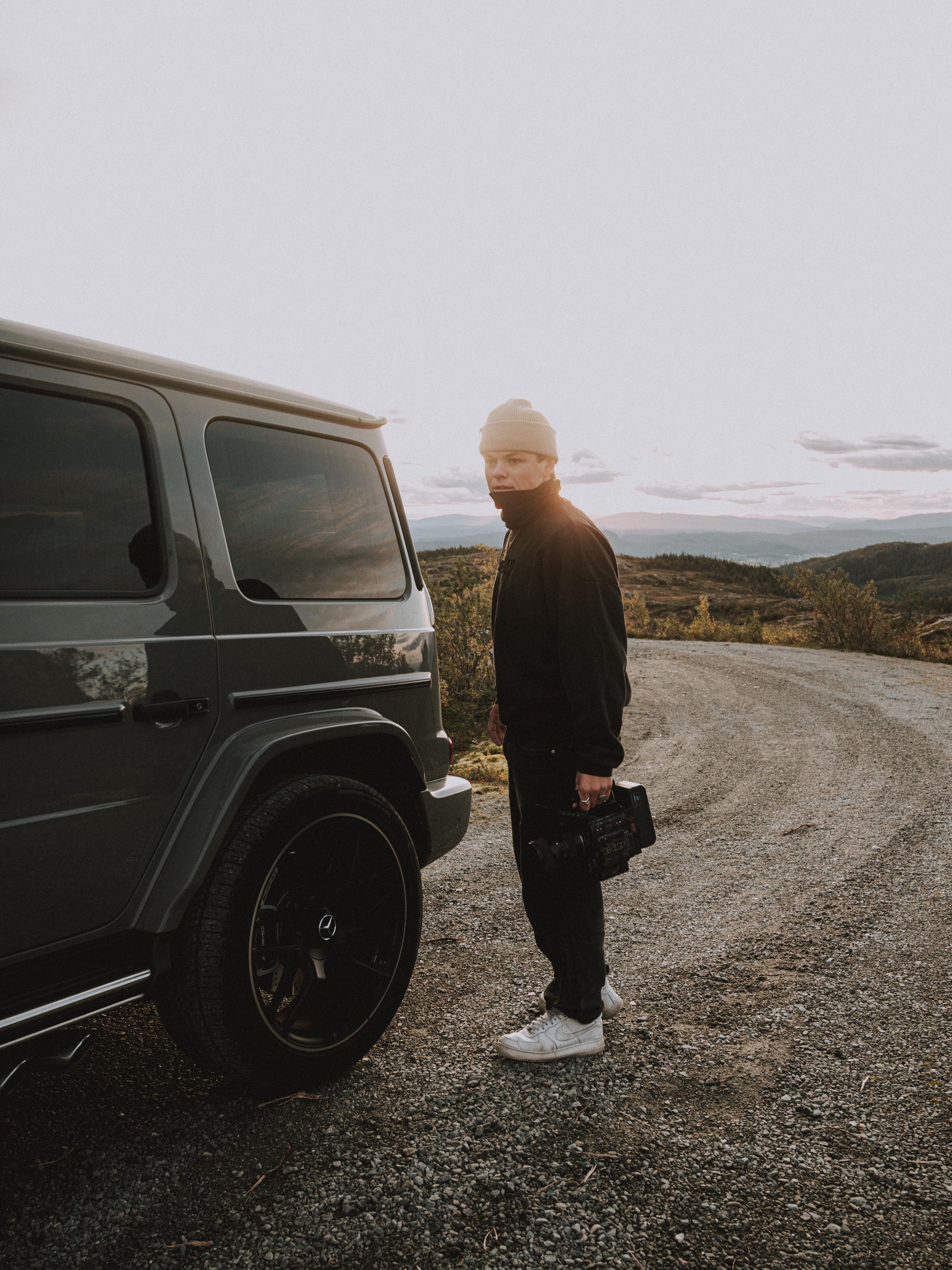
Ola film production. Photo:
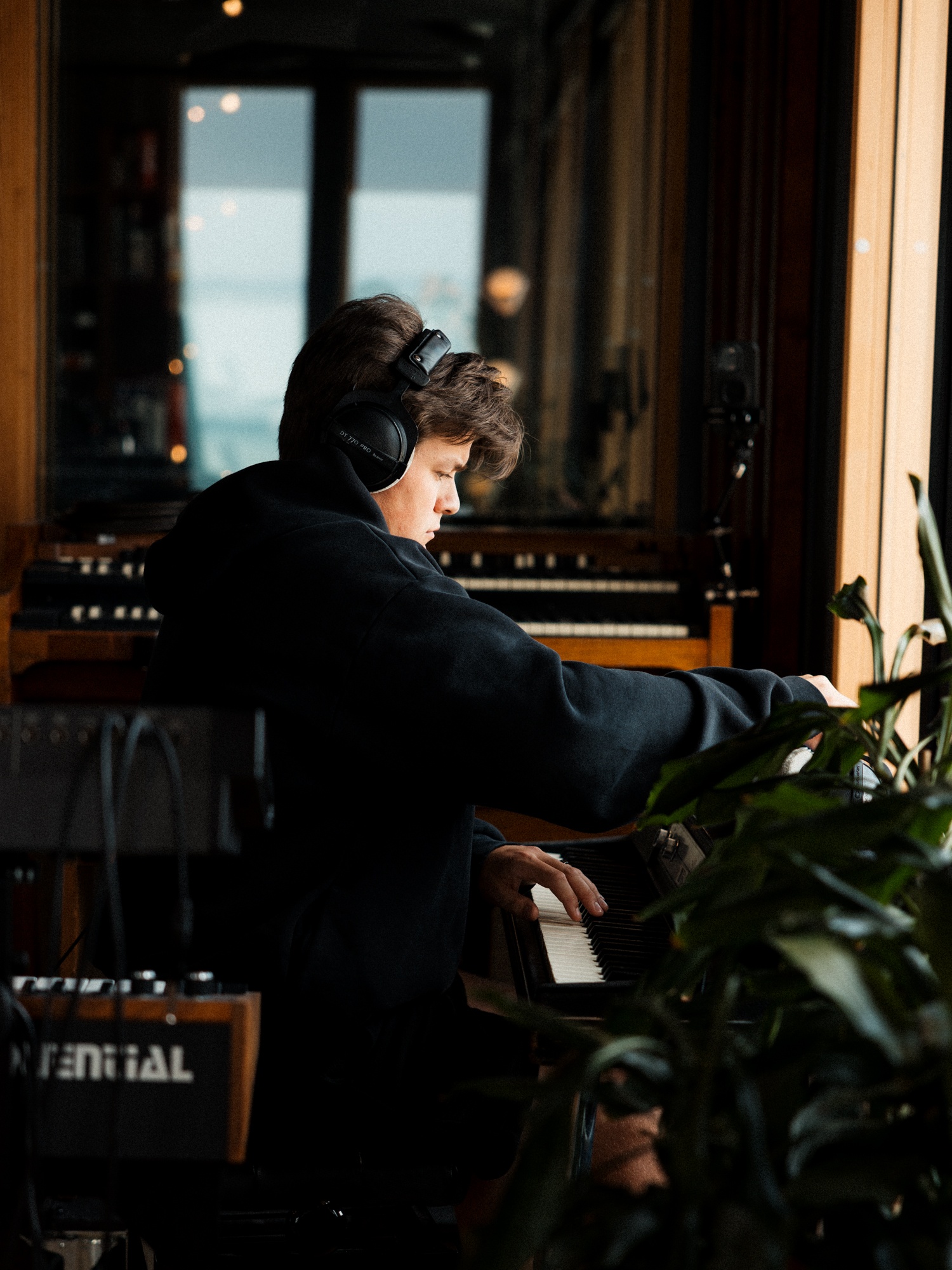
Ola making music. Photo:
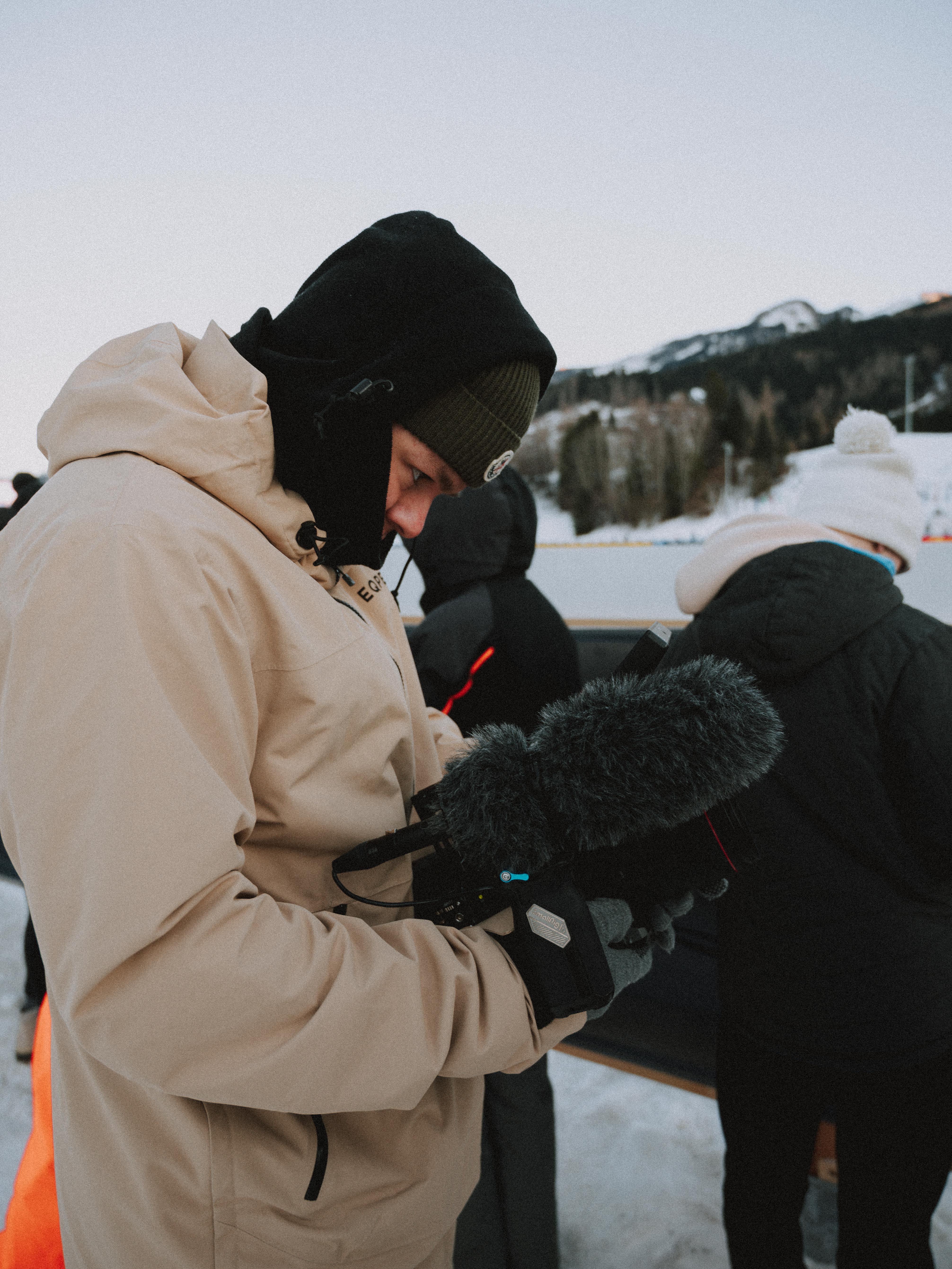
Ola during film production. Photo:
Author's profile
McKenna Starck
Trondheim Brand Manager
McKenna works with the development of Trondheim’s city brand and Trondheim.com, with a focus on brand strategy, content and the overall digital experience.